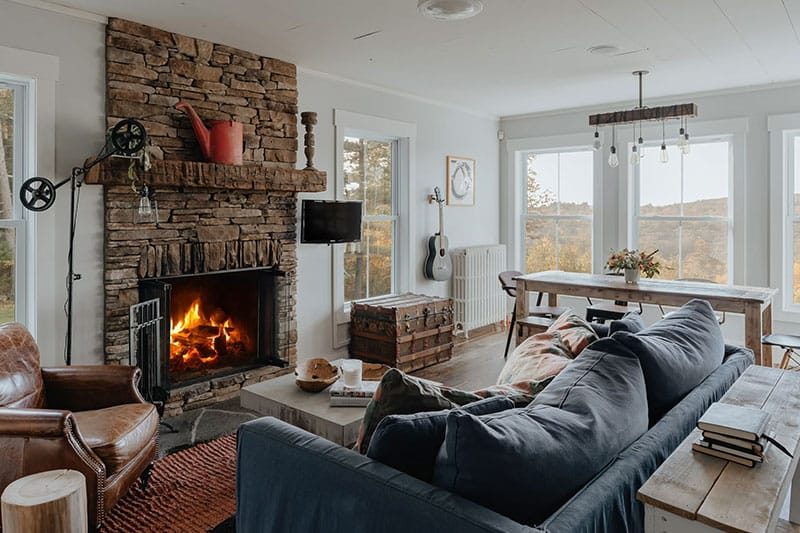
After a day out exploring the countryside, there’s nothing like curling up in front of a crackling open fire. Many farm stays, particularly traditional farmhouses, historic cottages, and barn conversions, have open fires but if you’re unfamiliar with them, the idea of getting it lit and keeping it burning can seem a little daunting.
The good news is that it’s much easier than it looks. With the right materials and a few simple steps, you’ll soon have a beautiful fire that burns steadily and safely, keeping you warm throughout the evening.
You’ll need:
Firelighters
Kindling
Logs
Matches or a long lighter
Most farm stays provide a complimentary starter basket of logs for an open fire, together with kindling and matches. If these aren’t provided, or you need to top up the supply during your stay, it’s best to choose kiln-dried hardwood logs.
Ash is considered one of the best firewoods producing a steady flame and a high heat output. Birch is easy to light and has bright, cheerful flames, although it burns faster than denser woods. Oak can be hard to get going but once lit, burns slowly for a long time with a deep, consistent warmth.
Whatever type of wood you choose, it should be properly seasoned and have a moisture content of less than 20%. Dry logs burn cleanly, produce more heat, and create far less smoke. Look for firewood carrying the DEFRA Ready to Burn certification label to be certain that it meets the smoke emission limits.
Although it may be tempting to gather ‘free’ wood from a nearby woodland or forest, freshly cut or damp logs are difficult or even impossible to light and burn very inefficiently. At best, you’ll end up with a smoky fire that gives off very little heat. At worst, you may struggle to get it burning at all.
Ideally, you’ll need both firelighters and kindling to get an open fire off to a good start. Firelighters ignite easily with a single match, while the kindling quickly builds a hot, concentrated flame that generates enough heat to ignite the larger logs without filling the room with smoke.
Firelighter blocks are traditionally made from petroleum-based chemicals such as kerosene or paraffin, or, for a more environmentally friendly option, natural wood wool coated in wax. Kindling is usually sold as small, dry softwood sticks, which should be stacked loosely over and around the firelighter to allow plenty of air to circulate.
If you don’t have kindling, you can improvise with scrunched-up newspaper, brown paper bags, or strips of plain cardboard. However, these materials should only be used sparingly, as they produce light, flaky ash that can be carried up the chimney, where it may increase the risk of chimney or roof fires.
Pine cones also make excellent natural fire starters, as the resin acts as an accelerant, while their open structure allows plenty of oxygen to reach the flames. Just make sure they’re completely dry before using them.
Before lighting the fire, make sure the chimney flue is open. A closed flue will prevent smoke from escaping and can quickly fill the room with fumes.
The simplest way to check is to hold your hand just inside the fireplace and feel for a slight draught being drawn up the chimney. Alternatively, shine a torch up the flue. If you can see daylight, the flue is open. If you can see a metal plate blocking the chimney, the flue is closed.
To open the flue, locate the lever, knob, or chain, usually positioned just above the fireplace. Push, pull, or turn it until the damper is fully open.
Next, prepare the grate. Use a brush and shovel to remove any excess ash, leaving a thin, even layer in the bottom of the grate which helps insulate the fire and makes it easier to establish a good bed of embers. Empty the ash pan underneath the grate so that air can circulate freely from below.
Your farm stay will usually provide instructions on how to dispose of ash. If not, transfer it to a metal container with a tight-fitting lid, such as an old biscuit tin, and store it outside on a non-combustible surface until it has cooled completely. Ash can retain enough heat to reignite for many hours, even when it appears cold. There’s a reason why dustbins are embossed with a ‘no ash’ warning.
The traditional way to build an open fire is from the bottom up. Place one or two firelighters in the centre of the grate, then arrange plenty of kindling over them in a criss-cross or teepee shape. Leave small gaps between the sticks so that air can circulate freely and feed the flame.
Next, place one or two small logs on top, taking care not to crush the kindling underneath.
An increasingly popular alternative is the top-down method. Start by laying two or three larger logs on the grate, then build layers of kindling on top before placing one or two firelighters at the very top of the stack. When lit, the fire burns down through the kindling to the larger logs. Although this approach is less familiar, it has several advantages: it heats the chimney more quickly, creates a stronger updraught, produces less smoke, and is considered easier and more reliable.
Whichever method you choose, remember that every fire needs three essential ingredients: fuel, heat, and oxygen. Leaving enough space between the wood for air to circulate is just as important as using enough kindling and logs.
Light the firelighters in several places using a long match or a long-handled lighter. This should be the easy part, especially if you’ve built your fire using the top-down method, where the firelighters are accessible.
As the firelighters burn, the kindling should quickly catch alight, creating the intense heat needed to ignite the larger logs. Resist the temptation to interfere too soon and give the fire a few minutes to establish itself.
If the kindling struggles to catch, add a few more dry sticks or another firelighter beneath the wood. You can also tuck in a little twisted paper. Those new to open fires are often surprised by just how much kindling is needed to build enough heat to get things going. It’s far better to use plenty of kindling at the start than to try to coax reluctant logs into lighting later on.
Once the first logs are burning well and you have a glowing bed of embers, add another log. Position it so it rests on the already burning logs and take care that it doesn’t smother the flames. Wait until each new log is burning before adding another, as piling on too many logs at once can reduce airflow and cause the fire to die down.
To keep your fire burning throughout the evening, add a fresh log before the previous ones have burned down completely. Maintaining a good bed of glowing embers is the secret to an open fire that is easy to manage and produces consistent heat.
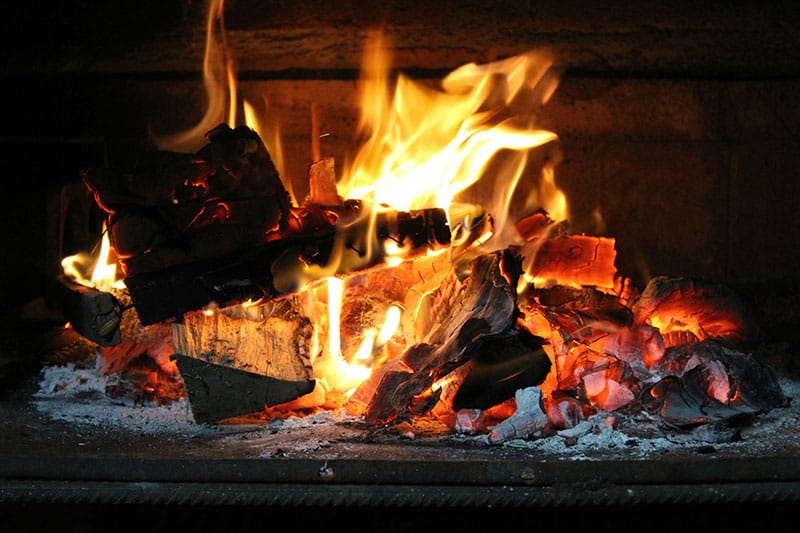
Try not to disturb the fire too much, but if the flames begin to die down, use a poker to gently reposition the logs. Spacing them slightly farther apart allows more oxygen to reach the heart of the fire, helping it burn more vigorously.
You can also use the poker to break up large pieces of glowing charcoal to expose fresh, hot surfaces and release more heat.
If the fire still seems sluggish, opening a window slightly on the opposite side of the room can improve the draught up the chimney.
Although the sale of traditional house coal for domestic use is banned in England, working farms are exempt from these rules. The restrictions also don’t apply in Scotland and Wales, so you may still come across a coal fire during a farm stay.
Lighting a coal fire is slightly different from lighting a wood fire. You need to build up a strong, hot base first using firelighters, paper, and plenty of dry kindling. Once the kindling is burning well, add a layer of coal on top. Choose smaller pieces rather than large lumps, as they will absorb the heat from the wood more quickly and ignite more easily.
Allow the fire to establish itself for around 30 minutes. During this time, the flames from the wood and paper will keep the fire going, but the aim is for the coal to become hot enough to maintain the fire on its own.
Once the coal is glowing and burning steadily, use a poker to gently loosen the ash and separate any pieces of coal that have stuck together. Add fresh coal gradually around the edges of the fire rather than placing it directly in the centre. Adding too much at once can reduce the airflow and cool the fire. As the new coal begins to ignite, gently push it towards the centre with the poker to maintain an even, steady burn.
Don’t worry – it happens!
If your fire goes out, and you used dry, suitable firewood, the most likely cause is that too many logs were added at once, restricting airflow, and starving the fire of the oxygen it needs to keep burning.
If you’re left with a bed of glowing embers, don’t start again from scratch. Add a handful of dry kindling and allow it to catch before placing a small log on top. Once the fire has rebuilt its heat and the new log is burning well, you can gradually add larger logs as needed.
If built and managed properly, an open fire is perfectly safe, but it is very different from the sealed heating systems found in most modern homes. A little extra care and attention will help ensure you enjoy the warmth and atmosphere of your fire safely.
Never leave an open fire unattended. Always make sure someone is present while it is burning.
Use the fire guard provided, especially if children or pets are around. A guard also helps prevent sparks escaping and stops logs from rolling out of the fireplace, where they could ignite carpets, curtains, or furniture.
Set clear boundaries for children. Before lighting the fire, explain that the area around the fireplace is out of bounds. Remember that fire tools, such as the poker and tongs, can remain hot for some time after use, so keep them out of reach of young children.
Only burn suitable firewood. Never put rubbish, cardboard, treated timber, or plastics on the fire which can produce unpleasant or harmful fumes. Even the inks and coatings used on some printed packaging or magazines can release unwanted chemicals when burned.
Keep flammable items well away from the fireplace. Furniture, blankets, clothing, and other combustible materials should be kept at a safe distance from heat, flames, and stray sparks.
Never use petrol, paraffin, or other flammable liquids to light or revive a fire. They can ignite suddenly and create a serious hazard.
Let the fire die down safely before leaving it unattended. Before going to bed or leaving the property, allow the flames to burn down naturally and make sure the fire is safe. Follow any instructions provided by your farm stay regarding the use and care of the fireplace.
An open fire is one of the simple pleasures of a rural escape. Knowing how to light and manage one safely means you can make the most of this traditional feature and add an extra touch of comfort to your holiday.
Explore our collection of farm stays with open fires, perfect for a magical autumn, winter, or Christmas break.
At the end of the day, there is nothing quite like returning to your farm, lighting the fire, and settling down as the flames begin to dance. With a warm drink in hand and the glow of the fire filling the room, you can relax knowing that the cosy atmosphere you’ve created is all your own.