A holiday on a working farm in Northumberland is an excellent choice for dog owners, offering miles of open countryside to explore alongside a stunning, largely unspoilt coastline, much of which is dog-friendly. As England’s most sparsely populated county, many of Northumberland’s beaches remain quiet throughout the year, providing plenty of space for dogs to run freely or enjoy a swim in the sea without disturbing others. The Northumberland Coast Path winds past sandy bays, rugged headlands, nature reserves, majestic castles, and picturesque fishing villages, giving dogs endless new sights, sounds, and scents to discover.
Walking along Northumberland’s coastline is a wonderful way for your canine companion to get some exercise, mental stimulation, social interaction with other dogs, and valuable bonding time with you.
Responsible dog ownership is essential. Always keep your dog under effective control, use a lead if their recall is unreliable, and keep them close when near livestock and wildlife, particularly ground-nesting birds. On the beach, remember to clean up after your dog and dispose of waste in a bin to help protect bathing water quality and keep the area safe and enjoyable for everyone.
Here are some of our favourite dog-friendly beaches to visit during your Northumbrian farm stay.
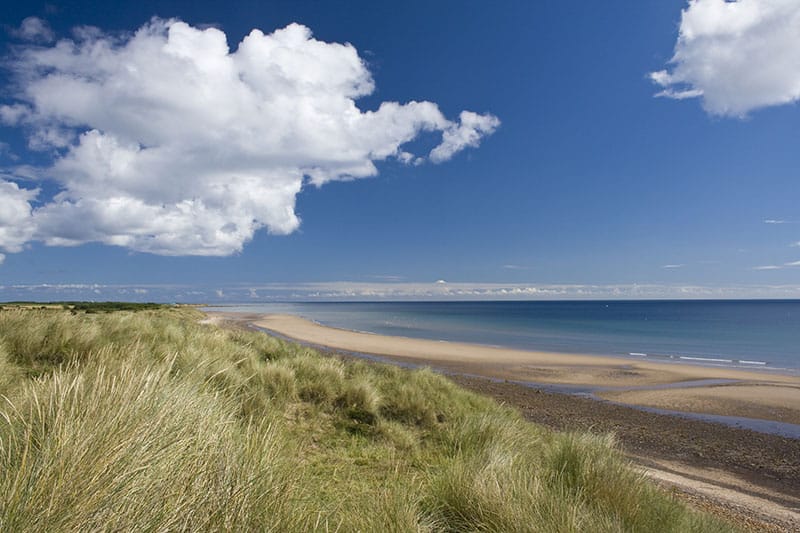
Backed by grassy dunes and the Northumberland Coast Country Park, Druridge Bay has more than seven miles of golden sandy beach and welcomes dogs all year round. A stretch of the bay between the country park and neighbouring National Trust land is privately owned and has long been used as an unofficial nudist beach, with a charity skinny dip taking place there each year.
Several areas around the bay are designated nature reserves managed by the Northumberland Wildlife Trust. A particular highlight is Druridge Pools, a former opencast coal mine that has been transformed into a rich wetland habitat. Its lakes, wet meadows, and reedbeds support a diverse range of wildfowl and waders, including little egrets, curlews, gadwalls, goldeneyes, and wigeon. Dogs are permitted within the reserve but must be kept on a lead to avoid disturbing the wildlife.
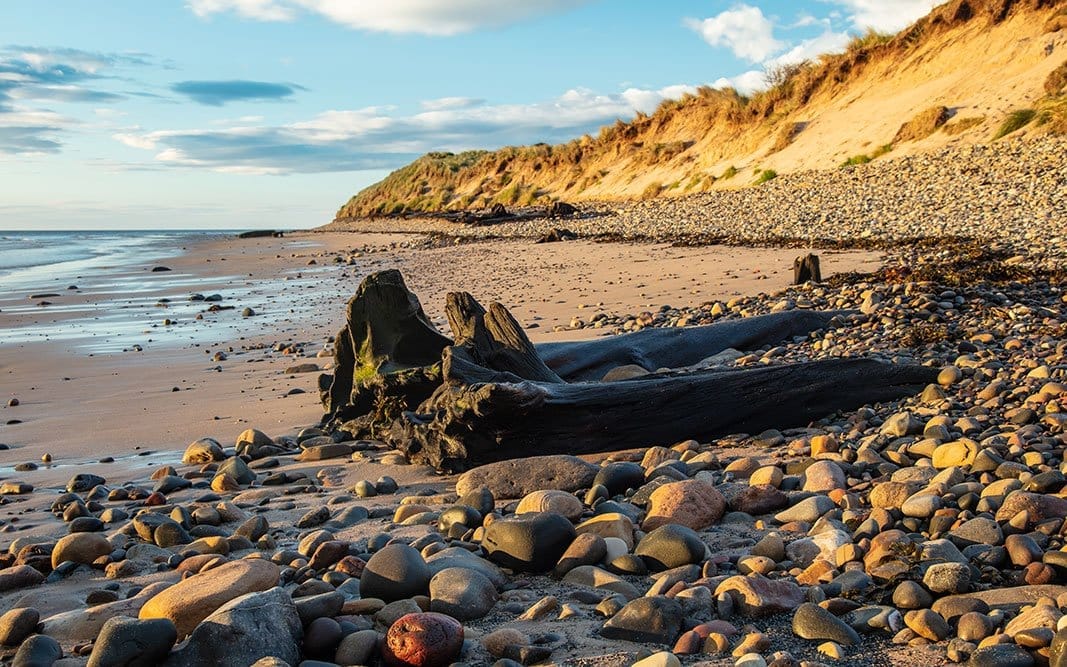
Backed by dunes and low cliffs, Amble Links is a predominantly sandy beach with patches of rock and shingle, that is popular with families, water sports enthusiasts, and dog walkers alike. The beach looks out towards Coquet Island, an RSPB-managed nature reserve that supports more than 40,000 breeding seabirds, including puffins, eider ducks, and all four species of tern. Although the island itself is not open to visitors, organised boat trips from Amble sail close by, offering views of the working lighthouse and the remains of a medieval monastery.
For spectacular views of the island from land, you can join the coastal path and follow a five-mile circular walk via Hauxley, passing through picturesque farmland, a nature reserve, and riverside scenery. At Low Hauxley, keep an eye out for the remains of a prehistoric forest, occasionally revealed at low tide. Estimated to be around 7,000 years old, they are believed to be part of Doggerland, the ancient land bridge that once connected Britain to continental Europe.
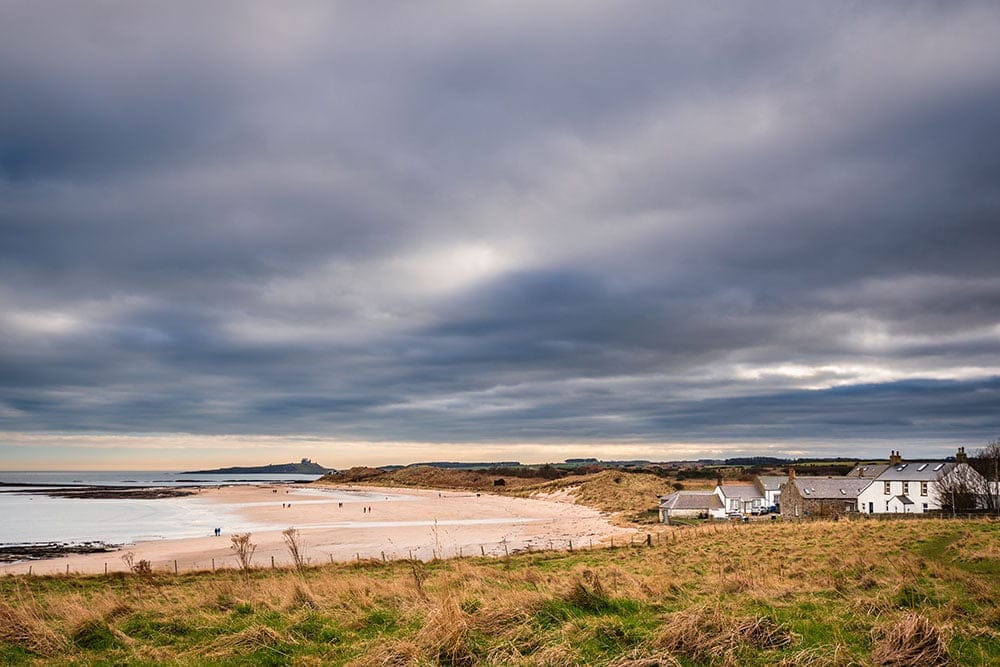
Also known as Low Newton, Newton Haven is a sandy beach set within a sheltered bay, making it a popular spot for swimmers and water sports, including surfing, windsurfing, and yachting. At the back of the beach lie sand dunes which, in summer, burst into colour with a variety of wildflowers, including orchids, bluebells, cowslips, burnet roses, and bloody cranesbill amongst willow scrub, gorse, hawthorn, and bramble. Dogs are welcome on the beach all year round, making it an excellent destination for long, bracing walks with your four-legged companion.
Behind the dunes is Newton Pool, a small nature reserve with a bird hide overlooking a freshwater pond where visitors can spot a good number of wading birds, such as oystercatchers, curlews, and redshanks. From here, the coastal path continues towards Craster, passing the spectacular ruins of Dunstanburgh Castle, once one of the largest and most impressive fortifications in northern England.
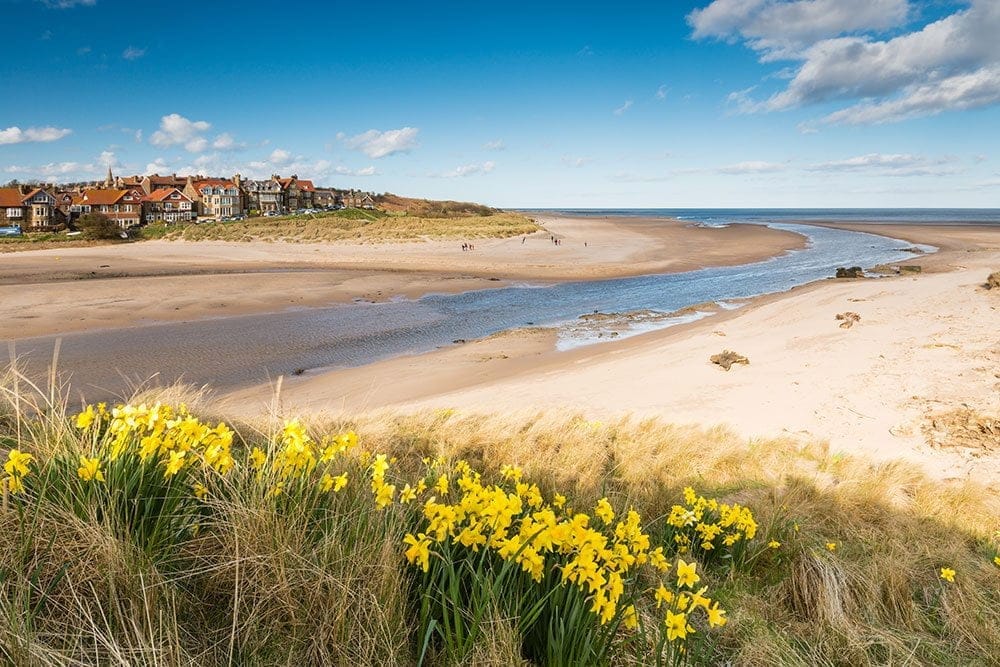
Set within a wide, unspoilt bay at the mouth of the River Aln, Alnmouth beach is a vast stretch of sand that rarely feels crowded, even in the height of summer. It’s an ideal spot for a family day out, with plenty of space for beach games, building sandcastles, or enjoying a picnic by the sea. Swimming, however, is not recommended due to strong tidal currents, and warning signs near the estuary advise that even paddling can be dangerous.
The area south of the estuary is less accessible, making it quieter still and particularly popular with dog walkers – just be sure to keep them on a lead if they like a swim. A short walk towards the harbour leads to The Ferry Hut, said to be the smallest museum in the British Isles. Once a shelter for the ferryman who rowed passengers across the River Aln, it now houses a collection of local history and memorabilia celebrating the village’s past.
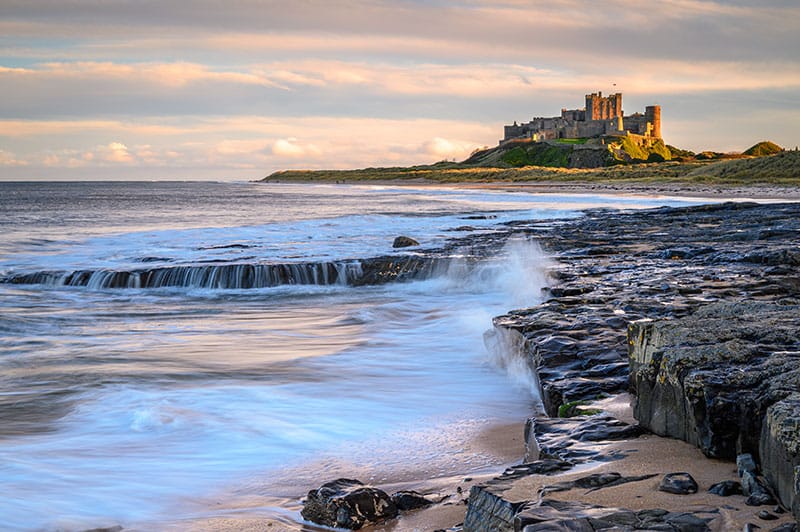
Bamburgh Beach is a wide stretch of golden sand backed by dunes, that’s perfect for long, windswept walks at any time of year. Dogs are welcome on the beach without restriction, allowing plenty of space for them to run and explore. Overlooking the shoreline is the iconic Bamburgh Castle, originally built by the Normans in the 12th century. Home to the Armstrong family since the Victorian era, the castle is open to visitors and, while dogs are not permitted inside the State Rooms, they are welcome in the grounds, where water bowls are provided throughout the site.
Walking north from the castle leads to Stag Rocks, named after the white stag painted onto the dark volcanic rock, where a lighthouse stands built in 1910, and England’s most northerly land-based lighthouse. The area is also excellent for birdwatching and offers spectacular views across the sea towards the Farne Islands.
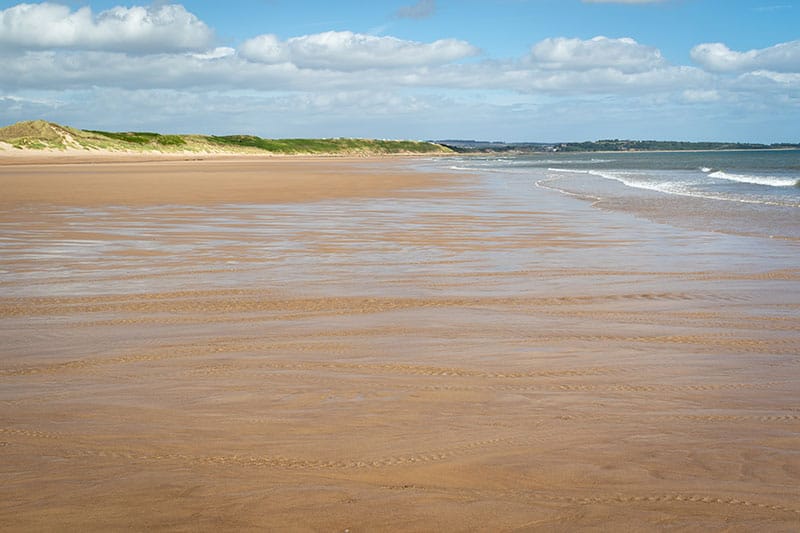
Just a short walk from the historic village, Warkworth beach is a vast expanse of soft, golden sand. Known for its excellent water quality, it’s an ideal spot for a peaceful swim or paddle, while a local surf school offers lessons in both surfing and paddleboarding.
Towering above the beach is the spectacular Warkworth Castle, once home to the powerful Percy family and now cared for by English Heritage. Dogs are welcome both in the castle grounds and within the castle itself, where they can accompany visitors in exploring ancient passageways, battlements, and towers.
A pleasant and relatively easy linear walk heads north along the beach, weaving through sand dunes and passing the River Coquet estuary. Along the way, walkers can enjoy sweeping coastal views, glimpses of shipwrecks, and vistas across Warkworth Golf Course.
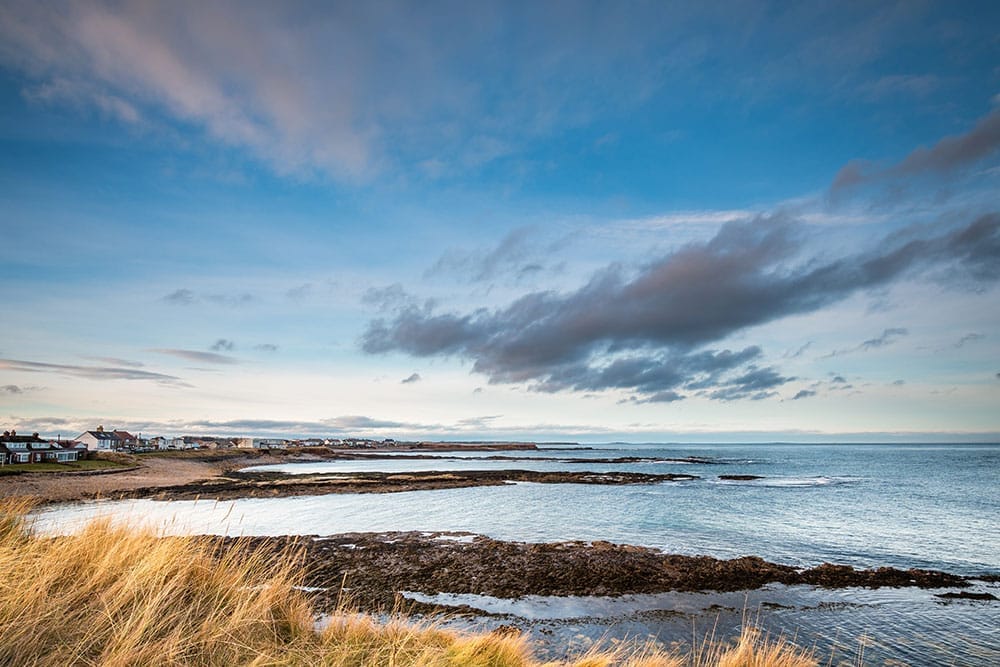
Situated in a sheltered, horseshoe-shaped bay, Beadnell beach is a beautiful stretch of golden sand backed by grassy dunes and open fields beyond. It’s an excellent destination for families, with plenty of space for building sandcastles, playing beach cricket, and dune sledging, while the clean waters make it ideal for swimming. The beach also has a thriving watersports scene, offering activities such as diving, sailing, surfing, windsurfing, sea canoeing, and waterskiing. As a result, it can sometimes be busy, so visitors with dogs should ensure they remain under control and do not disturb others enjoying the beach.
At the centre of the beach, a small burn known as Long Nanny flows out to sea. This area forms a coastal bird sanctuary managed by the National Trust and is a nationally important breeding site for Arctic terns, little terns, and ringed plovers. During breeding season, sections of the beach are roped off to protect the birds and their chicks, and dogs must be kept on a lead to avoid worrying them.
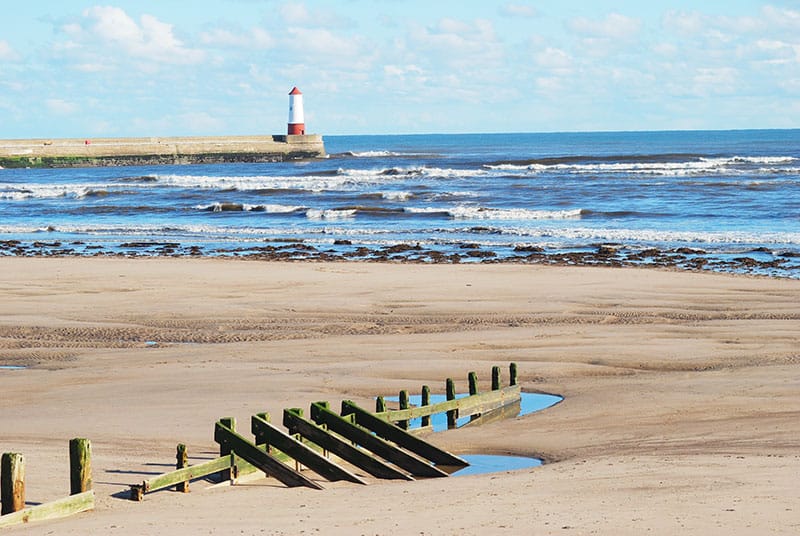
Popular with the Victorians as a spa and bathing resort, Spittal is a predominantly sandy beach with a promenade, amusements arcade, play area, and splash park. Seals are often spotted bobbing in the sea, and dolphins occasionally make an appearance, so take care if your dog is tempted to venture into the water.
A pleasant coastal walk leads to Berwick-upon-Tweed, where you can join the Berwickshire Coast Path and cross the border into Scotland. Along the way, stop at the pier and lighthouse at the mouth of the River Tweed, where benches provide the perfect spot to pause with a coffee and enjoy fantastic views across the North Sea towards Holy Island.
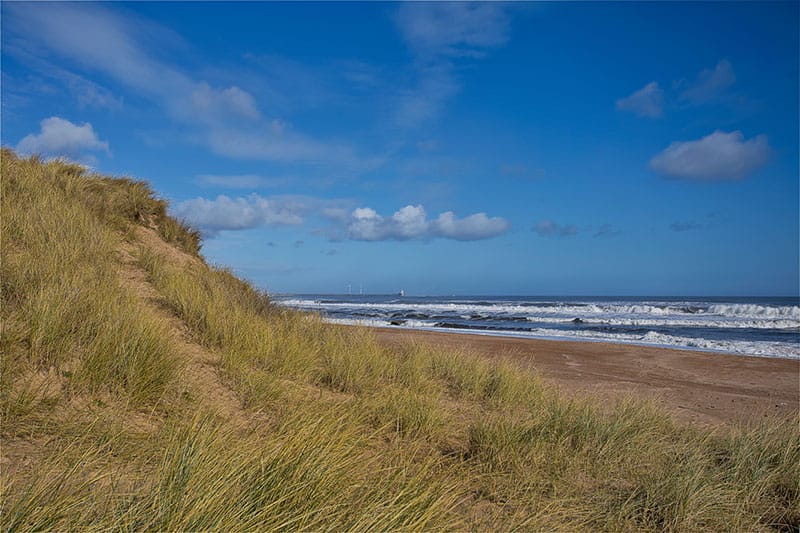
Blyth Beach is a long stretch of golden sand with clean waters ideal for swimming, as well as a zoned area for watersports. At the northern end of the beach, a long pier marks the mouth of the River Blyth and offers wonderful views across the river and the North Sea. From here, you can walk along the inside of the harbour wall, passing rows of docked yachts and Blyth’s famous LV50 Lightship, one of the last remaining wooden lightvessels built for Trinity House, now serving as the clubhouse of the Royal Northumberland Yacht Club.
The dune system between Blyth and Seaton Sluice forms a designated Local Nature Reserve, recognised nationally for its rich diversity of plant species. The dunes attract many migrant birds during spring and autumn and support important communities of reptiles and invertebrates of both regional and national significance.
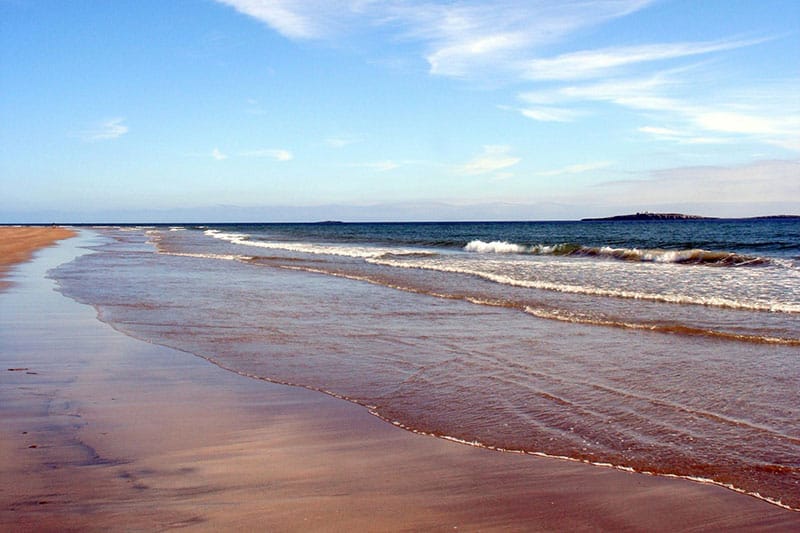
Seahouses is a vibrant coastal village with a picturesque harbour and a gently sloping sandy beach. The harbour is lined with attractive fishing boats, and regular boat trips depart from here to the Farne Islands, home to vast colonies of seabirds and the largest population of grey seals in the UK.
The beach is backed by Annstead Dunes Nature Reserve, where foredunes along the seaward edge rise to around 30 feet before sloping steeply towards the shore. A network of narrow grassy paths winds through the reserve, leading to the beach via kissing gates and stiles. As you near the shoreline, the paths become narrower, and access to the beach requires stepping onto a decking area, while the return journey involves a steep climb through soft sand. Dogs are welcome within the reserve but must be kept on a lead to avoid disturbing wildlife.
Looking for somewhere nearby to stay? Browse our collection of dog-friendly farm stays perfectly placed for exploring Northumberland’s beaches.