
If you’re planning a holiday on a coastal farm, a day at the beach is a must. Whether you’re travelling as a family, a couple, or enjoying a solo escape, there are plenty of fun and relaxing ways to make the most of your time by the sea.
Start by choosing your perfect coastal farm stay, then explore our list of beach activities for inspiration on how to spend your day.
Remember to stay safe around the water, apply plenty of sun cream, and during the summer months avoid direct sunlight at its strongest between 11am and 3pm.
Building a great sandcastle is all about getting the balance of sand and water just right; too much water and the sand will stick to the bucket when you turn it out, too little and your castle won’t hold its shape and will quickly crumble. Ideally you want about one part water to one part sand.
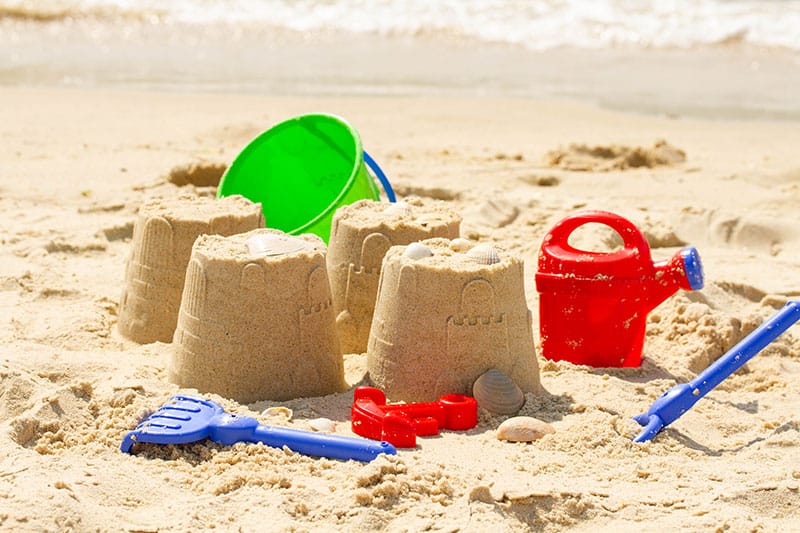
Choose a spot near the high tide line so you have plenty of time to finish your creation before the sea comes in and washes it away. Digging down into the sand will reveal water, giving you an easy supply for building, and the perfect moat for your castle.
Add extra detail by using lolly sticks to carve patterns into the sand, or shape small compacted blocks to create battlements. For a drawbridge, place a large rock or ball in your moat and build the bridge over it, then carefully remove it once the sand is firm enough to hold its shape.
Walking on sand is an excellent low-impact exercise that can boost your mood, strengthen your legs and glutes, and burn more calories than walking on hard surfaces thanks to the added resistance. The uneven, soft ground encourages your muscles to work harder, helping to improve balance, while the fresh seaside air can reduce stress and promote better sleep.
Alternatively, head for the coast path. The King Charles III England Coast Path is a long-distance trail that follows the entire English coastline, passing dramatic cliffs, wide sandy beaches, charming fishing villages, and traditional seaside resorts. Scotland, Wales, Northern Ireland, and Ireland also have their own spectacular coastal paths, many of which are dog-friendly, so you can bring your four-legged companion along to enjoy the adventure too.
On a hot day, no trip to the beach feels complete without an ice cream to cool down. A classic 99 Flake from a van always hits the spot, but many coastal towns are also home to traditional Italian ice-cream parlours serving a fantastic range of flavours, along with indulgent sundaes and nostalgic knickerbocker glories.

If you’re visiting the West Country, why not try a delicious clotted cream ice cream, flavoured with classic British fruits such as strawberry, blackcurrant, or gooseberry? And if you find yourself in Yorkshire, don’t miss the iconic lemon top, creamy vanilla soft-serve ice cream finished with a bright, zesty dollop of lemon sorbet.
The beach is one of the most magical places to watch the sunset, especially along the west-facing coasts of the British Isles, where the sun slowly sinks into the sea and paints the water in beautiful shades of red, orange, and pink. During the summer months, sunsets can be as late as 9pm, leaving plenty of time to enjoy a full evening by the shore beforehand.
Make it romantic – find a quiet spot and snuggle up together on a cosy blanket with a bottle of champagne, and perhaps a few oysters, as the light fades over the water.
Some private beaches and coastal venues host evening sessions with live music, freshly cooked food on the sand, and expertly mixed cocktails, another wonderful way to enjoy the sunset by the sea.
A breezy day at the beach is perfect for a few hours of kite flying, and fun for all ages. Choose a reliable, easy-to-fly style, such as a delta kite, and find a wide-open space away from crowds, buildings, and power lines. Never fly a kite during a thunderstorm or when lightning is nearby. Even if the storm isn’t directly overhead, the air can still be electrically charged.
To launch the kite, have someone stand about 60 feet downwind holding it upright, and release it as you pull the line taut. Wind speed is key – too little, and the kite won’t lift, too much, and it can be difficult to control. The ideal speed is around 8–15 mph.
Stand-up paddleboarding, or SUP for short, is becoming increasingly popular and can be enjoyed by the whole family at the beach. Over time, it’s a great way to boost overall fitness, particularly building core strength.
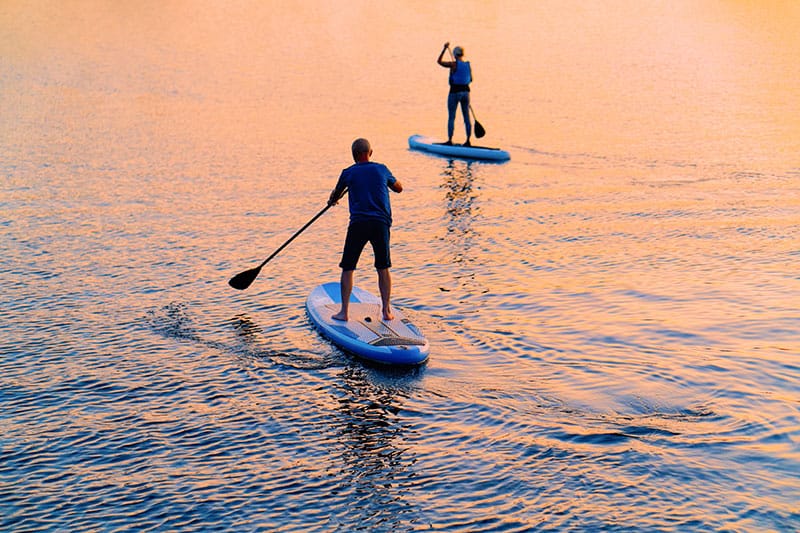
You can paddleboard on either an inflatable or solid board, and many beaches with water-sports centres offer equipment for hire, as well as tuition for beginners. Before heading out, always check the weather and tide times. Features like reinforced rails, a grippy deckpad, and the correct leash will help you feel confident on the water and reduce the chance of falling in, though there’s nothing quite like a refreshing splash on a hot summer’s day!
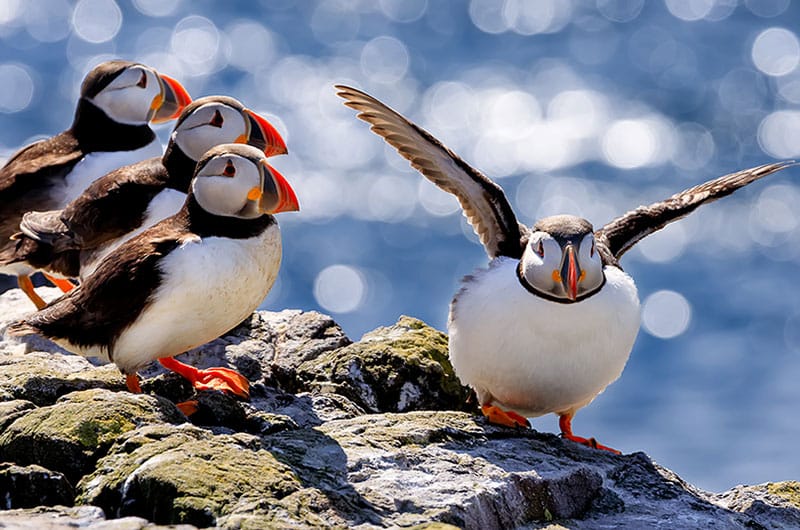
You don’t need to be a twitcher to enjoy spotting birds at the beach. Spend a few hours watching the skies and shorelines, and you might see a huge variety of fascinating species, from comical puffins bobbing in the water and sleek gannets diving for fish, to noisy kittiwakes nesting on cliffs and tiny sanderlings scurrying back and forth with the waves.
In autumn, one of the most spectacular sights is an murmuration, a huge flock of starlings twisting and twirling in a mesmerising aerial display over the sea at dusk before settling in for the night to roost in piers or nearby reed beds.
If you’re new to birdwatching, there are plenty of apps to help identify identify different species, or you can pick up a coastal bird field guide to take along with you.
Crabbing is a fun, family-friendly beach activity that requires very little equipment and offers a great way for children to connect with nature. Best enjoyed from a harbour wall, pier, dock, or sandy shoreline, a simple hand line baited with a small piece of bacon or chicken is lowered into the water. As the crabs cling to the bait, use a long-handled dip net to gently lift them out, before placing them temporarily in a bucket filled with seawater, seaweed, and a few rocks to recreate their natural environment.
Keep the bucket in the shade and avoid overcrowding – around ten crabs is a sensible limit to prevent fighting. When it’s time to return them to the sea, carefully hold each crab by the back of its shell and place it gently back into the water rather than throwing or dropping it from a height. Wearing thick gloves can help prevent accidental nips.
You may have written your name in the sand before, but have you ever tried creating something more elaborate? The beach makes a wonderful outdoor canvas, and if a mistake happens, it’s easy to smooth it out and start again.
Children can draw their favourite cartoon or book characters, sea creatures, or something entirely imaginative like a mermaid or pirate ship. Encourage them to use shells, pebbles, seaweed, or driftwood to decorate and bring their creations to life.
Not only is it great fun, but it also helps develop spatial awareness, fine motor skills, problem-solving abilities, and social interaction when children work together on a shared design.
One of the best ways to enjoy a day at the beach is with a delicious picnic. Before setting off, stop by a farm shop and stock up on favourites such as sausage rolls, pork pies, mini quiches, and Scotch eggs. Add slices of local cheese and cured meats, a couple of simple salads, and a loaf of freshly baked bread for an easy but satisfying spread. Finish with seasonal fruit such as strawberries, raspberries, or plums, along with a few treats like homemade brownies or carrot cake. Pair everything with refreshing drinks – try real lemonade, freshly pressed apple juice, or a bottle of local wine – and you have all the ingredients for a feast with very little preparation.
Pack your food in a cool box with ice packs or frozen bottles of water to keep everything fresh. Bring along a small chopping board and knife for serving, and don’t forget a rubbish bag so you can take everything home with you and help keep the beach clean.
Namaste. Practising yoga on the beach is a wonderful way to feel connected with nature, breathing deeply in the fresh sea air as the breeze moves gently through your hair and the rhythmic sound of the waves creates a naturally calming soundtrack.

The shifting surface of the sand can make yoga more challenging, encouraging you to engage your core and improve balance. At the same time, the soft sand provides a natural cushion for more demanding poses or restorative sessions, helping beginners feel more confident. Practising barefoot can also enhance a sense of grounding, allowing you to connect more closely with the natural environment beneath your feet.
The best time to practise is at sunrise, when the beach is quiet and the air still cool. Choose a flat area away from the water to avoid uneven or wet sand, and use a thick towel or lightweight mat rather than a heavy yoga mat, as sand can easily damage it.
On a hot day, a dip in the sea is a wonderful way to cool off. British beaches are generally safe for swimming and benefit from high standards of bathing water quality, although pollution levels can rise after heavy rainfall, when sewage systems may become overloaded.
Whenever possible, choose a lifeguarded beach and avoid swimming alone. The RNLI patrol around 240 beaches during the season; look for the red and yellow flags and always swim between them, as this is the area monitored by lifeguards. Some beaches may also be supported by local volunteer rescue services.
Be mindful of strong tides and rip currents, which are often found near groynes and headlands, and avoid “tombstoning”, jumping from cliffs or piers, as hidden rocks or submerged objects can pose serious dangers.
At low tide, shallow pools of seawater left behind on rocky beaches offer the opportunity to observe a variety of marine life in their natural habitat. Look out for colourful sea anemones, barnacles clinging to a rock, fast-moving shrimp and small fish, slow-moving molluscs, and the occasional crab scuttling across the bottom.
In most rockpools, the water is clear enough to see these creatures easily, but if you’d like a closer look, use a small bucket or beaker to gently scoop them up. Avoid using nets, as animals can become tangled in them, and do not place different species together in the same container, as this may lead to predation. Once you have finished observing or photographing, carefully return them to the same pool where they were found, and replace any moved rocks to their original position.
Learning to skim a stone takes a little practice, but once you’ve mastered the technique it’s a satisfying skill, whether you’re counting how many skips you can achieve or challenging friends and family to a friendly competition. It works best on calm days, when the sea is relatively flat and there is little wave activity near the shoreline.
Choose a smooth, flat, rounded pebble roughly the size of your palm. Hold it by wrapping your index finger around the edge, with the stone resting against your thumb and middle finger. To throw, flick your wrist forward so the stone spins away from you at a low angle. When it strikes the water correctly, it should bounce across the surface in those distinctive skips and hops. It can also help to crouch slightly before throwing, so you are already level with the water.
Following the opening of the first fish and chip shops in the 1860s, the dish quickly grew in popularity among the working classes across Britain’s cities and towns. By the end of the century, the expansion of the railways meant newly prosperous workers could finally afford seaside holidays, eagerly travelling to coastal destinations that had once been the preserve of the wealthy.

Chippies soon appeared in seaside resorts all around the coast, feeding the influx of visitors with the perfect meal for hungry day-trippers; affordable, satisfying, and easy to eat straight from its wrapping of old newspaper. Like many Victorian seaside traditions, it has endured to this day. Just remember to keep an eye out for those cheeky gulls that might fancy one of your chips.
Pop a coin into one of the tourist telescopes dotted along the promenade or pier and see what you can spot. Keep an eye out for distant sailboats, tankers, and ships on the horizon, as well as wildlife such as seabirds, dolphins, or seals far offshore. You might also catch sight of coastal landmarks, including cliffs, sea stacks, and lighthouses.
Some telescopes are equipped with speakers, allowing visitors to listen to audio guides describing the attractions visible in the distance.