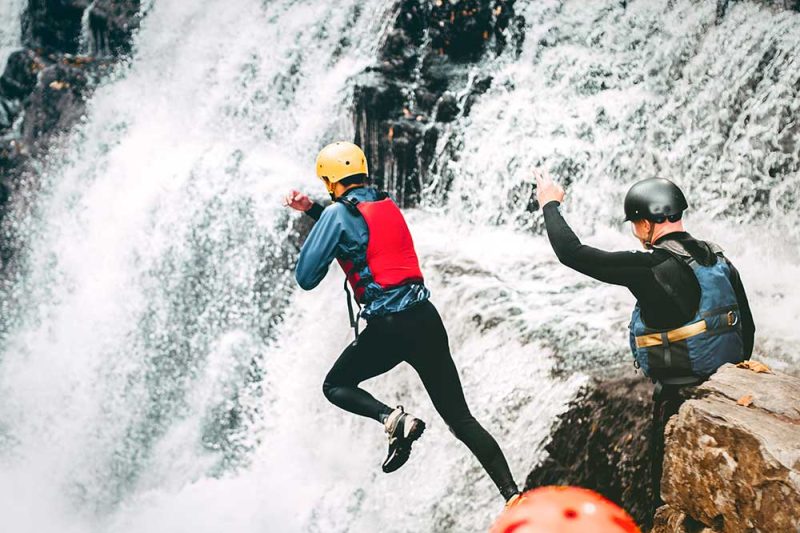
If you’re planning a farm holiday by the sea and fancy raising your adrenaline levels up between lazy days on the beach and leisurely countryside walks, why not give coasteering a go?
For thrill-seekers and nature lovers alike, coasteering offers a unique way to explore coastal landscapes from an up-close perspective.
Although the individual elements of coasteering – swimming, climbing, and cliff jumping – have been practised for many years, the term itself only emerged in the 1970s. It was originally used to describe the method climbers used to access otherwise unreachable coves.
By the 1980s, coasteering began to develop into a commercial recreational activity, with its roots near St Davids in Pembrokeshire. From there, it quickly spread across the British Isles, reaching more remote areas such as the Outer Hebrides early on.
The activity has since expanded to all parts of the UK where rugged coastal terrain is found, including South West England, South Wales, the east coast of Scotland, and the Channel Islands. Today, the UK coastline is considered a global hotspot for coasteering with over 150 recognised National Coasteering Charter member providers.
One of the most appealing aspects of coasteering is its adaptability to different locations and sea conditions. A typical coasteering experience is likely to include:
Scrambling and climbing: Coasteerers navigate rocky shores, using natural footholds and handholds to make their way along the coastline, allowing a close-up view of sea caves, cliffs, and rock formations that are otherwise inaccessible.
Swimming: Participants swim through crystal-clear tidal pools and navigate narrow channels with a chance to see fish, sea anemones, coral, and other marine life up close.
Cliff jumping: Cliff jumping, a heart-pounding leap from coastal cliffs into the sea, is one of the most thrilling aspects of coasteering. Jumps vary in height, and guides help participants select levels that suit their comfort and skill.
Wildlife spotting: Coasteering along the coast offers the chance to see local wildlife, including seabirds, seals, dolphins, porpoises, and even whales, making it a fantastic activity for nature lovers.
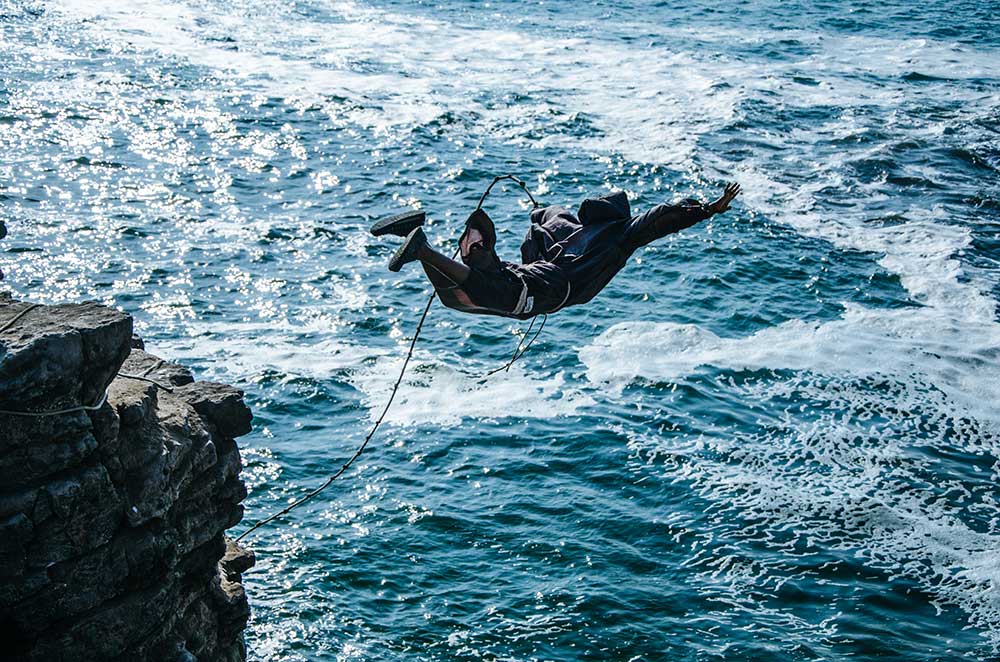
A coasteering experience will be led by experienced guides who provide equipment and ensure safety, making it accessible to both beginners and seasoned explorers who want to push their limits.
Introductory coasteering: For beginners, introductory routes focus on low-level climbs, smaller jumps, and gentle swims, providing a safe introduction to the basics.
Family-friendly coasteering: Specialised routes are available for families with children, focusing on fun activities and wildlife spotting rather than the more intense jumps or climbs.
Advanced Coasteering: For adrenaline junkies, advanced coasteering routes will include taller cliffs, more challenging swims, and difficult scrambles, requiring a higher level of fitness and confidence.
As well as offering an amazing adventure, coasteering has a range of physical, mental, and environmental benefits:
Physical fitness: Coasteering provides an intense full-body workout, improving strength, flexibility, and endurance.
Mental resilience: Coasteering activities challenge participants to push their boundaries and face new experiences. For many, building confidence in the marine environment translates into greater resilience in everyday life.
Environmental awareness: Coasteering highlights the beauty and fragility of coastal ecosystems. Many coasteering guides share knowledge about local wildlife, geology, and the impact of pollution, encouraging environmental stewardship. Choose a certified, eco-conscious coasteering company to ensure your adventure is both thrilling and environmentally responsible.
Coasteering is available all year round, although the best time is usually from late spring to early autumn, when water temperatures are warmer, and sea conditions are more predictable.
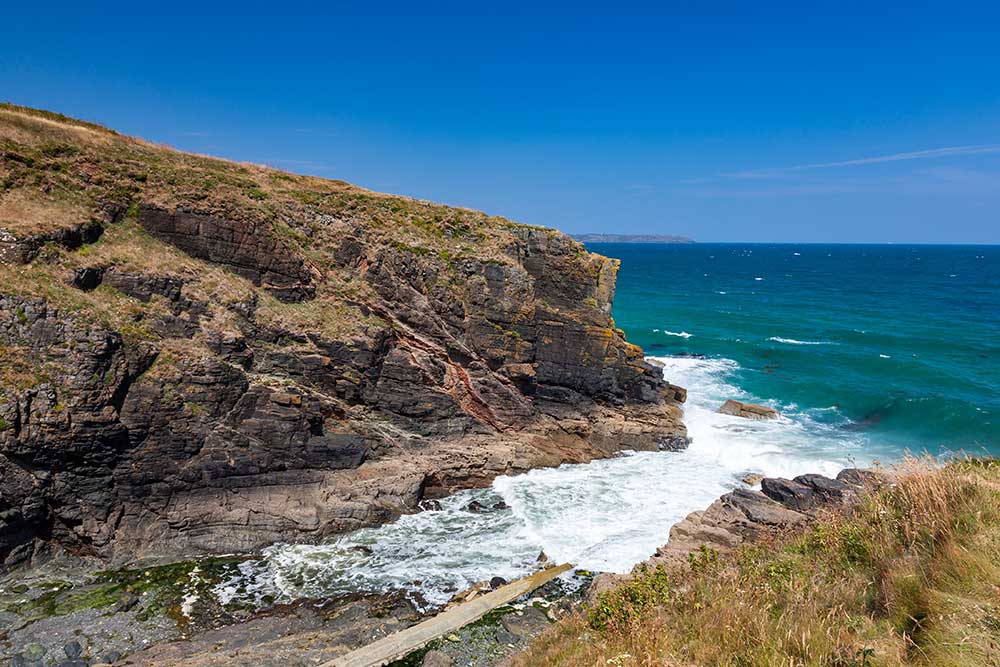
Winter coasteering is also possible in some locations, but it requires additional equipment, like thicker wetsuits, gloves, and hoods, to withstand colder conditions. Off-season coasteering can offer a unique, quieter experience, but always check with a local guide as tides and currents can be more challenging in winter months.
Britain’s coastline provides plenty of opportunities for coasteering. Some of the top spots include:
Pembrokeshire: Known as the birthplace of coasteering, Pembrokeshire offers an iconic coasteering experience with its dramatic cliffs, natural rock pools, and plentiful wildlife.
Cornwall: Cornwall’s stunning cliffs and turquoise waters make it a popular destination for coasteering. Areas like Newquay and The Lizard Peninsula offer participants the chance to discover unique rock formations and sea caves.
Isle of Skye: Known for its raw, wild beauty, the Isle of Skye’s coastal features are perfect for coasteering. The jagged cliffs, secluded beaches, and swooping seabirds provide a scenic, challenging adventure.
North Devon: With steep cliffs and crashing waves, North Devon offers a thrilling coasteering environment. The coastline includes plenty of deep sea caves, rocky ledges, and secluded beaches to explore.
Cumbria: The cliffs from St Bees to Fleswick offer a fantastic coasteering experience but the route is not for the faint-hearted. With opportunities for bouldering, cliff jumping, and cave exploring, coasteering in Cumbria is challenging more suited to those with experience.
When you book a coasteering session, most companies provide essential equipment, including wetsuits, helmets, and buoyancy aids. You’ll also need:
Footwear: Sturdy water shoes or old trainers with good grip are essential for climbing on slippery rocks. Wetsuit socks will protect your ankles and keep your feet warm and dry.
Swimwear: Wear swimwear under your wetsuit for added comfort and mobility.
Shorts: Wearing a pair of shorts over your wetsuit can help protect it from damage caused by barnacles, sharp rocks, and other rough or jagged surfaces that might otherwise tear or snag the fabric.
Waterproof bag: Pack a bag with essentials such as sunscreen, your phone, a torch, and a small first aid kit.
Extra Layers: The coastal environment can be chilly, so bring a towel, warm clothes, and extra layers for after your session.
GoPro: Strap a GoPro to your helmet to capture your coasteering adventure from a first-person perspective.
Safety is a top priority in coasteering, and experienced guides ensure that each participant understands the necessary techniques before getting started.
Work as a team: Always coasteer with a certified guide who understands the tides, currents, and safe jumping locations. Stay close to your group, communicate clearly, and keep an eye out for each other.
Check weather bonditions: Coastal conditions can change quickly, so be ready to reschedule if the weather turns unfavourable. Swells and tides can make exiting the water more challenging than anticipated, so always plan ahead and identify safe exit points in advance, ensuring you know where you can get out quickly if needed.
Fitness level: Coasteering is a physical activity, so a moderate level of fitness is helpful. However, routes are adaptable, and guides often cater to a range of abilities.
Be prepared to get wet: Coasteering is a fully immersive experience, so embrace the water and enjoy the ride.
Trust your guide: Guides are there to keep you safe and make the experience enjoyable, so follow their instructions, especially when it comes to jumps and climbs.
Start small: If you’re nervous about cliff jumping, start with lower jumps to build confidence before attempting anything higher.
Have fun! If you’re new to coasteering, it’s perfectly normal to feel a bit nervous. Just come prepared, listen to your guide, and you’re sure to have an amazing time.