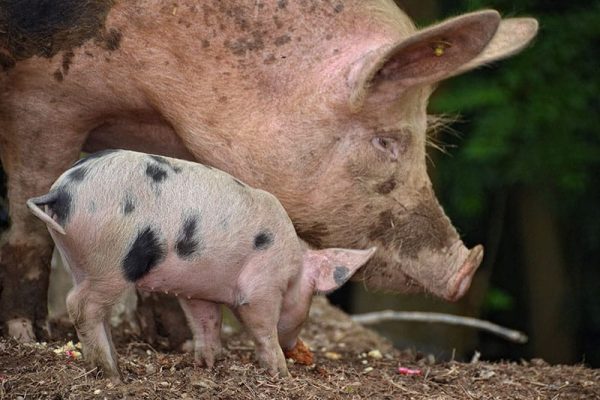
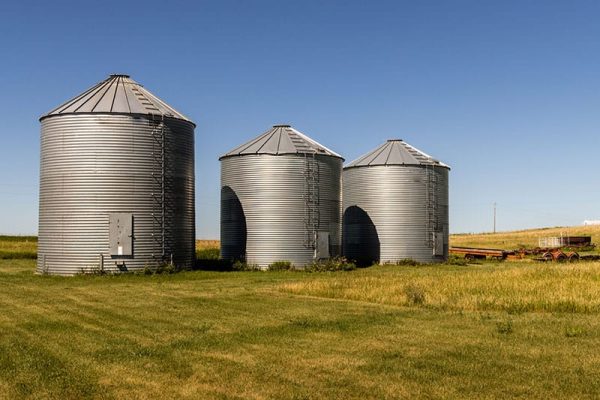
A farm stay is an excellent choice for a family holiday, with the chance for children to spend plenty of time outdoors, experience the freedom of the countryside, eat fresh food, and meet friendly animals.
Of course you can expect mud, early mornings, and constant requests to feed the chickens, but what may catch parents off guard is the tricky questions.
A farm brings children face to face with things they don’t normally see, such as food production, reproduction, and sometimes illness, injury, and death, and it’s very likely that they will have questions, sometimes asked just at the most awkward moment.
Most of the time, the best answer is to tell the truth in a way that is appropriate for their age.
This is a very common question that children ask on a farm, and may be asked more directly than adults expect.
If they’re looking at beef cattle, the honest answer is yes. If you’re not sure what type of cattle they are, it’s fine to say so rather than guessing.
For younger children, keep it simple:
“Some cows are kept for milk and some are kept for food, but farmers look after all of them while they’re on the farm.”
You don’t need to apologise for the answer or rush past it, and children usually accept this information more matter-of-factly than might be anticipated.
Older children may ask follow-up questions, such as whether the animals know or whether they are sad. They may also question whether they want to continue eating meat themselves.
When answering, the aim isn’t to persuade your child one way or another, or turn the conversation into a moral argument, but to answer honestly and leave space for them to think through it themselves if they need to.
This is a thoughtful question, and it deserves a clear, honest answer.
Cattle don’t have the kind of abstract self-awareness that would allow them to understand their future in the way humans do. They experience what is happening in the present moment like comfort, hunger, safety, or discomfort, but they don’t think ahead about what might happen later.
You might say:
“The cow doesn’t know what’s going to happen. She just knows what life is like right now with lots of grass to eat, space to move, and the other cows around her. That’s her world.”
This is both accurate and reassuring without being evasive, and it answers the question children are really asking about awareness and understanding.
If the piglets have simply moved to another pen, it’s best to say so. If they’ve left the farm, be honest that pigs raised for meat leave when they are grown enough, but keep the explanation age-appropriate.
You don’t need to go into detail. For most younger children, it’s enough to say:
“They’ve gone to become food.”
For older children who want a clearer explanation, you might add:
“They were taken to an abattoir, where they will be processed into pork.”
As always, the key is to match the level of detail to your child’s curiosity, answering honestly without giving more information than they’re ready for.
This question is usually less about chickens and more about fairness, with children assuming that because they would feel upset if something important was taken from them, hens must feel the same way.
Hens lay eggs as an instinct, but they do not form emotional attachments to them, unless they are “broody”, an intense biological urge to sit on eggs to hatch them.
A simple answer is:
“The hens lay eggs anyway. The farmer collects them, but it doesn’t hurt the hens and they don’t miss the eggs in the same way people might.”
If your child has just collected eggs themselves, it can help to refer back to that experience. You might ask what they noticed – did the hen seem upset, or did she try to stop them? Most children will already have observed that nothing distressing happens.
The bigger lesson here is that animals don’t always think about things in the same way people do, and a farm stay gives children plenty of opportunities to explore that difference.
Children are trying to work out whether an egg is more like food or more like a baby animal. If they’ve recently seen chicks, incubators, or hens sitting on nests, the distinction can be confusing.
The simple answer is that most eggs collected for eating were never going to become chicks.
You might say:
“No. This egg was never going to turn into a chick. It’s an egg for eating.”
If your child wants more detail, you can explain that a chick only grows in certain eggs and is then kept warm under a hen or in an incubator. Eggs collected for breakfast don’t go through that process.
Many children find this reassuring because it answers the question they’re really asking which is whether the egg on their plate might have been a baby chick, and once they understand the difference, they’re usually happy to move on.
This is one of the more difficult questions.
In some cases, the answer is yes. A cow separated from her calf can become distressed, and farmers who work with dairy cattle are very aware of this. In other situations, separation is managed in ways that aim to reduce stress for both the mother and the young animal.
An honest, simple way to explain it is:
“Sometimes they do for a while, but farmers try to look after the animals as carefully as they can. It’s one of the harder parts of farming.”
Children can usually understand that farming sometimes involves difficult decisions, and that farmers care about the animals even when those decisions are necessary, without it taking away from the experience of the farm as a whole.
Few questions arrive more suddenly than this one. The important thing is not to panic. Your child’s question is entirely reasonable, as they’ve seen something unusual and want to know what’s happening.
For younger children, a simple answer is enough:
“The bull and the cow are making a baby calf together.”
Most young children accept this and move on.
Older children may want more detail. If they ask how the calf is made, you can explain a little more, but if they don’t, there’s no need to launch into a full biology lesson. Follow their lead and answer the question they’ve actually asked.
You tone matters more than the content. If you respond calmly, your child is likely to treat it as an interesting fact about farm animals. If you act embarrassed or try to change the subject, they’ll quickly conclude that they’ve stumbled onto a forbidden topic.
A working farm can be a useful place to talk about reproduction because the process is visible, natural, and presented without fuss.
This is something that usually happens during lambing season, when a farmer needs to help a ewe deliver a lamb that isn’t positioned correctly. To a child watching from a gate, it can be one of the more startling sights on the farm and if they don’t understand what’s happening, they may think the farmer is hurting the animal.
The honest explanation is:
“The lamb inside the ewe isn’t coming out the right way, so the farmer is helping. Farmers do this to keep both the ewe and the lamb safe.”
If your child seems upset, it’s best to move away. If they’re curious or interested, it’s fine to let them watch and you can reassure them afterwards that it was done carefully with the animal’s welfare in mind.
Farms naturally have strong smells because there are lots of animals living in one place, and because waste and feed are part of everyday farm life.
Some of it comes from silage, fermented grass that’s stored for winter feed, which has a very strong, sour smell that can carry quite far. Slurry, which is liquid manure used as fertiliser, can also be quite pungent.
All of this is simply part of how a working farm runs. It’s not something wrong, just something different from what most children are used to.
You might say:
“That’s the smell of a working farm from animals, dirt, and poo all mixed together.”
Most children are curious rather than bothered, and once they understand where it’s coming from, it becomes much less strange.
However, you choose to answer your child’s questions, a few themes are consistent.
Children who receive straightforward answers tend to build a healthier, more confident understanding of the world than those who are met with avoidance. A farm is a particularly good place for this, because it naturally raises real questions with real answers.
A calm, straight forward response to a difficult question will shape how your child receives it. If you treat the question as interesting rather than alarming, they are likely to do the same.
“I don’t know, let’s ask the farmer”, is one of the most useful phrases when visiting a farm. Farmers are usually happy to talk to curious children, and hearing the answer from someone with direct experience is often more valuable than a guess.
If something is complex, it’s perfectly fine to say, “That’s a really good question, let me think about it.” Many of the best conversations happen later, when there’s space to reflect, such as around the dinner table or on the journey home.
Children’s questions arise naturally from what they see around them such as food, animals, birth, death, and the rhythms of rural life. A farm makes these things visible in a way everyday life doesn’t, so you don’t need to force the conversation, but just be ready to have it if it comes.