If you’re a nature enthusiast, a holiday on a working farm is an excellent choice, with easy access to the countryside and the chance to spot its diverse flora and fauna.
But you don’t need to venture far, as the farm itself is often home to a rich variety of birds, animals, insects, and plants, if you know where to look.
Farm buildings provide valuable habitats for various species of wildlife, offering shelter, nesting and roosting sites, as well as sources of food.
Old stone buildings with wooden beams and tiled roofs, are especially important, with features that mimic natural habitats, such as cavities in tree, that have become increasingly scarce due to changes in agricultural practices, climate change and urbanisation.
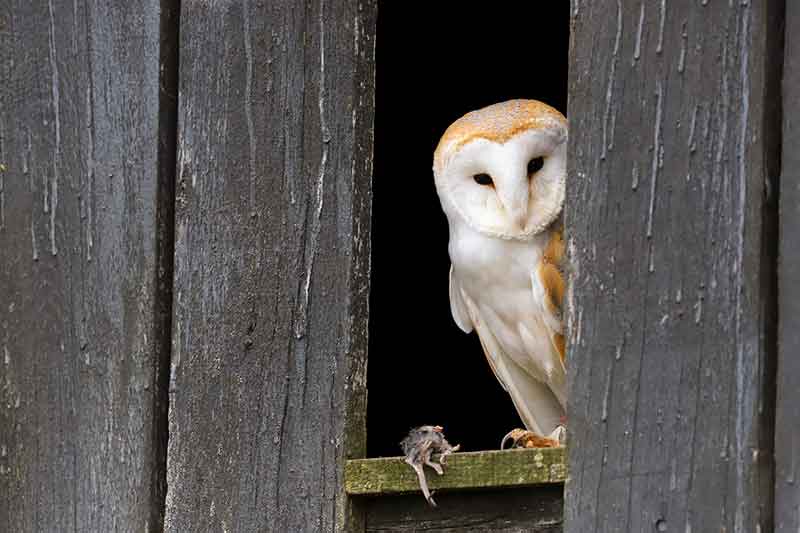
Barn owls have lived alongside farmers for thousands of years, with farms the ideal terrain for its low, gliding hunting style. As nocturnal birds, they rely on barns for safe, dark places to sleep during the day, while benefiting from easy access to prey, helping control mice and rat populations. The best time to spot a barn owl is at dusk, as it emerges from the barn to hunt over open countryside.
Swallows arrive in Britain from their wintering grounds in Africa in early spring and depart again in late summer. They are rarely seen in towns, preferring open fields near water where insects are abundant, helping farmers by keeping pest numbers down. They depend on man-made structures for nesting, building their cup-shaped nests on sturdy vertical surfaces such as rafters, making barns an ideal home. Look out for nests tucked high under the eaves, but take care not to disturb them.
Bats commonly use barns as roosts, relying on them for shelter, breeding, and hibernation. In summer, female bats form maternity colonies, gathering in warm, safe spaces to give birth and raise their young. They are highly sensitive to disturbance, and disruption can cause a mother to abandon her pups, so if you think you’ve come across a maternity roost, leave well alone.
In winter, bats retreat into crevices, roof spaces, and mortice joints, making them very difficult to spot. To tell if a barn is home to bats, look for their crumbly droppings and listen for high-pitched chattering at dusk.
Farmland supports a wide variety of wildlife, offering food, shelter, and protection from predators, and over millennia, many species have moved into these landscapes from their traditional habitats such as woodland and heathland.
However, over the past century, increasingly intensive farming practices, the widespread use of pesticides, and insufficient regulation have made farmland less suitable for wildlife, leading to significant declines in many species. In response, conservation organisations have begun working closely with farmers to promote better land management, with many now adopting more nature-friendly approaches.
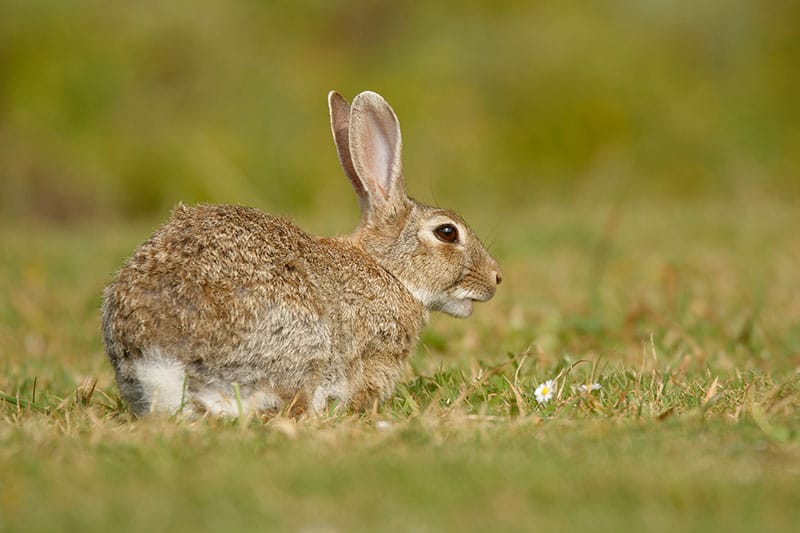
Introduced by the Normans, rabbits are a familiar sight in the countryside, seen hopping through long grass with their fluffy white tails bobbing behind them, but their prolific breeding means they are widely regarded as pests. They can cause significant damage to arable crops and forestry through grazing and burrowing, and compete with livestock on pasture, reducing yields. As a result, in much of England and Wales, landowners have a legal duty to control wild rabbit populations and prevent the damage they cause.
Of the six species of deer found in Britain, only the red deer and roe deer are native. On some farms, deer are reared commercially for venison, with high fencing used to prevent them from escaping. Wild deer also frequently venture onto farmland in search of easy food, but they can cause significant damage to crops, with culling necessary to protect the land. If you’re hoping to spot a wild deer on a farm, the best times to look are at dawn and dusk, when they are most active.
Farmland provides excellent hunting grounds for birds of prey such as kestrels, buzzards, and short-eared owls. Look for them hovering overhead or perched on fence posts and treetops, scanning the ground for prey including voles, rats, mice, rabbits, small birds, and large insects.
Since gaining legal protection in the 1950s, many birds of prey have expanded their range, and today, farmers and landowners increasingly work in partnership with conservation bodies to find practical and effective ways to manage any conflicts.
Sadly, many of Britain’s ancient meadows have been lost as farming practices have intensified and towns and villages have expanded. While many of the remaining meadows are now managed by conservation charities, some farmers are also setting aside land to create new wildflower meadows, helping to restore biodiversity.
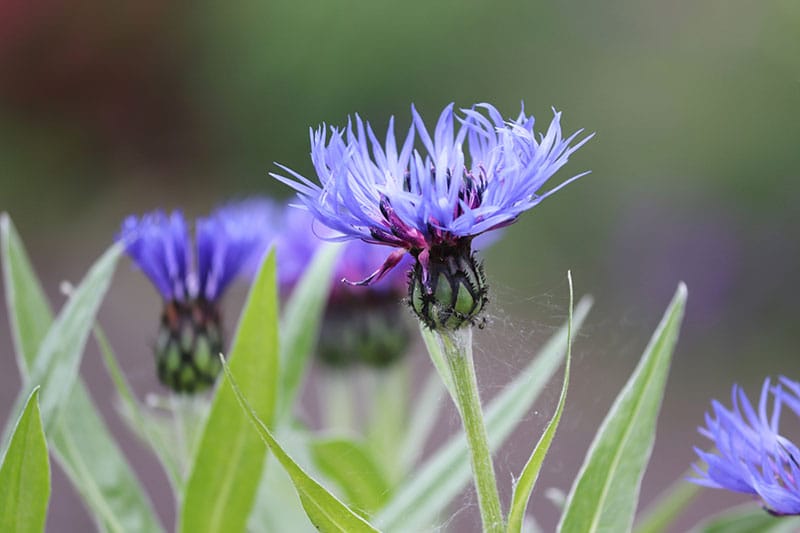
Meadows offer a range of benefits for farmers. They provide habitats for species that help control pests, support complex root systems that improve soil health and water filtration, and can also bring financial rewards through stewardship schemes.
Summer is the peak season for wildflower meadows, when they burst into colour and attract pollinators such as bees and hoverflies. Common species to look out for include ox-eye daisy, common knapweed, red clover, cowslip, bird’s-foot trefoil, meadow buttercup, wild carrot, and yarrow.
While it is sometimes acceptable to pick a small number of flowers for study or enjoyment, it is illegal to uproot any plant without permission, and you must not pick protected species or flowers in nature reserves. In general, it is best to leave wildflowers undisturbed so that everyone can enjoy them in their natural setting, and they can continue to support the wildlife that depends on them for food and shelter.
You are more likely to hear grasshoppers before you see them, as meadows come alive in summer with their distinctive chirring sound. The noise, known as stridulation, is produced by males rubbing their hind legs against comb-like structures on their forewings to attract a mate.
Grasshoppers are typically brown, olive, or green, allowing them to blend into the vegetation and making them difficult to spot. Listen for their song to help locate them in sunny patches of grass, or watch for movement as they leap from leaf to leaf.
Alongside flowers, butterflies add colour to meadows throughout the year, although they are most commonly seen on the wing during summer. Species to keep an eye out for include the large and small skippers, orange-tip, small copper, small tortoiseshell, and peacock.
Butterflies play an important role in healthy ecosystems. As long-distance pollinators, they help promote genetic variation in plants, improving their resilience and survival. Both butterflies and their caterpillars also provide an important food source for birds, bats, and other insect-eating animals.
Found throughout the countryside, bordering fields, gardens, and country lanes, hedgerows include not only the hedge itself, but also the adjoining bankings, trees, and ditches. Some are remnants of ancient woodland that was cleared for agricultural land, while others were planted to define boundaries, particularly during the Enclosure Acts of the 18th and 19th centuries, when thousands of miles of hedgerow were established.
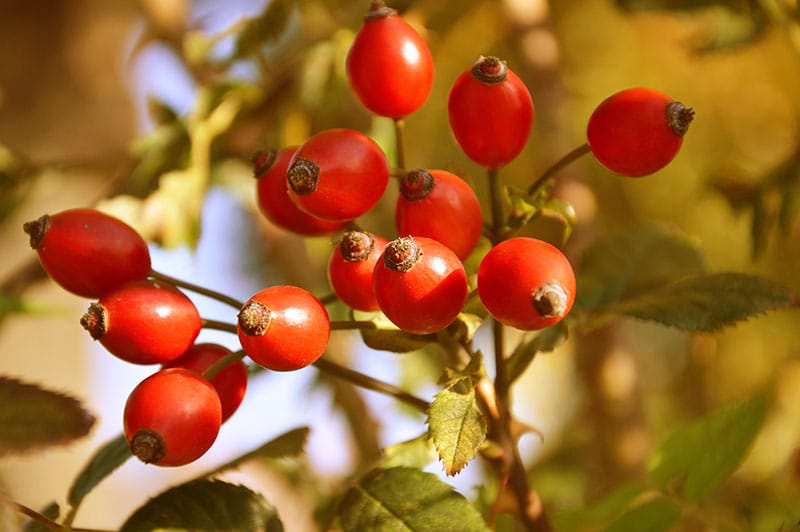
Hedgerows provide a vital habitat for pollinators and other insects, as well as birds and small mammals. They also play an important role in preventing soil erosion, managing water runoff, and storing carbon.
From late summer to early autumn, hedgerows are an excellent source of edible berries for foragers. Common finds include blackberries, sloes, elderberries, rosehips, hawthorn, wild plums, crab apples, cherries, and rowan. While some are inedible when eaten raw, they can all be cooked into jams, jellies, pies, crumbles and wines.
Take care to correctly identify any berries before picking, as some poisonous species can closely resemble edible ones. And if you plan to eat fruit straight from the bush, choose berries growing away from busy roads and avoid those low down where dogs may have fouled.