Situated on the southern edge of the scenic Mendip Hills of Somerset, Cheddar Gorge is one of Britain’s most spectacular natural landmarks. At over 400 feet deep and three miles long, it is England’s largest gorge with dramatic cliffs, extensive cave systems, weathered crags, and diverse habitats that support a variety of wildlife. Jointly owned by the National Trust and the Marquess of Bath’s Longleat Estate, it is part of a Site of Special Scientific Interest called Cheddar Complex, and attracts tourists, outdoor enthusiasts, and nature lovers alike.
The gorge began to form about 1.2 million years ago during the Pleistocene Ice Age, the most recent period of Earth’s repeated glaciations, when Britain had a warmer, more arid climate between colder phases. During the cold periods, permafrost sealed the limestone with ice and frozen mud making it impermeable. Powerful flash floods from the surrounding hills were therefore forced to flow over the surface and cut through the rock creating steep cliffs and crevices. During the warmer periods, the ice melted and water drained underground forming vast caves, leaving the gorge dry, so that today much of the gorge has no surface river until the underground River Yeo emerges in the lower part.
Cheddar Gorge is the site of the Cheddar Show Caves, where Britain’s oldest complete human skeleton, known as Cheddar Man, was discovered in 1903. Estimated to be around 9,000 years old, the find is one of the most significant archaeological discoveries in the country. It’s thought that his tribe buried him in a special area of the cave to prevent his spirit passing to the land of the ancestors. Even older human remains, dating back approximately 12,000 to 13,000 years, have also been uncovered within the cave system.
The two main caves open to the public are located on the south side of the gorge and are each named after their respective discoverers.
The larger of the two show caves was discovered and excavated in the late nineteenth century by Richard Cox Gough, a former miller and tea dealer. He was instrumental in opening the limestone caverns to the public, installing the first lighting systems, initially acetylene, later replaced by electric lighting. Census records list him as a “cavern proprietor” in 1881 and, by 1891, as a “stalactite cave explorator”.
The cave descends to a depth of 377 feet and extends for just over two miles, although only the first 2,900 feet are open to visitors with the remaining passages accessible only by river diving. Inside, cathedral-like chambers are adorned with extraordinary rock formations, including towering stalagmites and delicate stalactites. Carefully designed atmospheric lighting enhances the cave’s beauty, creating the illusion of glacial landscapes and drawing attention to some of its most remarkable features. Visitors are encouraged to look out for the famous Black Cat of Cheddar, a shadow cast by the lighting that resembles a cat wearing a bow tie.
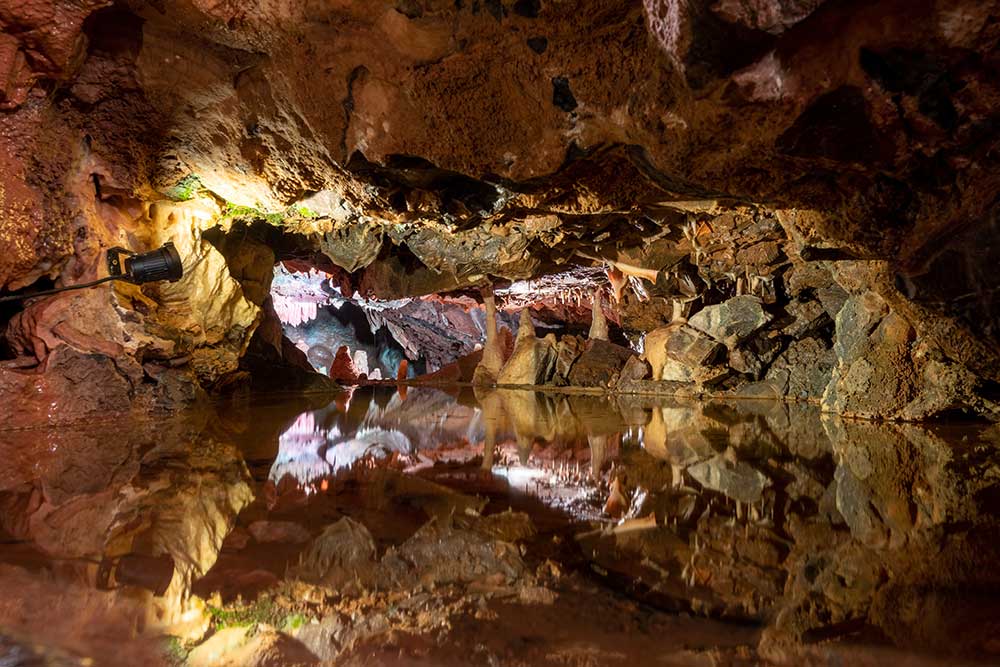
The cave maintains a constant year-round temperature of around 11°C, keeping visitors cool in summer and warm in winter. These stable conditions are also the ideal environment for maturing Cheddar cheese, and shelves of ageing cheese can be seen within the cave. An audio guide is available, offering insight into the cave’s history and geological formation.
Gough’s Cave has been a focal point of human activity since prehistoric times. Archaeological evidence suggests episodes of cannibalism, as well as skulls that may have been deliberately fashioned into ritual drinking vessels. At the Museum of Prehistory in the gorge, visitors can explore how early humans lived through a 40,000-year struggle for survival during the last Ice Age. The museum offers close-up views of flint tools and other everyday objects made by our ancestors, insight into how they defended their shelters against predators such as wolves and cave bears, and the chance to take part in hands-on activities such as cave painting.
Cox’s Cave is the older of the two show caves and was accidentally discovered in 1837 during limestone quarrying for a new wagon house for a nearby gristmill. The mill was owned by George Cox, uncle of Richard Gough, and the discovery was made when a crowbar was dropped into a hole at the top of the cliff. A shrewd businessman, Cox immediately recognised the cave’s potential and opened it to the public as a show cave, running it as a private enterprise until the beginning of the twentieth century, when it was taken over by Thomas Thynne, the 5th Marquess of Bath.
The cave comprises seven small grottos connected by low archways. One of its most striking features is an area known as the Home of the Rainbow, where mineral traces carried in from the surface have coloured the stalagmites in a remarkable range of hues, from deep black, green, and orange to pure white.
Visitors can enjoy a fully immersive experience enhanced by multimedia displays that tell the story of how the cave was formed and shaped by the power of water over millions of years. A virtual guide leads guests on a journey through the chambers, with the story brought vividly to life through state-of-the-art sound, lighting, animation, and colour projections cast onto the cave walls.
For true thrill-seekers, the Adventure Caving experience offers the chance to explore deeper, lesser-known parts of the cave network. Led by a professional guide, you’ll crawl, squeeze, and climb through narrow passages and hidden chambers, discovering the stunning subterranean beauty of Cheddar Gorge as you descend up to 40 feet into the cave system. Switching on your head torch, you’ll feel as though you’ve stepped into a lost world – just be sure not to look down as you edge across the Bottomless Pit and slip headfirst through the Letterbox.
The experience requires a reasonable level of fitness and a genuine enthusiasm for underground adventure. Be aware that deep within the cave, the only light comes from the lamps on your safety helmet, and expect to get a little muddy along the way, but you’ll emerge exhilarated and justifiably proud of your achievement.
For those who enjoy the outdoors, Cheddar Gorge and the surrounding area offer a wide range of activities to suit all abilities.
One of the best ways to experience Cheddar Gorge is on foot. The Cheddar Gorge Trail is a four-mile circular route along the cliff tops, with panoramic views stretching as far as Glastonbury Tor, the Somerset Levels, and Bridgwater Bay. Along the way, the trail passes through woodland, deep valleys, open grassland, and rocky outcrops. While the route is moderately challenging, with several steep sections, the views are well worth the effort.
Cheddar Gorge is a rock climber’s paradise, with over 1,000 climbing routes ranging from beginner to advanced levels. With its high limestone cliffs, the gorge attracts climbers from across the UK looking to tackle some of the country’s best routes. Guided climbing sessions are available for those new to the sport, making it a great place to give rock climbing a try.
In addition to the Adventure Caving Experience within the show caves of Cheddar Gorge, there are plenty of other opportunities for cave diving in the surrounding Mendip Hills. Nearby Goatchurch Cavern, located on the edge of Burrington Combe, is popular with novices thanks to its easy access and range of routes, allowing visitors to choose how they go. For more experienced cavers, Swildon’s Hole offers an unforgettable adventure, with an underground river and a complex network of low passages, impressive chambers, sheer drops, and its infamous sumps.
For cyclists, the jaw-dropping Cliff Road – more prosaically known as the B3135 – cuts directly through the gorge and is a favourite challenge for mountain biking enthusiasts, with gradients reaching up to 16 per cent. As you climb the winding road, hemmed in by towering limestone cliffs, rocks gradually give way to trees as the rolling hills of the Mendips open out below. Pause at the summit to take in the sweeping views before enjoying the exhilarating descent back down through the gorge.
Just a short distance away lies Cheddar Reservoir, an artificial lake fed by water from the River Yeo. It offers a wide range of watersports, including paddleboarding, windsurfing, sailing, and kayaking, as well as angling for species such as pike, tench, roach, perch, and eels. The reservoir is also a popular destination for birdwatchers, who visit to observe its resident waterbirds and the occasional rare vagrants that make an appearance.
Cheddar Gorge is a haven for wildlife with the temperate climate and ecology within the gorge and its surrounding habitats providing ideal conditions for a variety of flora and fauna.
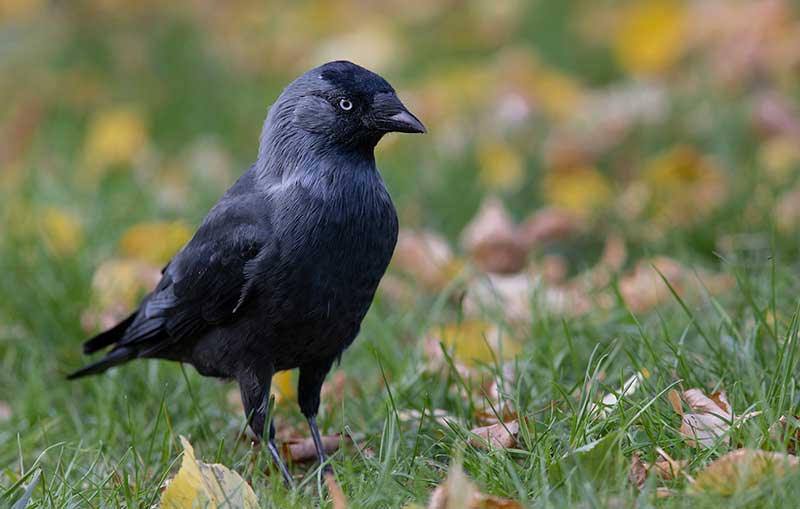
The gorge’s cliffs are perfect nesting sites for peregrine falcons, kestrels, and buzzards, which can often be seen soaring above the valley. Listen out too for noisy jackdaws and ravens, and don’t forget your binoculars for a chance to view them all up close.
Herds of feral goats, introduced to the gorge to manage vegetation, are a common sight on the steep cliffs. With their surefootedness, they navigate the rocky terrain with ease and are often seen grazing along the paths.
The gorge is an important habitat for whitebeams, including the endangerd Cheddar whitebeam which is endemic to the gorge. The gorge also supports a range of wildflowers, such as the navelwort, common broomrape, common rock-rose, and the rare Cheddar pink, a delicate flower that blooms in summer
The sheltered valley and diverse plant life make Cheddar Gorge an excellent place for butterfly and insect spotting. Look out for species like the rare large blue butterfly and the small pearl-bordered fritillary, as well as several species of grasshopper which are drawn to the limestone-rich environment. Keep your eyes peeled for a variety of reptiles, including adders, common lizards, slow worms, and grass snakes, all of which can often be seen basking on the sun-warmed rocks.