For most people, the word “cow” is used to describe all domestic bovines. However, in precise usage, a cow is a mature female that has given birth at least once, and the term is also used for adult females of other species, including elephants, sea lions, and whales. In cattle production, there are several specific terms used to describe animals according to their age, sex, and purpose.
If you are planning to stay on a farm with cattle, it is useful to understand these distinctions. Doing so will help you identify the different types of animals you may encounter and know whether you are likely to see a newborn calf.
A calf is the term used to describe a young bovine from birth until weaning. They are born after a gestation period of approximately nine months, and can usually stand within minutes of birth and begin suckling within the first hour of life. During their first few days, calves are unable to keep pace with the rest of the herd, so their mothers often leave them hidden in a safe place and return several times a day to feed them.
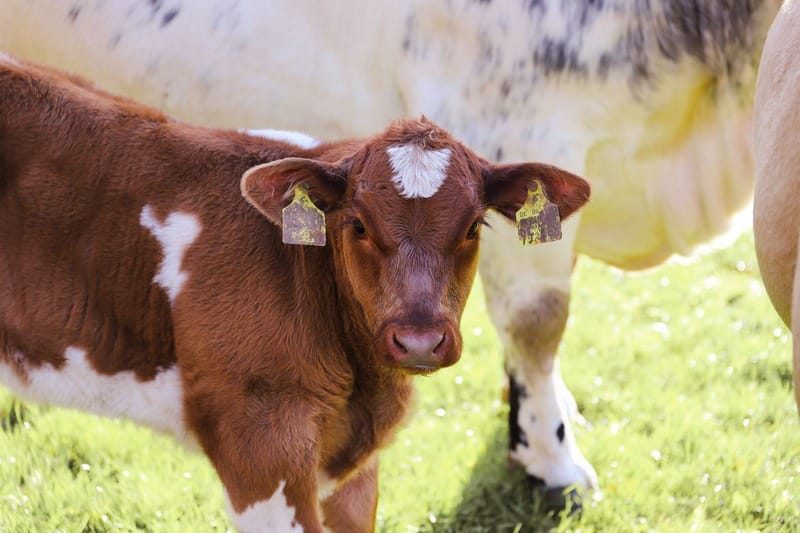
In the UK, famers must attach an ear tag to dairy calves within 36 hours of birth as a legal requirement for traceability and disease control. A second tag must be fitted within 21 days. For beef calves, both ear tags must be fitted within 21 days of birth. Each tag displays the country code, herd mark, and a unique six-digit identification number. The official ear tag number remains with the animal for its entire life.
A weaner is a calf that has transitioned from a liquid diet to solid food. Most dairy calves are separated from their mothers shortly after birth so that the cow’s milk can be collected for human consumption. They are fed a milk replacer and gradually introduced to forage and concentrates. From around five weeks of age, the milk ration is reduced as their digestive systems develop the ability to process roughage and grains. By approximately 12 weeks of age, a dairy calf is usually fully weaned.
Beef calves are generally weaned between five and ten months of age, although eight to nine months is most common. Keeping calves on their mother’s milk for longer helps maximise growth rates before they enter the beef production system. However, if forage is limited, calves may be weaned earlier, to reduce the nutritional demands on the cow, helping her maintain body condition and recover in preparation for her next calving.
Once a bovine reaches one year of age, it is known as a yearling, a stage between a calf and a fully mature adult. By this age, they will be feeding entirely on grass, forage, or other solid feeds and are experiencing a period of rapid growth. Depending on breed and management system, they can gain between 0.8 kg and 1.2 kg per day.
To support healthy development, yearlings are included in a preventative health programme that includes worming, parasite control, and vaccinations, to help ensure they remain healthy and continue to grow into productive adult cattle.
A heifer is a young female bovine that has not yet given birth to a calf. Several terms are used to describe the different stages of a heifer’s development. A heifer calf is a female from birth until around one year of age. Once she becomes pregnant for the first time, she is known as a bred heifer. In the final few weeks before calving, she is referred to as a springing heifer.
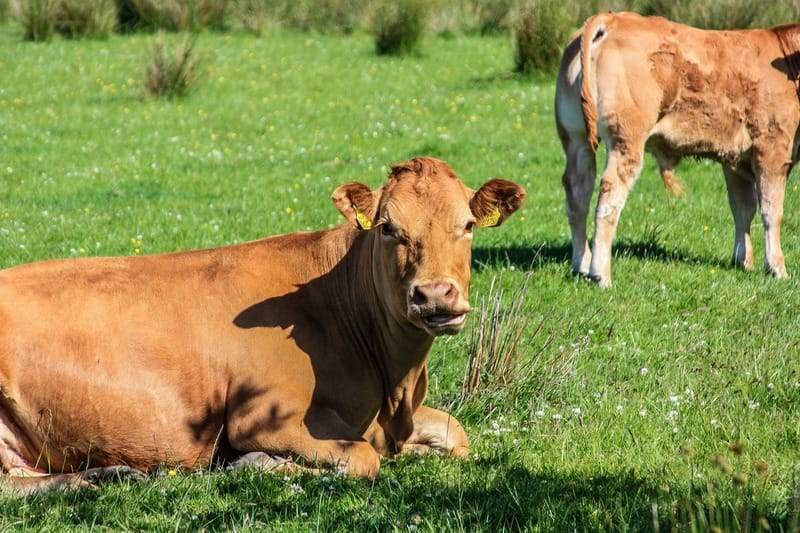
A replacement heifer is a young female specifically reared to join the herd and replace older or less productive cows. They are selected for desirable traits such as good genetics, sound health, fertility, and milk-producing potential, helping to maintain or improve overall herd performance.
Heifers that are not retained as replacements may be raised for beef production or sold as breeding stock to other farms.
Once a female bovine has given birth to her first calf, she is known as a cow. For both dairy and beef herds, the optimum age for first calving is between 23 and 25 months, as this helps reduce rearing costs while maximising lifetime productivity. In the UK, however, the average age at first calving is still a few months higher.
To achieve first calving at around two years of age, heifers must be bred (or serviced) at 14 to 15 months old. At the time of breeding, they should have reached approximately 60% of their expected mature body weight and continue growing to reach around 90% by the time they calve.
A suckler cow is a cow whose primary role is to rear her own calf for beef production. Suckler cows breed and calve once a year, raising their calves until weaning. Because the bond between cow and calf is strong, separation can be stressful for both animals, making careful management essential to minimise welfare and health risks.
One common weaning method is fence-line weaning, where cows and calves are placed in adjacent fields separated by a secure fence, which allows them to see, smell, and interact with one another while preventing suckling. After a period of gradual adjustment, they are moved to separate pastures.
Some farmers also use cow-calf dairy systems, where dairy cows are not separated from their calves shortly after birth. Instead, calves remain with their mothers and nurse naturally for several months while the cows continue to produce milk for human consumption. In these systems, cows are milked once a day rather than twice, leaving additional milk available for the calf. The system relies on crossbred cattle that combine good milk production with desirable beef characteristics, helping calves achieve strong growth rates while maintaining dairy output.
A bullock is a castrated male bovine, primarily reared for beef production and, in rare cases, trained as a draught animal to perform heavy work such as pulling loads.
Compared with entire bulls, bullocks are easier and safer to handle because they are less aggressive and there is no risk of unwanted breeding. Castration can also improve meat quality, as bullocks are less susceptible to stress, which can result in dark-cutting beef and affect fat distribution within the carcass.
Most male calves are castrated before three months of age using a variety of approved methods. These include the application of a rubber ring to restrict the blood supply to the testes or the use of a clamp to crush the spermatic cords. After two months of age, calves may only be castrated by a veterinary surgeon using anaesthesia.
In the UK, the terms “bullock” and “steer” are used interchangeably.
A bull is an intact male bovine kept for breeding purposes. Bulls are selected for desirable traits using genetic data, visual appraisal, and veterinary assessments to identify animals that are healthy, fertile, structurally sound, and capable of passing on valuable characteristics to their offspring. Modern breeding technologies allow farmers to predict traits such as calf birth weight, and growth rates, as well as maternal traits like milk production, fertility, and calving ease, helping them select bulls that will improve the performance of future generations.
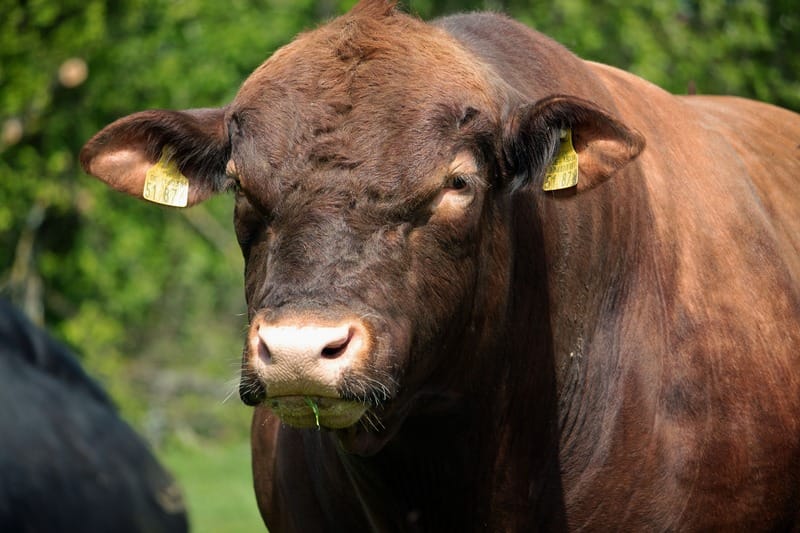
In the UK, the general guideline is one bull for every 25 to 35 cows. However, the ideal ratio depends on the bull’s age and the type of herd. Young bulls may be limited to 15 to 20 cows during a breeding season, while mature bulls can successfully serve up to 35 cows. Heifers require closer supervision and a lower bull-to-female ratio, with one bull for every 15 to 20 heifers recommended.
Most farmers do not rely on a single bull to serve an entire herd. Keeping more than one bull provides a safeguard against fertility problems and helps reduce the risk of cows remaining empty. Bulls are typically run with the herd for a service period of nine to twelve weeks.
Farmers who use artificial insemination (AI) may also employ sweeper bulls that are introduced after the AI programme to mate with cows that have failed to conceive. Because they are breeding the least fertile animals in the herd, sweeper bulls must have excellent fertility.
An ox is an adult male bovine that has been castrated and trained to perform heavy agricultural work, such as pulling ploughs, carts, and other heavy farm equipment. For centuries, oxen were an essential source of power on farms, but during the 19th and early 20th centuries they were largely replaced, first by horses and later by tractors. Today, working oxen are rarely used in commercial agriculture, although they can still be seen at heritage farms, rare-breed centres, and agricultural demonstrations.
Oxtail is the culinary name for the tail of cattle. While the term originally referred specifically to the tail of an ox, it is now also used to describe the tails of other cattle.
Dam is the term used for the mother of a calf. It is used in breeding records and pedigree registration systems to identify the biological mother and distinguish her from other females within the herd.
Sire is the term used for the father of a calf.
A freemartin is a sterile female calf that is born as a twin to a male calf. Although she appears female externally, her reproductive system is underdeveloped due to hormonal and cellular exchange in the womb.
When a cow carries mixed-sex twins, the placentas often fuse, allowing the calves’ blood supplies to mix. As a result, male hormones and cells from the bull calf can pass to the female twin and disrupt normal development of her reproductive organs. The female calf becomes a chimera, meaning she carries both male (XY) and female (XX) chromosomes in her cells.
Around 90–95% of heifers born as twin to a bull calf are freemartins. Farmers and veterinarians routinely test for the condition so that time and resources are not spent raising an animal that will not produce milk or calves.