A farm stay is very different from a hotel and, in some ways, different from a traditional holiday cottage too. As a guest, you’re staying on a working property where daily life revolves around the land, the animals, and the people who care for them. The farmer is not only your host but also the person responsible for keeping everything running smoothly.
Understanding a few simple points of farm etiquette can make a real difference, helping to ensure an enjoyable experience for you, making life easier for your hosts, and maintaining the warm welcome that future guests will receive.
Most of the guidelines are simply common sense, but there are a few considerations specific to farm holidays that are useful to know before you arrive.
Arriving and settling in
Arrive at the agreed time
On a farm, the accommodation may be prepared between guests by the farmer or a small team rather than a dedicated housekeeping service. Arriving before the agreed check-in time can mean the property is still being cleaned or prepared, and during busy periods even a short delay can disrupt a carefully planned schedule.
If your travel plans change and you’re likely to arrive later than expected, it’s courteous to let the farmer know. They may be waiting to welcome you, hand over keys, or show you around the property before returning to their other duties on the farm.
Read the welcome information
Most farm stays provide a welcome pack or information folder containing details specific to the property, such as how the heating system works, how to operate gates, what to do if the hot water runs out, and other practical information you may need during your stay.
On a farm, these instructions are more important than they would be in a standard holiday cottage. Farm properties may use older or less conventional systems, and they often rely on guests following a few simple procedures to keep everything running smoothly. Take a few minutes to read the information when you arrive rather than waiting until you encounter a problem.
Introduce yourself to your host
While it’s not essential, taking a moment to introduce yourself is well worth it. A simple hello when you arrive at the farmhouse door or across the yard, will set a friendly tone for the rest of your stay.
Farmers who welcome guests are usually genuinely interested in where visitors have come from and what they plan to see and do. Making that initial connection also makes it easier to ask questions later, whether you need local advice or help with something on the property.
A conversation that begins with a quick introduction may lead to recommendations for a scenic walk, a good farm shop, or a favourite local pub that doesn’t appear in the guidebooks.
The farmyard and farm buildings
Respect restricted areas
On a working farm, some areas will not be accessible to guests, such as livestock buildings, feed stores, machinery sheds, workshops, or chemical storage areas.
These spaces are not off limits out of awkwardness, but are active workplaces with real safety risks. Heavy machinery, animals, vehicles, and agricultural chemicals all require careful management, and access is often limited for good reason.
Pay attention to any signs, gates, or instructions that indicate where guests are welcome. If you’re ever unsure about where the guest areas begin and end, just ask.
Don’t touch or move farm equipment
Farm machinery, tools, and vehicles are not decorative features, but are essential pieces of working equipment. Items may be left in a particular place for a specific reason, and moving them, even with the best intentions, can create inconvenience or disrupt farm operations.
For your own safety, do not climb on, inspect, or handle machinery unless you have been invited to do so.
If something is blocking your path or appears out of place, resist the temptation to move it yourself. Instead, speak to the farmer, who will be able to explain the situation or deal with it safely.
Keep noise to a minimum
Sound travels surprisingly far in the countryside, and often much further than it would in a town or city. A conversation on the patio late in the evening can carry across fields and farmyards, especially on a still night, and it’s easy for voices to become louder than intended after a glass of wine or two.
Remember that farmers start work early in the morning and may be trying to get some rest after a long day. Be particularly considerate if the farmhouse is nearby or if there are other guests staying on the property. Keeping noise to a reasonable level, especially late in the evening, helps ensure that everyone can enjoy a peaceful stay.
Gates – the most important rule on a farm
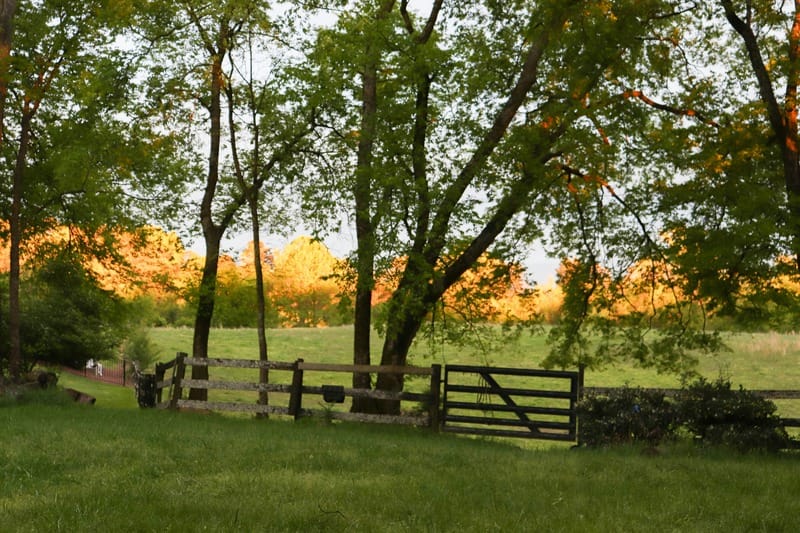
If there is one piece of farm etiquette that matters above all others, it is this: leave every gate exactly as you found it. If a gate was closed when you arrived, close it behind you. If it was open, leave it open.

The rule is simple, but its importance cannot be overstated.
Livestock can move through an open gate in a matter of minutes. A cow that wanders into the wrong field may take hours to locate and return. Sheep that escape onto a road can create a serious hazard for motorists. Animals that end up in the wrong place can pose risks to other livestock, property, or people, and the cause is usually nothing more than a gate left open for a few moments by someone passing through
The problem is that farmers may not realise a gate has been left in the wrong position straight away, and by the time it is discovered, the animals may be far from where they should be.
If you’re ever unsure whether a gate should be open or closed, or if you’re unfamiliar with a latch system, don’t guess. Ask the farmer. They will always be happier to spend a minute explaining a gate than several hours searching for escaped livestock.
Keep dogs under control
Farm stays can be wonderful places to visit with a dog, but if you’re bringing one along, make sure you also bring a lead, and use it whenever you’re near livestock. This is one rule that should never be taken lightly.
Even a friendly, well-behaved dog can cause serious harm by chasing livestock. Sheep that are stressed or frightened may miscarry, suffer injuries, or even die from exhaustion or shock. Poultry can be scattered and become vulnerable to predators or fail to return safely to their roosts. In some cases, the effects are not immediately obvious, and a farmer may not discover the consequences until days later.
For this reason, worrying livestock is treated very seriously. Under the Animals Act 1971, dog owners may be liable for any damage caused, and as a last resort a farmer is legally entitled to shoot a dog that is chasing or attacking livestock. While this is a situation everyone would prefer to avoid, it highlights the importance of keeping dogs under control at all times.
Whenever livestock are present, or may be present, keep your dog on a lead. If you’re walking along a public footpath that crosses farmland, put the lead on before entering the field, not after you’ve looked around and decided there are no animals nearby. It’s a simple precaution that protects you, your dog, the livestock, and the farmer’s livelihood.
Outdoor fires
Take fire safety seriously
Fire can be one of the greatest risks on a working farm. In dry conditions, a small flame or stray spark can spread rapidly through grass, hedgerows, or stored crops, turning into a serious incident within minutes. Even when conditions are damp, a fire that gets out of control on agricultural land can cause extensive damage.
For that reason, never light a bonfire, fire pit, barbecue, or any other outdoor fire without first checking with the farmer, even if a fire pit or designated outdoor area is provided. Conditions can vary from day to day, and what appears safe may not be.
The farmer will be able to advise whether it’s appropriate to have a fire, where it can be done safely, and what precautions should be taken. A quick conversation beforehand can prevent a potentially serious problem later.
Disposable barbecues
A disposable barbecue placed directly on dry grass can ignite a fire even after it appears to have gone out. If you are using one, always raise it off the ground, keep it well away from dry vegetation, and ensure it is fully extinguished with plenty of water before disposal.
If your farm stay has not provided barbecue facilities and you are considering bringing a disposable barbecue instead, always check with the farmer first. Conditions on farmland can change quickly, and they will be able to advise on whether it is safe and appropriate to use one.
Fireworks
Farm animals are easily startled by sudden loud noises, and fireworks in particular can cause significant distress and injury. Animals may panic, run into fencing or each other, or suffer stress-related complications such as miscarriages.
For this reason, fireworks must never be used on or near a farm without the farmer’s explicit permission. What might feel like a harmless celebration can have serious consequences for livestock and farm operations.
Sky lanterns should also be avoided. They are banned or restricted in many parts of the UK due to the severe fire risk they pose. The open flame can ignite crops, hedgerows, thatched roofs, and dry countryside, while the wire frames can cause fatal injury to livestock if ingested or if animals become entangled.
If you are planning to mark an occasion during your stay, always speak to the farmer first. They will be able to advise whether fireworks are safe and appropriate, or suggest alternatives that won’t put animals at risk.
Parking
Park only in the area you have been asked to use, and nowhere else. On a working farm, yards, tracks, and gateways are essential routes that must remain accessible at all times for tractors, feed deliveries, veterinary visits, and emergency vehicles.
A car left across a gate or blocking access to a field can prevent the farmer from reaching livestock that need immediate attention. In such situations, you may need to be disturbed and asked to move your vehicle straight away, regardless of the time or inconvenience.
If a designated parking space has not been clearly shown to you, always check before leaving your car anywhere other than an obvious lay-by or marked area. Avoid parking on grass unless you have been told it is acceptable, as it can leave lasting damage that takes weeks to recover. And be aware that what looks like an unused corner of yard may be a turning space for large farm vehicles.
Picking, collecting, and helping yourself
One of the joys of staying on a farm is access to fresh, seasonal produce. Many farms are happy for guests to pick herbs and vegetables from a kitchen garden or fruit from an orchard, and where hens are kept, you may be invited to collect freshly laid eggs for breakfast. Some farms also have fishing lakes or nearby rivers where you can catch a trout for supper. These small experiences are part of what makes a farm stay feel so different from any other holiday.
However, before helping yourself to anything, always check that it is permitted. Only take what you need and will use, and be considerate of other guests who may also be hoping to enjoy the same produce.
Some farms sell their produce, or wood for open fires and stoves, directly to guests through honesty boxes. If so, either pay the exact amount indicated or leave a generous donation. For a farmer, seeing guests choose their produce over a supermarket alternative carries a value that goes well beyond the transaction.
Looking after the property
Report problems when they happen
If you notice a dripping tap, a door that doesn’t close properly, or any piece of equipment that isn’t working as it should, let the farmer know as soon as possible rather than waiting until you leave.
On a farm, where the farmer is usually nearby and hands-on, small issues can usually be resolved quickly. Left unreported, however, they can become bigger inconveniences for the next guests.
Leave the property as you found it
This is standard self-catering practice, but it’s worth restating. Strip the beds if asked, wash up, give everything a wipe down, and and leave the property in a condition you would be happy to arrive to yourself.
On many farm stays, especially those run directly by the farmer rather than a management company, the host will also be the person cleaning between guests. Leaving the accommodation tidy is a simple but meaningful way of showing respect for someone who has opened both their home and their livelihood to you.
Rubbish and recycling
Under UK regulations, holiday lets and self-catering accommodation are not permitted to use standard household waste collections, meaning farmers must arrange and pay for commercial services.
To make this as straightforward as possible for your host, read the welcome information carefully, and if anything is unclear, ask. You will usually be provided with clearly designated bins for general rubbish, recycling, and food waste.
At the end of your stay, please empty all internal bins, clear out the fridge and freezer, and dispose of any perishable items responsibly.
Don’t leave food out for the farm animals
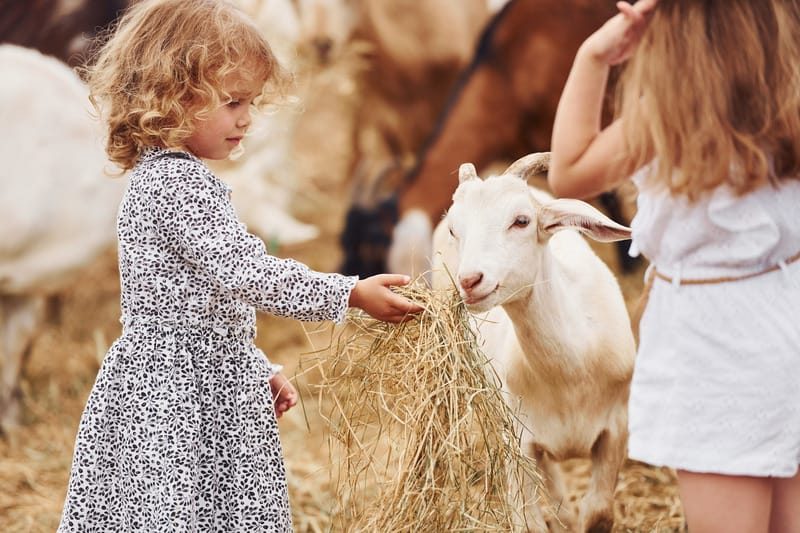
It can be tempting, especially if you have children keen to feed chickens or ponies. However, farm animals have carefully managed diets, and foods that seem harmless can in fact cause real harm.
Bread, for example, is a common cause of digestive problems in poultry. Even small amounts of unsuitable food can upset livestock or lead to longer-term health issues.
If you would like to feed or interact with the animals, always ask the farmer first about what is appropriate. They will be able to advise what, if anything, the animals can safely have.
Return anything you borrow
If the farmer has lent you wellies, a torch, books, or a corkscrew, return them when you’ve finished with them. In farm households, items are often shared freely and informally, and something left in a barn or kitchen may be needed first thing the next morning.
Checkout
Leave at the agreed time
The same principle that applies on arrival also applies at departure. Checkout times on farm stays are usually set to allow the farmer, or a small team, enough time to prepare the property for the next guests.
On busy changeover days, even a short delay can create real pressure for a small operation working to a tight schedule.
Tell the farmer you’re leaving
A brief farewell at departure, or even just a wave from the car, is a simple way to bring the stay to a close.
If you’ve enjoyed your time, let the farmer know. If something didn’t quite work or could be improved, it’s also helpful to mention it gently and constructively. Farmers who host guests directly often rely on honest, real-time feedback to refine what they offer, and they usually value it more when it’s shared in person rather than in a later online review.
Leave a review
Farm stays listed on booking platforms rely on reviews far more than larger hotels do. A genuine, thoughtful review, even a brief one, can help future guests make informed decisions and helps the farmer attract the right kind of visitors for their property.
If you’ve had a good stay, it’s worth taking five minutes once you’re home to leave feedback.
A note on the farmer’s time
A working farmer is not a hotel concierge. They have livestock to care for, machinery to maintain, fields to manage, and a business to run alongside the accommodation they provide.
Most farm hosts are generous with their time and knowledge, and many enjoy speaking with their guests. However, the demands of farm life don’t always align neatly with hosting duties.
The most positive farm stay experiences tend to come when guests treat the farmer more like a neighbour than a service provider, with consideration, respect, and a bit of curiosity about the work taking place around them. In return, guests will find that the farmer becomes their most valuable local guide, and that a brief conversation in the farmyard can offer more insight than any travel guidebook ever could.