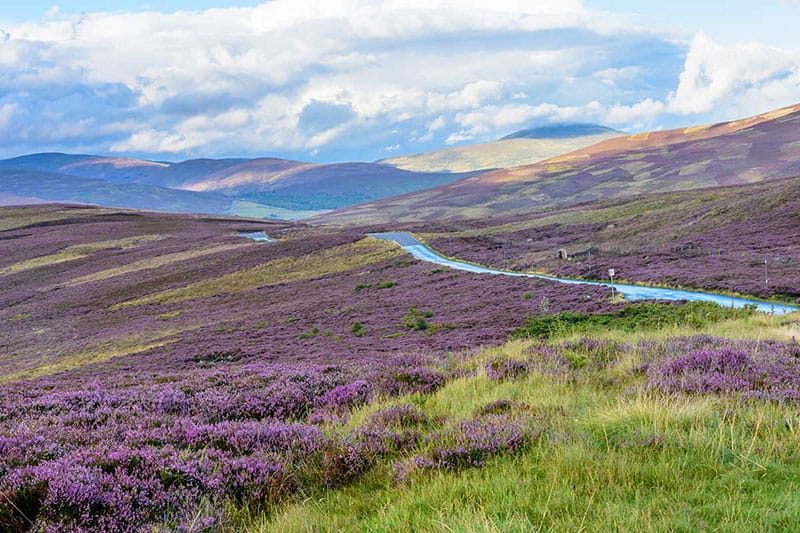
Situated near the village of Crathie in Aberdeenshire, Balmoral Castle is a grand estate house and a private holiday residence of the Royal Family. Built in the Scottish baronial style, the castle stands within a 53,580-acre estate comprising grouse moors, forestry, farmland, and managed herds of deer, Highland cattle, sheep, and ponies.
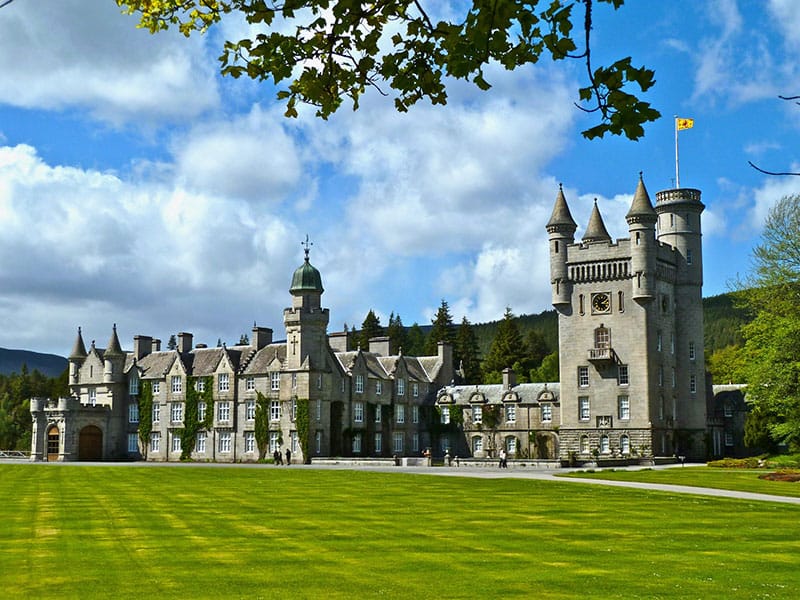
Visitors can explore the gardens, where seasonal displays change throughout the year, from vibrant spring bulbs and colourful herbaceous borders in summer to the rich golden tones of autumn reflected in the surrounding trees. Several walking routes also wind through the grounds, passing historic monuments, including a pyramid-shaped cairn erected by Queen Victoria in memory of her husband, Prince Albert, after his death.
Guided tours take visitors through a selection of state rooms, offering an insight into the heritage and grandeur of the castle and a closer look at royal life. The Ballroom hosts a changing programme of exhibitions and art installations, including a collection of paintings by King Charles III.
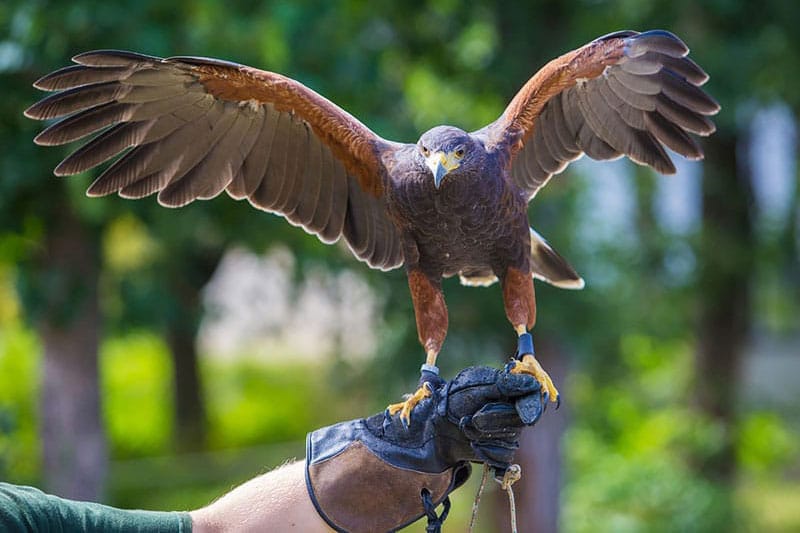
If you want to get active in Cairngorms National Park, a visit to the Rothiemurchus Outdoor Centre is a must. Set within a sprawling country estate in one of Scotland’s most picturesque locations, the centre offers a wide range of activities led by experienced instructors. Try your hand at clay shooting, archery, axe throwing, or bait and fly fishing, or capture the landscape with a wildlife photography session. For a truly memorable experience, book a falconry session and watch beautiful birds of prey, including owls, hawks, and eagles, swoop to your hand. Or visit the farm to enjoy a Hairy Coo safari, bottle-feed calves, or feed the deer.
Explore the estate via a network of trails with a pony or quad trek, glide across the loch in a canoe or on a stand-up paddleboard, or hire a bike to discover the scenery on two wheels at your own pace.
After an active day, unwind in the Smugglers Sauna, nestled in the tranquil surroundings of Loch an Eilein, and re-energize your mind and body.
The estate also has a well-stocked farm shop and a dog-friendly café serving hearty stews, soups, sandwiches, daily specials, and tempting cakes, perfect for refuelling after a day of adventure.
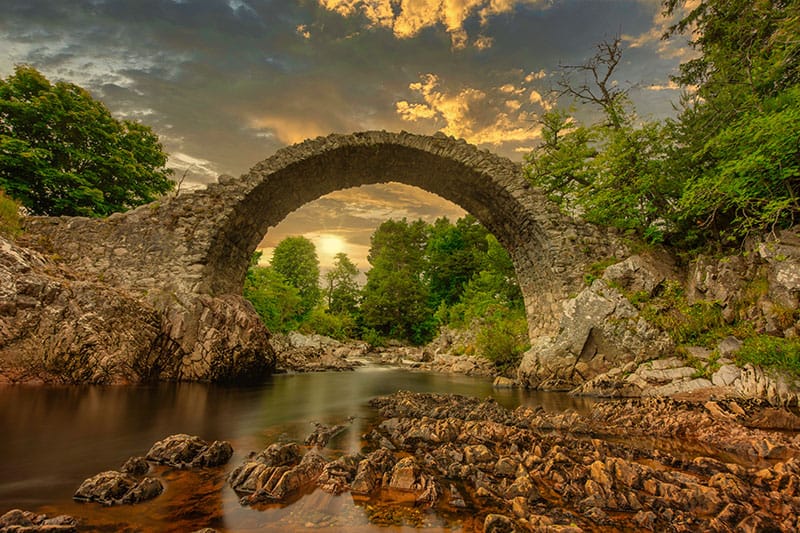
Bordered by woodland and lying in the shadows of the Monadhliath Mountains, Carrbridge, is a picturesque village easily accessed from both Inverness and Aberdeen. Crossing the River Dulnain that runs through the village is a packhorse bridge, built in 1717 and the oldest stone bridge in the Highlands, that gives the village its name.
To the south, set in an ancient pine forest is Landmark Forest Adventure Park with a variety of rides and attractions including water coasters that take riders over a series of waterfalls, a butterfly house filled with tropical plants, and the Forest Tower, a wooden structure which rewards those who climb its 105 steps with stunning views of the Cairngorms Mountains and the village below.
Carrbridge also hosts a range of events throughout the year including a chainsaw carving competition, and the Golden Spurtle contest which invites porridge purists and culinary innovators from around the globe to compete in the porridge making world championships.
The Cairngorms National Park is a key area for game birds with large-scale releases of pheasants and red-legged partridges each year. It is also a stronghold for a number of native grouse species who rely on the heather moorland and coniferous forests for food and shelter. Visit in spring for a chance to witness a lek, when males gather in open areas performing elaborate displays to defend territories and attract females.
Capercaillie – the capercaillie is the largest species of grouse whose common name is derived from the Scottish Gaelic capall coille meaning “horse of the woodland”. The male has dark grey plumage with a green sheen on its breast. The wings are brown with a white path at the joint, and it has a red comb over its eye. Females are mottled brown and grey with a russet patch on the upper breast.
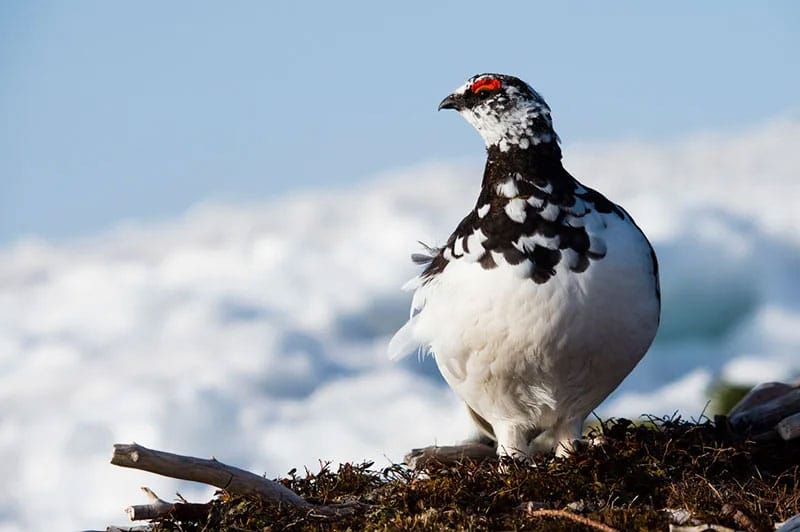
Ptarmigan – in winter, male ptarmigans are almost completely white except for black patches on the face, neck, and tail, and a red comb over their eyes. In spring, as the snow melts, their plumage becomes mottled grey with white bellies, legs, and feet. Females have pale buff plumage with white underneath and a narrow red eye comb.
Red grouse – male red grouse have reddish-brown plumage with dark bars and pale edges to the feathers which helps camouflage it from predators. It has a distinctive white ring around the eye, and red eye combs that get larger during the breeding season. Females are similar but duller overall, and their eye combs disappear in winter.
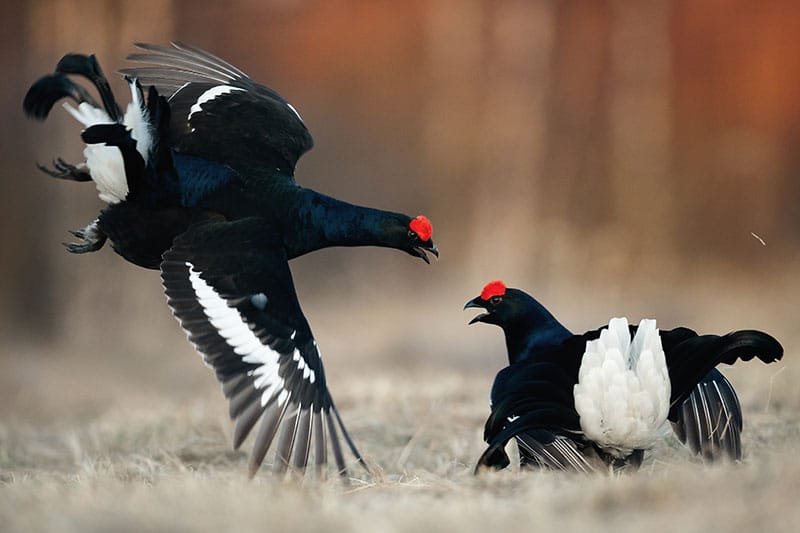
Black grouse – also known as the blackcock, the black grouse has glossy black plumage with a blue-green sheen, white patches on its wings, and a red wattle above the eye. Females are smaller with brown plumage barred with black and a narrow white mark on their wings.
The Cairngorms reindeer have lived in the park since 1952 when they were introduced from Sweden. Today it is the only free-ranging herd found in Britain grazing on over 10,000 acres of mountainous landscape.
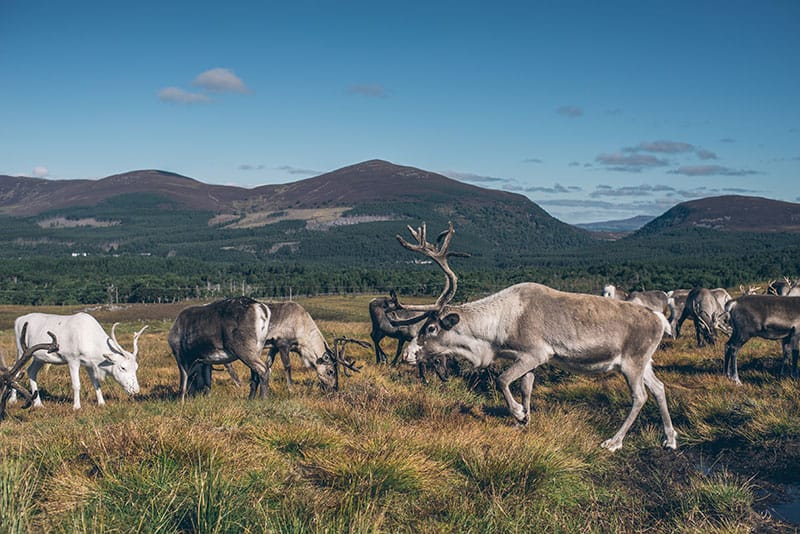
Visitors can join guided hill trips walking with the reindeer through beautiful scenery with plenty of information given by the herder, the opportunity to take photographs, and a short feeding session. Alternatively, for those unable to take part in the hill walks, they can also be seen in paddocks in Glenmore. During October, the reindeer are trained to pull sleighs ready for Christmas and visitors may be lucky enough to see them in and around the village, alongside Father Christmas who makes a special journey over from Lapland.
Caledonian pines are native pines that form Scotland’s only indigenous coniferous forests. They are directly descended from the first pines to arrive in Scotland after the last Ice Age in about 7,0000 BC, and represent a unique ecosystem that covers much of the Highlands supporting a rich variety of wildlife. The trees form an open canopy and beneath them grows a thick ground cover of shrubs.
Scots pine – tall straight tree with scaly orange-brown bark topped by a rounded mass of foliage. Its needles are blue-green and grown in pairs up to 7 cm long. Scots pine is monoecious meaning male and female reproductive structures grow on the same tree. Male flowers are yellow that develop into yellow egg-shaped cones, while female flowers are reddish-purple and turn into green cones.
Juniper – a sprawling, evergreen shrub with grey-brown bark and reddish-brown twigs. It has small, needle-like green leaves with silver bands on the inner side. In autumn, the female flowers produce blackish-blue berries which are used by distilleries to flavour gin and for cooking with game.
Blaeberry – forming a dense carpet on the floor of Caledonian pine forests, blaeberries, also known as bilberries, are similar to blueberries but have red flesh rather than white. It is a deciduous shrub with green, oval-shaped leaves, and in spring produces pink bell-shaped flowers before the purple-bloomed black berries appear in autumn. It is an important food for woodland grouse, especially capercaillie chicks, who eat both the leaves and the caterpillars feeding off them.
The gnarled, lichen-encrusted Caledonian pines surrounding Loch Garten are home to a remarkable variety of wildlife. During spring, breeding birds such as ospreys, crested tits, crossbills, great spotted woodpeckers, and siskins, while in winter, vast flocks of greylag and pink-footed geese arrive to roost. Look out too for red squirrels scampering up the trees and on the forest floor, nests, some measuring up to 3 ft tall, containing hundreds of thousands of ants. On a warm summer’s day the loch becomes alive with dragonflies and damselflies skimming across the water and common lizards can be spotted basking on the rocks.
The RSPB runs a programme of family friendly events throughout the year. Children can try their hand at moth-trapping, bug-hunting, owl pellet dissection, or building a giant osprey net. There are also several nature trails running through the reserve. As you walk keep an out for an array of wildflowers. Rare species include arctic starflowers, one-flowered wintergreens, and creeping ladies tresses, a small forest orchid.
Situated within the River Spay floodplain, Insh Marshes has a varied habitat comprising pools, marshes, and woodland, home to a large population of waders including curlews, lapwings, redshanks, and snipes. Roe deer can sometimes be seen amongst the trees, while the wet meadows are good for orchids and butterflies.
There are three nature trails running through the reserve with benches to stop for a picnic or enjoy the scenery, and there are two hides for close up viewing without disturbing the wildlife. Some of the grassland is grazed by sheep, cattle, and ponies, so while dogs are welcome on the reserve they must be kept under effective control.
Sightly off the beaten track, Crannach is a quiet woodland and upland reserve that supports a variety of birds including black grouse, Scottish crossbills, tree pipits, redstarts, and spotted flycatchers. Amongst the broadleaved woodland, birchwood, and pine wood are some rare plants too like twinflower and green shield moss.
There are no formal trails in the reserve, but all paths are public rights of way, and without a car park nearby, it is much quieter than its neighbours.