
Cumbria, home to the magnificent Lake District National Park, is a region of stunning countryside, rich heritage, and thrilling adventures. Famous for its glacial lakes, mountains, fells, and valleys, the national park attracts outdoor enthusiasts from around the world. Its landscapes are defined by contrasts, where you’ll find England’s highest mountains, including Scafell Pike, and its deepest lake, Wastwater.
But there’s much more to Cumbria than the Lake District. From beautiful coastlines and deep forests to pretty villages and market towns steeped in history, the county offers plenty of memorable experiences for every visitor.
Here are 21 amazing ways to explore the best of Cumbria.
St Bees Head is a dramatic stretch of coastline located on the western edge of Cumbria, overlooking the Irish Sea. It is the most westerly point of the county and forms part of the Heritage Coast. Characterised by its red sandstone cliffs, the highest in northwest England, it offers breathtaking views as far as the Isle of Man on a clear day.
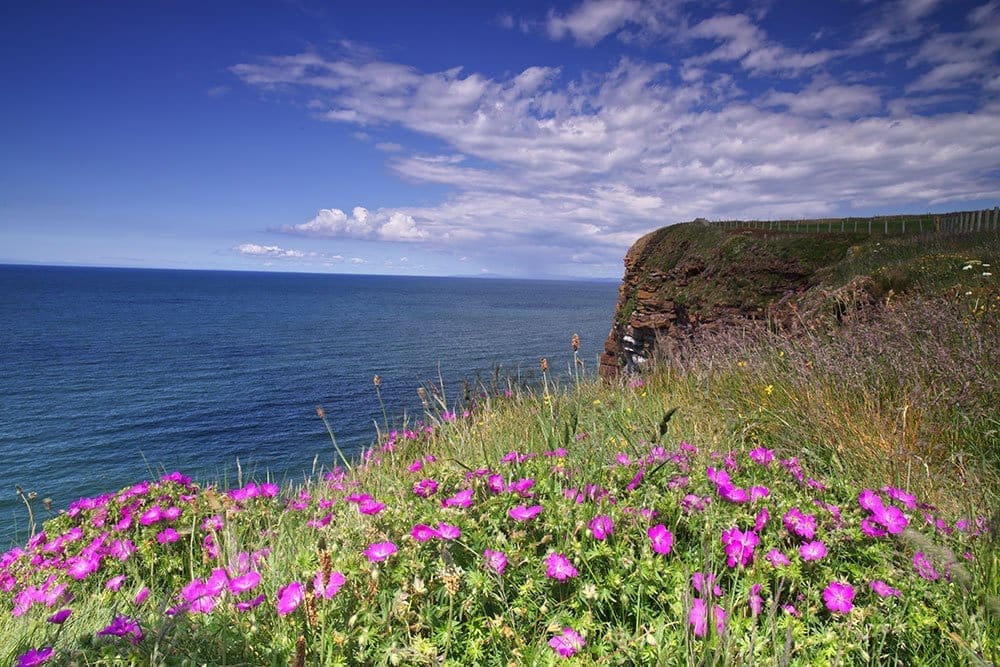
Most of the cliffs are owned by the RSPB, which manages a nature reserve on the North Head, providing an important home for thousands of seabirds. It is the only place in England where black guillemots breed, easily recognised by the large white patches on their wings. Other nesting seabirds include kittiwakes, fulmars, razorbills, shags, cormorants, and puffins. The area also supports regular breeding by tawny owls, sparrowhawks, and peregrine falcons.
St Bees Head marks the start (or end) of the famous Wainwright Coast to Coast Walk, a 190-mile trail stretching across Northern England to Robin Hood’s Bay on the east coast.
Managed by the Cumbria Wildlife Trust, Foulshaw Moss is an example of a rare, raised peat bog. Drainage and tree planting in the middle of the last century meant much of the wildlife was lost, but thanks to a restoration project by the trust, water-loving plants such as Sphagnum mosses, carnivorous sundews, bog grasses, cranberry, heather and cottongrass now thrive here.
In summer, the pools attract large numbers of dragonflies and damselflies, including the rare white-faced darter dragonfly, as well as a wading birds such as moorhens, snipes, and water rails.
A pair of ospreys breed on the reserve and visitors can enjoy watching them from the viewing platform as they soar in the sky above. Bring a pair of binoculars and you may catch a glimpse of them at the nest.
Lying just a few miles south of the Lake District, Ulverston is a lively market town known for its year-round calendar of events and festivals. Highlights include the Dickensian Christmas Festival, featuring multiple performance stages, street entertainers, hot mulled wine, food and craft stalls, and festive costume parades; Another Fine Fest, named in honour of Stan Laurel, who was born in the town, a celebration of music, spoken word, street theatre, visual art, circus acts, and interactive workshops; and Retro Rendezvous, a nostalgic blend of live music, vintage vehicle displays, artisan food and drink, market stalls, and retro cycling experiences.
With pretty, cobbled streets, colourful terraced houses, and a wealth of cosy pubs, quirky cafes, and independent shops, Ulverston has plenty to offer visitors. Climb to the Sir John Barrow Monument at the top of Hoad Hill for fantastic views over Morecambe Bay and the Lake District fells.
For foodies, Cartmel is a must-visit. The village is home to two Michelin-starred restaurants, including L’Enclume, the only restaurant outside London and the South East to hold three Michelin stars. Ingredients are sourced from the restaurant’s 12-acre Our Farm, along with meat and fish from local suppliers. In summer, guests can book a tour of the farm to learn about its regenerative farming and preservation techniques, followed by an al fresco feasting lunch.
Cartmel is also one of the homes of sticky toffee pudding. In 1989, the owners of the Village Shop developed a take-home version that became so popular that by the late 1990s it was being sold in supermarkets across the UK. The puddings are still handmade in small batches and sold in the shop, along with sticky toffee apple crumble, sticky ginger pudding, and lemon drizzle sponge.
When you’ve had your fill of sampling the village’s many speciality coffee shops, gastropubs, and modern eateries, Cartmel Priory is well worth a visit. Founded for Augustinian canons in the late 12th century, the church includes examples of three distinct periods of monastic architecture including an early English pointed arch and groined vaulted roof.
Described as ‘the most beautiful boat shed in Britain’, the Windermere Jetty Museum traces the lake’s 200-year boating history through interactive galleries, oral histories, and a fascinating collection of motorboats, steam launches, speed boats, and sailing yachts.
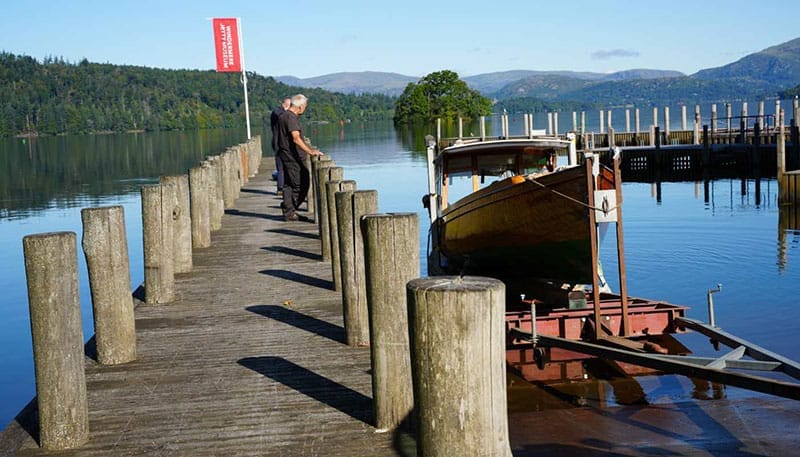
With conservation at the heart of the museum’s mission, you can watch expert boat builders in action as they restore historic vessels and see the boats later launched onto the water.
For a unique Lake District experience, hop aboard a cruise on a heritage wooden boat from the museum’s collection. Let knowledgeable skippers transport you back in time with stories about the boats and the landscape that inspired the museum.
Just a short walk from Keswick town centre, the Derwent Pencil Museum offers a fascinating journey through the history of the humble pencil. It stands on the site of the Cumberland Pencil Company, home of the world’s first graphite pencil and renowned for producing some of the finest pencils in the world.
Visitors enter through a replica of the Seathwaite mine, where graphite was first discovered in the 1550s. Inside, highlights include WWII pencils with hidden maps and compasses used to aid prisoners of war, pencil drawings by famous artists, miniature pencil sculptures, the Queen’s Diamond Jubilee pencil, and one of the world’s largest colouring pencils, measuring nearly 8 metres long.
Quizzes, children’s activities, and live product demonstrations keep the whole family entertained, while the gift shop offers a wide selection of Derwent pencils and other drawing materials.
For a mind-bending experience, head to The Puzzling Place in Keswick’s Museum Square. This series of unique exhibitions is centred around optical illusions. Watch balls roll uphill in the Anti-Gravity Room, shake your own hand in the Eyelusion Exhibition, and see your friends shrink before your eyes in the Ames Room.
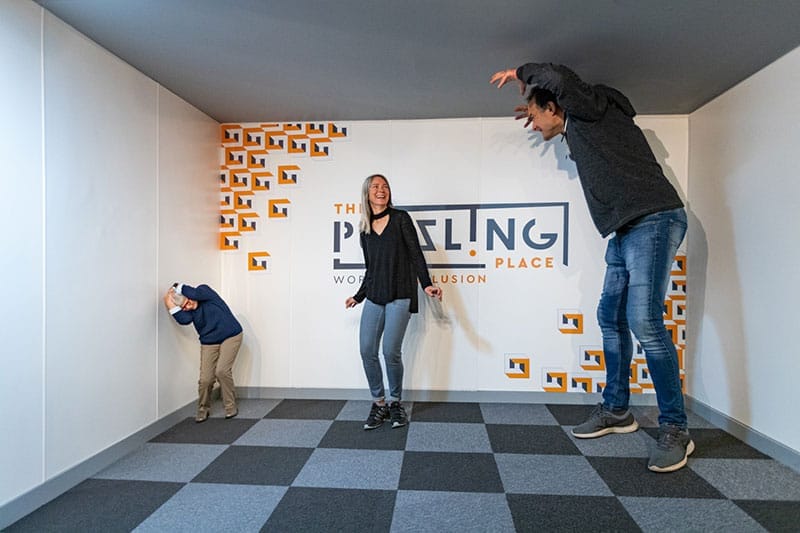
The attraction also includes interactive exhibits, intriguing artwork and sculptures, and a hologram gallery where 3D puzzles build themselves, relics are stolen, and Escher’s tessellating Reptiles come to life as you shift your viewpoint.
Designed to appeal to all ages, The Puzzling Place will leave you scratching your head, and questioning what you’ve just seen.
Located opposite the Dubwath Silver Meadows nature reserve, Bassenthwaite Lake Station is a charming café set within a beautifully restored railway station. On the site of the former Cockermouth to Keswick line, it includes a full-size replica steam train, the French SNCF Class 241 engine made famous by its appearance in the 2017 film adaptation of Agatha Christie’s Murder on the Orient Express, starring Dame Judi Dench and Johnny Depp.
The station’s owners have taken great care to preserve the surrounding natural beauty, creating a haven for native wildlife. Visitors can enjoy the peaceful atmosphere along a dedicated wildlife walkway, complete with a bird hide for quiet observation of local flora and fauna.
The café serves food throughout the day, but to truly savour the 1930s art-deco elegance of the train, afternoon tea is the highlight. Guests can enjoy finger sandwiches, freshly baked scones, and an array of sweet and savoury treats, all accompanied by unlimited tea or filter coffee.
From the outside, St Mary’s Church in Wreay appears to be a fairly unremarkable neo-Romanesque building, with its rectangular nave and semi-circular apse. Inside, however, and a very different story unfolds. Designed in the 1830s, the Grade II listed church was the visionary work of Sarah Losh, one of the few female architects of her time, and is recognised as the earliest known British example of a revival of Lombard architecture.
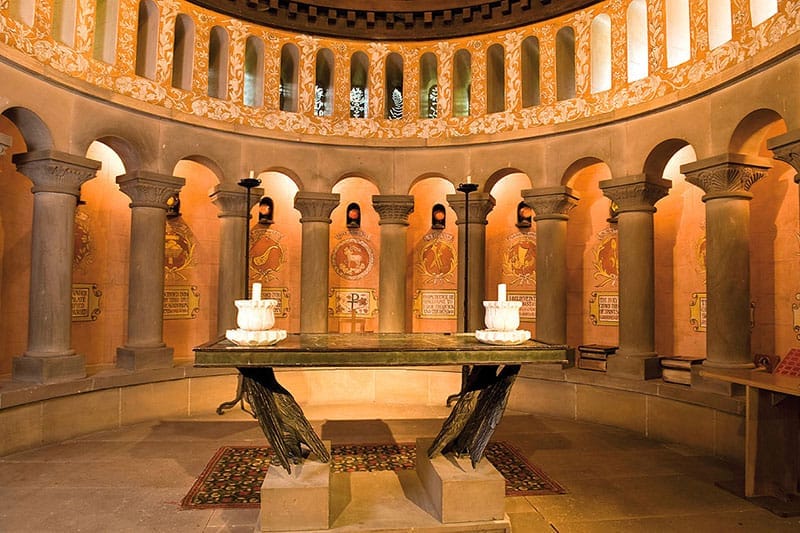
The interior is rich with symbolism and detail: carvings of angels, birds, insects, fantastical beasts, plants, and a recurring motif of pine cones adorn almost every surface. The altar is a slab of green Italian marble, supported by two brass eagles. The pulpit is fashioned from the stump of a tree trunk, unearthed from a bog. Gargoyles take the form of grotesque turtles and dragons. The windows are embellished with ammonites, butterflies, and floral designs.
A single cross can be found, if you look carefully, hidden within one of the stained glass panels in the trio of west windows. These are made of fragments of glass collected by Sarah’s brother, William Losh, from the Archbishop’s palace at Sens.
A few miles north of Penrith lies Long Meg and Her Daughters, a Neolithic stone circle and the third largest in diameter in the British Isles. Originally thought to comprise around 70 stones, only 59 remain today, and of those, just 27 still stand. Long Meg herself is made of local red sandstone, likely sourced from the nearby River Eden, while her “daughters” are rhyolite boulders, a type of granite deposited during the last Ice Age. Long Meg bears several carved symbols, including a spiral, a cup and ring mark, and faint human-like figures.
Many myths and legends surround the stones. One of the most enduring tales claims that Meg and her daughters were a coven of witches, caught mid-sabbath and turned to stone by the Scottish wizard Michael Scot, who, in reality, was a mathematician and scholar. Folklore holds that the stones are uncountable, and that if anyone manages to count them twice and arrive at the same number, the spell will be broken.
Just over a third of a mile away stands one of the smallest stone circles, aptly named Little Meg. Sadly, most of its stones are no longer in their original positions, and during the summer months, they are often hidden by tall grass. One of the stones features a carving similar to those found on Long Meg.
Lacy’s Caves are a series of five chambers carved into the red sandstone cliffs above the River Eden, just north of Little Salkeld. They were created in the 18th century by Colonel Samuel Lacy of nearby Salkeld Hall, who is also known for his failed attempt to blow up Long Meg and her Daughters, but was thwarted by a thunderstorm. It’s believed that Colonel Lacy used the caves as a folly to entertain his guests, or possibly to store his wine collection. The area was originally landscaped with ornamental gardens, including rhododendrons, some of which still survive today. According to local tales, Colonel Lacy even employed a fake hermit to pretend to live in the caves, adding an air of romantic mystery to impress his visitors.
To reach the caves, begin in the village of Little Salkeld. It’s about a 30-minute walk, but be careful as some sections can be boggy underfoot. The caves are located in woodland just before you reach the river. Inside, you’ll find arches carved into the walls and old graffiti, all of which enhance the caves’ sense of mystery and intrigue.
Situated on the north shore of Bassenthwaite Lake and housed in beautifully renovated former farm buildings, The Lakes Distillery is celebrated for its award-winning spirits, which embody the rich heritage of the region.
The distillery offers a variety of tours and tasting experiences. Led by expert guides, visitors can explore the still room, learn about the influence of oak and cask seasoning on flavour development, and gain insight into the production of The Lakes’ whisky, gin, and vodka. At the end of the tour, guests aged 18 and over are invited to enjoy a guided tasting of three of The Lakes’ signature spirits.
The on-site bistro, set within a former Victorian cattle parlour, serves a regularly changing seasonal menu. Whether you’re after coffee and homemade cakes, a light lunch, small plates, or a full three-course meal, the menu is complemented by a curated selection of wines, beers, and signature cocktails.
Whether you’re walking, cycling, or driving it, Honister Pass is not for the faint-hearted. This narrow mountain road, which connects Seatoller in the Borrowdale valley to Gatesgarth at the southern tip of Lake Buttermere, has an average gradient of around 8%, with some sections reaching 25% as it snakes its way through the fells.
However, those who brave the climb are rewarded with beautiful views of the surrounding hills. At the summit sits Honister Slate Mine, the last working slate mine in England, which has been quarrying Westmorland green slate since the 17th century. Visitors can venture deep underground into the mountain on a guided mine tour, or test their nerve on England’s first via ferrata. Following the original miners’ route, this thrilling climb uses fixed anchors, ladders, and cables to help adventurers scale the rugged slopes.
Hill Top, a 17th-century farmhouse managed by the National Trust, was once the beloved home of Beatrix Potter. Bought in 1905 with the earnings from her first book, The Tale of Peter Rabbit, the house and its surrounding countryside went on to inspire many of her later stories.
The cottage garden is a delightful jumble of flowers, herbs, fruit, and vegetables, just as it was in Beatrix’s time. It’s easy to imagine Tom Kitten and his sisters playing among the greenery, and you might even spot the beehive beneath a large slate slab, near the rhubarb patch where Jemima Puddle-Duck laid her egg.
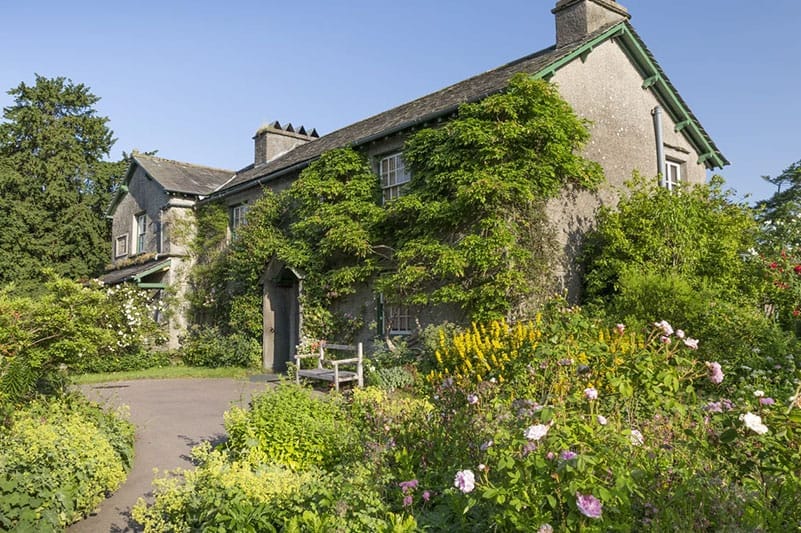
Inside, the house remains much as Beatrix left it, filled with her personal belongings, letters, manuscripts, and sketches. The dolls’ house featured in The Tale of Two Bad Mice is on display, and sharp-eyed visitors will spot tiny needle-felted mice representing Hunca Munca and Tom Thumb, posed in playful scenes tucked into hidden corners.
During Beatrix’s time, Hill Top was a working farm, and it remains so today. On selected dates, the tenant farmers offer guided tours, providing a rare chance to experience the daily life of a modern Lakeland farm.
Ravenglass is the only coastal village within the Lake District National Park with a rich maritime history. Once an important Roman naval base, it was home to a fort at the mouth of the River Esk for nearly 300 years. Today, little remains except the ruins of the bath house, now an English Heritage site, which is one of the tallest surviving Roman structures in northern Britain.
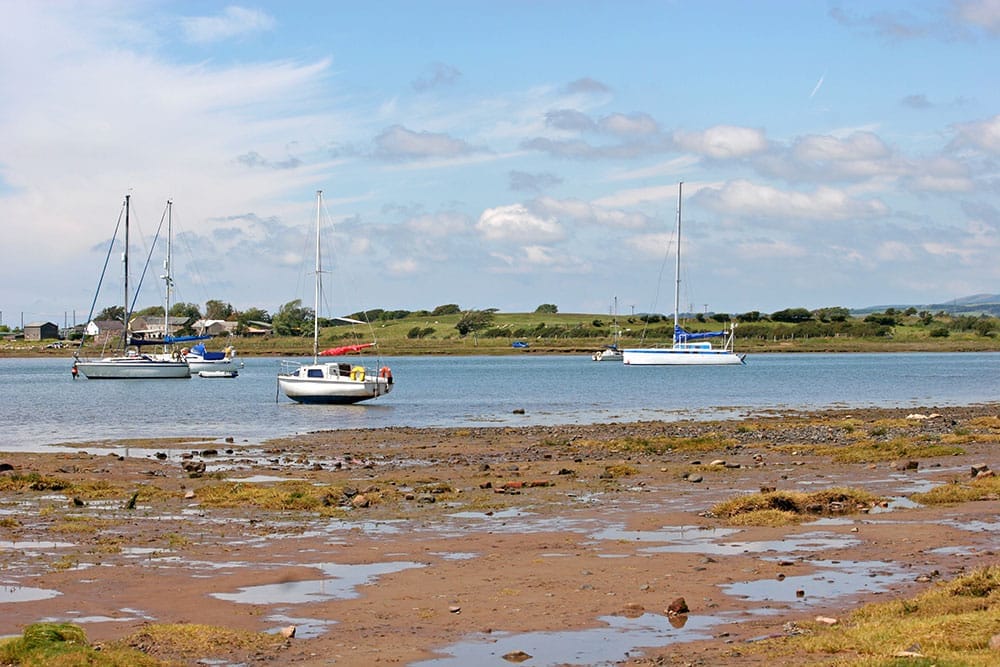
About a mile from the bath house lies Muncaster Castle, which has been home to the Pennington family for over 800 years and is still privately occupied today. Visitors can explore its grand state rooms, where paintings, textiles and furnishings bring centuries of history to life. The estate also has 77 acres of beautifully cultivated gardens, a weapons hall where you can try your hand at axe throwing, archery and crossbow, and a hawk and owl centre offering flying displays with owls, falcons, eagles, and even vultures.
In the past, iron ore, granite and copper ore were transported to the estuary at Ravenglass by narrow-gauge railway from mines near Boot. This line has been preserved as the Ravenglass and Eskdale Railway, affectionately known as the La’al Ratty. Today, this charming little steam train carries visitors through stunning countryside and up into the beautiful Eskdale Valley.
Wolves were once common throughout the British Isles, but due to a combination of deforestation and hunting, they became extinct sometime during the reign of Henry VII. Stories differ about which wolf was the last to be hunted, but a popular tale claims that the final wolf in England was killed at Humphrey Head in what was then Lancashire. According to legend, Sir Edgar Harrington promised his niece’s hand in marriage to whoever killed the last wolf. After a long chase, an unknown knight speared the wolf and revealed himself as John Harrington, Sir Edgar’s long-lost son.
Today, visitors can experience walking with wolves at Predator Experience locate at Ayside in Cumbria, just two miles from where this story is said to have taken place. Wolves have not been reintroduced into the wild in Britain, so the wolves you will meet live with their handlers under close supervision. During the one-hour walk, your guide will explain all aspects of the wolf’s evolution, physiology, social structure, communication, and conservation. You will learn to recognise their different howls and how to stroke them safely. Finally, you will have the chance to take photographs as a memento of your unforgettable day.
Heavy horses, also known as draught horses, were originally bred to pull heavy loads such as ploughs and brewery carts; in other words, they were the tractors of their time. They are generally calm and dependable in temperament, making them ideal for beginners or anyone who feels nervous around horses.
Cumbrian Heavy Horses is a BHS-approved, family-run equestrian centre where visitors can ride magnificent heavy horse breeds, including Clydesdales, Shires, Punch, Suffolk, and Ardennes. The centre offers a wide range of riding experiences for all ages and abilities, including farm rides, fell rides, beach rides, trail rides, and carriage driving lessons.
Stretching for 73 miles across northern England, Hadrian’s Wall was built to guard the north-west frontier of the Roman Empire. Constructed by the Roman army on the orders of Emperor Hadrian following his visit to Britain (or Britannia, as it was then known) in AD 122, the wall became a UNESCO World Heritage Site in 1987. Cumbria offers some of the best places to see this remarkable feat of Roman engineering.
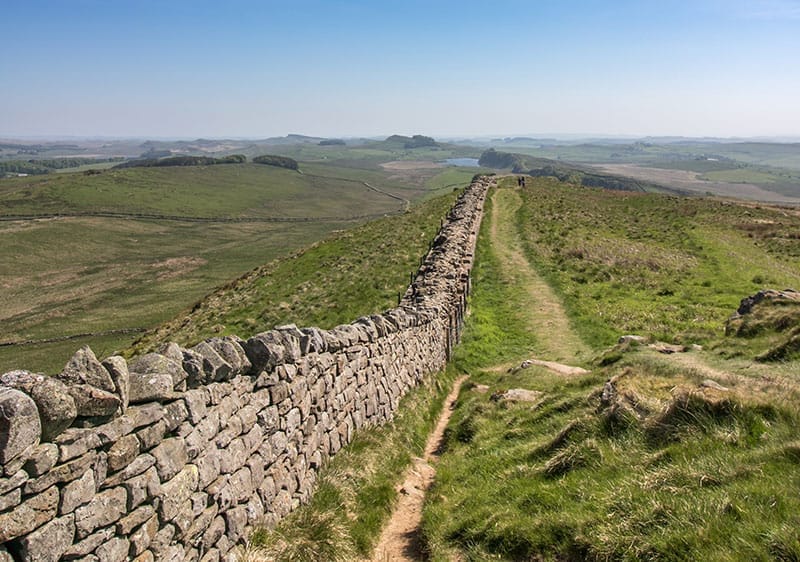
Just outside Birdoswald Roman Fort lies the longest stretch of the wall still visible today. Managed by English Heritage, the visitor centre features interactive displays and reconstructions that bring to life what daily existence was like in Roman Britain, along with artefacts uncovered during 19th and 20th century excavations. Visitors can explore the excavated remains of the fort and relax in the café, which serves a range of sandwiches, wraps, soups, cakes, desserts, and hot and cold drinks.
Around 4.5 miles east is Walltown Crags, also managed by English Heritage and widely regarded as one of the most spectacular sections of the wall. Here, the wall snakes through dramatic countryside and is particularly well preserved. It also reveals how Roman soldiers adapted their construction techniques to cope with large natural rock outcrops, sometimes incorporating the rock into the wall, sometimes building right up to it.
Nearby, the Roman Army Museum offers an engaging, interactive journey into the past with life-sized replicas and fascinating artefacts. You can try your hand at archery, sit in a Roman classroom, and watch the epic Edge of Empire film, which provides an eagle’s-eye view of Hadrian’s Wall. During the summer, visitors can also see live excavations at the Roman Fort of Magna, located right next to the museum.
Just 13 miles from Carlisle, Lanercost Priory is one of Cumbria’s best-preserved monastic sites. Founded in the 13th century, it suffered repeated attacks during the Anglo-Scottish wars, and the mortally ill King Edward I rested here for five months in 1306–7 during his final campaign, shortly before his death.
Part of the church is still in use today, with the roofless east end remains standing to their full height, with a triple tier of arches. Inside, you can see burial monuments dedicated to the Dacre family, a long-established Cumberland family once counted among the “De’il’s Dozen” and renowned for their efforts in repelling or avenging Scottish raids. Among the monuments is the touching Victorian effigy of four-month-old Elizabeth Dacre Howard.
During the Tudor era, the family converted the cloisters, with their beautiful vaulted ceiling, into a mansion that includes the Dacre Tower, adapted from the original monastic kitchen, and the Dacre Hall with its splendid Jacobean chimneypiece. The site also features an ancient vicarage and a vicar’s pele tower, built to protect its occupants from raiders and marauders.
Built in the early 17th century as a public house known as the Dove and Olive, Dove Cottage later became the home of William Wordsworth and his sister Dorothy. It was here that Wordsworth composed some of his greatest poetry, while Dorothy kept her remarkable Grasmere journals.
Like many Lakeland cottages, Dove Cottage is built from local stone, with white limewashed walls and a slate roof and floors. It has remained largely unchanged since Wordsworth’s day, and a guided tour offers visitors a fascinating glimpse into what life was like during that time. In an adjacent barn, the Wordsworth Museum holds one of the finest collections of handwritten manuscripts, journals, letters, published poetry, and personal items relating to British Romanticism.
Outside, the garden and orchard have been restored to the semi-wild state that the Wordsworths created using local plants and materials, inspiring Wordsworth to describe it as ‘the loveliest spot that man hath ever found’.
Set in the heart of the Lake District, Grizedale Forest offers a network of trails perfect for walking, cycling, or horse riding. Along the way, you’ll discover contemporary sculptures by leading international artists and enjoy breathtaking views across the lakes and mountains of the national park.
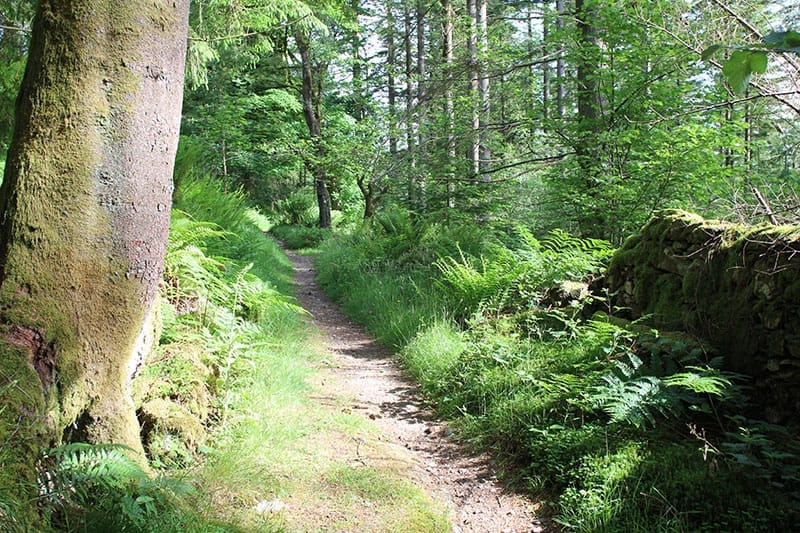
Thrill-seekers can head to Go Ape, a haven for zip wire enthusiasts, while the Observatory and Planetarium provides a chance to stargaze free from light pollution or explore the universe beneath a state-of-the-art ceiling-mounted dome. Wildlife lovers will find plenty to spot too, as the forest is home to roe deer, red deer, badgers, pine martens, buzzards, and red kites.
Grizedale also has children’s play areas, sensory features, and quiet zones, plus plenty of scenic spots to stop for a picnic.
And if you’re looking for a cool place to stay, why not check out our collection of farm stays in Cumbria?