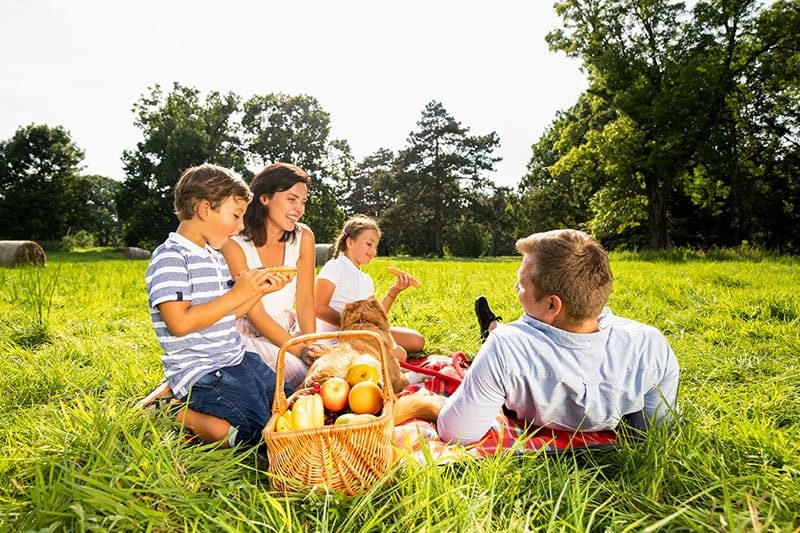
One of the greatest pleasures of summer is eating outdoors. Science even tells us that spending time in nature can lift our mood and heighten our senses, making food taste better and meals more enjoyable. A laid-back picnic with family is a lovely way to spend an afternoon, and with a little planning, you can keep things stress-free and turn a simple outing into a truly memorable day for everyone.
From finding the perfect picnic spot to deciding what to pack, our guide covers everything you need for a successful outing.
The setting can make all the difference to the success of your picnic, so choosing the right spot is key. Look for a location that offers a balance of sun and shade, with plenty of room to spread out, play games, and allow children to run around safely without feeling crowded.
Consider how much you’ll need to carry – easy access to parking or nearby public transport will ensure you arrive relaxed rather than exhausted.
Facilities are worth thinking about too. Being close to toilets will save any awkward moments, while members of your party with limited mobility may prefer a site with picnic tables or benches. If you’re bringing a dog, check whether the area is dog-friendly and whether leads are required.
Make sure you check the rules in advance, if you’re planning on taking a picnic to have during a day out at a family attraction. For example, National Trust and English Heritage properties usually welcome visitors to picnic in their grounds, while theme parks and similar sometimes restrict visitors from bringing in their own food and drink.
If you’re holidaying on a farm, there may be designated picnic areas available, or you could ask the owner if there’s a suitable field you can use. In the countryside, other good picnic spots include nature reserves, open moorland or heathland, woodland clearings, orchards, meadows, lakes, and riverbanks.
A beach picnic is always a popular choice, but remember to check tide times before you go. Beaches can become very busy during summer, so seeking out a quieter stretch of coastline can give you more space to relax and enjoy the day.
British weather can be unpredictable, so it’s wise to keep an eye on the forecast and have a backup plan in mind. And it’s not just rain to consider. Picnicking in strong winds can be incredibly frustrating as everything threatens to blow away, while very hot, humid days can feel uncomfortable with food soon becoming less than appetising.
Pack with comfort in mind whatever the conditions, bringing sun hats and sunscreen for warm weather, and layers such as jumpers or light jackets for cooler breezes. A small umbrella or lightweight raincoat is always worth packing just in case. Even if it hasn’t rained recently, the ground may still be damp, so a waterproof blanket or tarpaulin underneath your picnic rug is a sensible addition. If you’re happy to carry a little extra, a gazebo can provide reliable shelter or shade should the weather turn, and if you plan to stay out into the evening, a few cosy blankets will keep everyone warm once the sun goes down.
Check the forecast the day before and again on the morning of your picnic, and with a little preparation, a passing cloud won’t spoil the day.
Of course, the most important part of any picnic is the food. Picnic food should be easy to transport, simple to eat, and appealing to all ages, with finger foods and shareable dishes working best. If your children are fussy eaters, a picnic can be a great way to tempt them to try new foods, as the change of setting sparks their curiosity.

For a hassle-free option, head to a farm shop and pick up ready-made favourites such as sausage rolls, Scotch eggs, mini quiches, and pork pies, along with a few prepared salads, a local cheese, freshly baked bread, some seasonal fruit, and brownies for a treat.
If you’d prefer to make your own, preparing food the night before will save time and reduce stress on the day. Sandwiches and wraps with a variety of fillings, alongside crisps and vegetable sticks with hummus or dips, are always popular, but if you want your picnic to feel extra special, it’s worth getting a little creative.
A good approach is to include a main dish that can be easily shared, such as a cold pie or a filled picnic loaf, paired with interesting finger foods like spicy chicken drumsticks or empanadas. Add a couple of summery salads avoiding leafy greens that will wilt in the sun, fruit skewers, and a batch of flapjacks, and you have all the makings of a feast.
You could also try a themed picnic. Go all-American with buffalo wings and blue cheese dip, Reuben sandwiches, corn on the cob, potato salad, and coleslaw, finished with blueberry tartlets. Or opt for an Asian-inspired spread with prawn dumplings, pork bao buns, sticky spare ribs, crispy spring rolls, a sesame noodle salad, and fresh mango or pineapple for dessert.
Be sure to pack plenty of thirst-quenching drinks. Elderflower cordial is a classic choice, or you could prepare a fruit punch, zesty lemonade, or a refreshing cooler. Adults might enjoy a chilled bottle of wine or a jug of Pimm’s, or you could pre-mix cocktails at home and top them up with soda water or Prosecco, adding garnishes and ice just before serving. A handy tip is to freeze berries or fruit slices to use as edible ice cubes that won’t dilute the drink. And don’t forget plenty of water to keep everyone properly hydrated.
If you’re celebrating a birthday and want to bring a cake, a decorated traybake in the birthday boy or girl’s favourite flavour is better than a layered cake, as it’s less likely to collapse and can easily be cut into squares. Since candles can be tricky to keep lit outdoors, sparklers are a better option.
Picnics don’t have to be limited to lunchtime. Eating breakfast outdoors is a wonderful way to enjoy a sunny morning before the day becomes too warm. Good food options include homemade muffins and pastries, yoghurt parfaits in jars, hard-boiled eggs, a bacon frittata, cocktail sausages, and easy-to-eat fruit such as melon slices and grapes, all accompanied by a thermos of hot coffee and chilled juice.
Alternatively, why not try an afternoon tea picnic? Pack scones with clotted cream and jam separately, finger sandwiches filled with egg mayonnaise, cucumber and cream cheese, or roast beef and mustard, along with sweet treats such as mini lemon drizzle cakes, chocolate buns, or delicate macarons.
Eating outdoors is fun, but it’s easy for usual food hygiene standards to slip. To avoid any upset tummies, follow a few simple steps.
Start by washing your hands before preparing your picnic, and make sure to wash fruit, vegetables, and salads thoroughly. Because the time between preparing and eating picnic food is often longer than usual, it’s important that perishable items stay chilled. Keep sandwiches, meat, fish, quiches, dips, prepared salads, and dairy dishes in the fridge until the last moment, then pack them in a cool box with ice packs evenly distributed. Frozen drinks and bottles of water can also help keep the contents cold. Pack the cool box as tightly as possible to reduce air gaps, filling any spaces with crumpled newspaper to keep the cold in and warm air out.