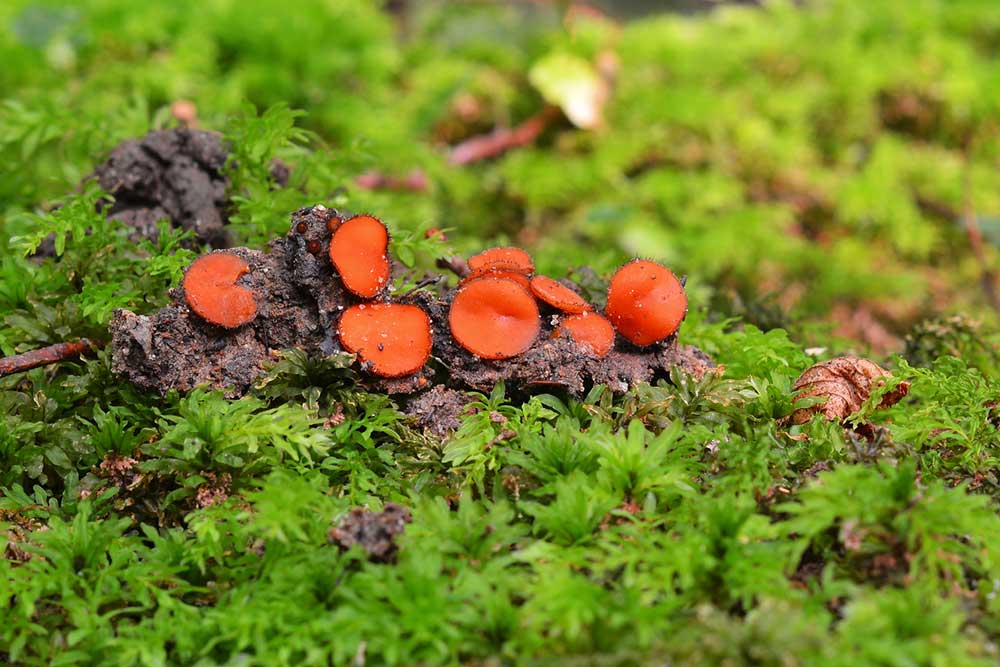
Common eyelash’s cap is shallow that flattens as it matures. The inner surface is scarlet, while the outer surface is pale brown with dark stiff hairs on the edges forming distinctive ‘eyelashes’. It does not have a visible stem. The white spores are elliptical in shape. It has no obvious smell. Common eyelash is also known as scarlet elf cup, Molly eye-winker, and eyelash pixie cup.
It is widespread throughout Britain. Look out for it on decaying wood, damp soil and moss, and by streams. It usually grows in clusters but may occasionally be solitary.
Common eyelash closely resembles other species in the Scutellinia genus but is the most widespread and common of them all. It also bears a slight resemblance to the scarlet elf-cup, though the elf-cup is much larger and is not fringed with hairs. It’s unclear whether the common eyelash is edible, but its small size makes it of no culinary interest.
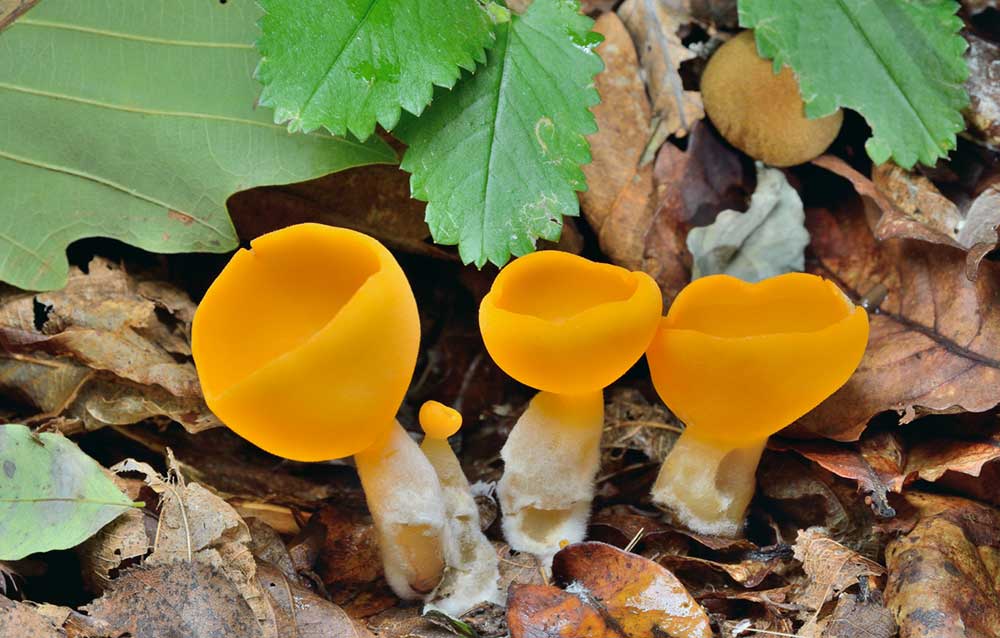
Hare’s ear has a short, white stem covered in fuzzy hairs. It may sometimes not be visible above ground at all. The cap is shaped like a cup with a cleft down one side and slightly rolled edges. The inner surface is bright orange or yellow with a rose tinge, while the outer surface is paler and lacks the pink. The white spores are smooth and elliptical, and it has no obvious scent. It is also known as donkey ear fungus and lemon peel fungus.
Hare’s ear is widespread across the British Isles. It grows in clusters in woodland under broad-leaved trees and conifers.
It looks similar to other fungi in the Otidea genus, and care should be taken as some of these are poisonous.
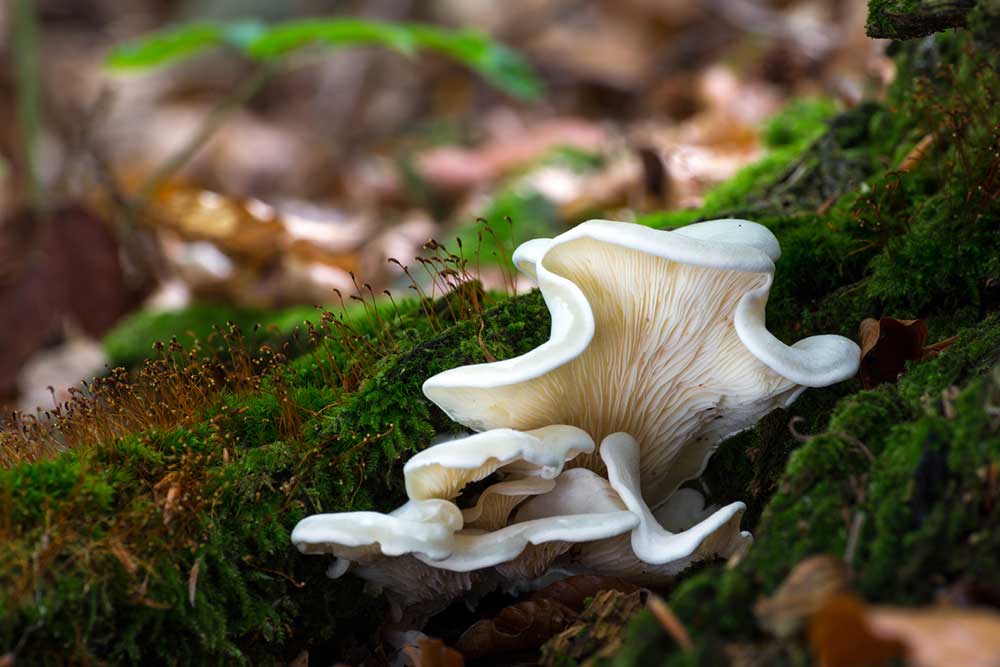
Angel’s wing has a very short stem, though it is often completely absent. Its round cap is slightly curved inward and is pure white or ivory, with a soft, velvety texture, and a split, preventing it from forming a complete circle. As it matures, the edges develop ripples. It grows in clusters overlapping in tiers. The gills and spores are white and turn cream with age. It has a faint but pleasant smell.
It is mainly found in the Scottish Highlands, southern Scotland, and parts of Cumbria but is rare elsewhere. Look out for it in coniferous forests on dead stumps and trunks, or old timber that is covered in moss.
Angel’s wing looks similar to the oyster mushroom, but are paler and can be distinguished by the split in the cap. Until relatively recently it was thought angel’s wing was edible but after several fatal poisoning incidents they have been reclassified and should not be consumed.
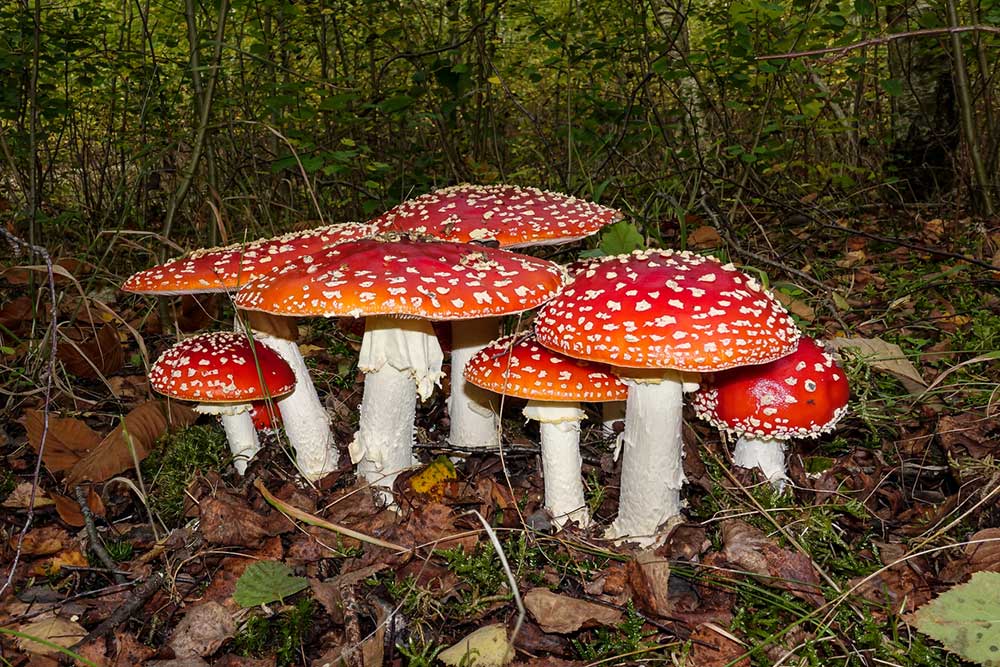
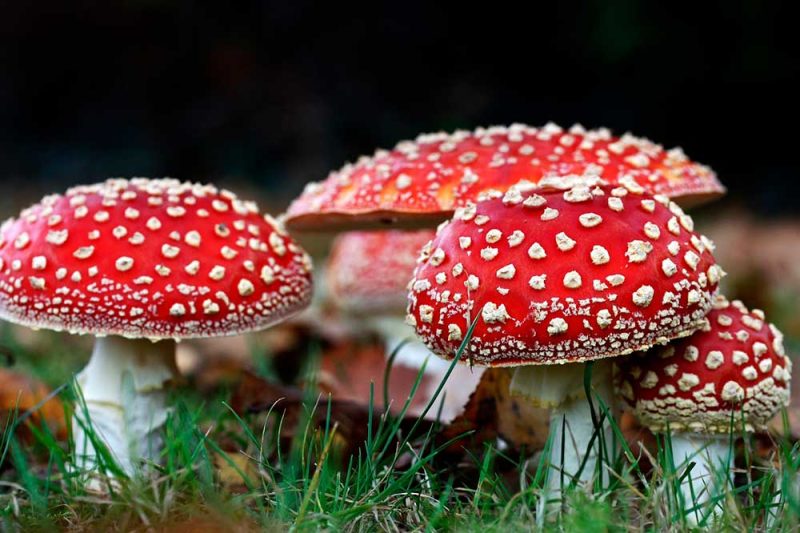
The classic fairy tale toadstool, fly agaric has a white, brittle, slightly fibrous stalk with a bulbous base with shaggy rings of scales around it and a large skirt. The rounded cap is scarlet red or orange with a handful of warty spots. The tightly packed gills, located beneath the cap are white or cream and not connected to the stalk, while the spores are white and oval-shaped. It has a slightly earthy smell.
Fly agaric is widespread across the British Isles. It is found in woodlands and heathlands, particularly near birch, pine, and spruce trees.
Although distinctive, fly agaric can be confused with the blusher which has a similar shape but a paler cap and cream spots. Fly agarics are poisonous and although reports of fatalities are rare it can cause hallucinations and stomach cramps.
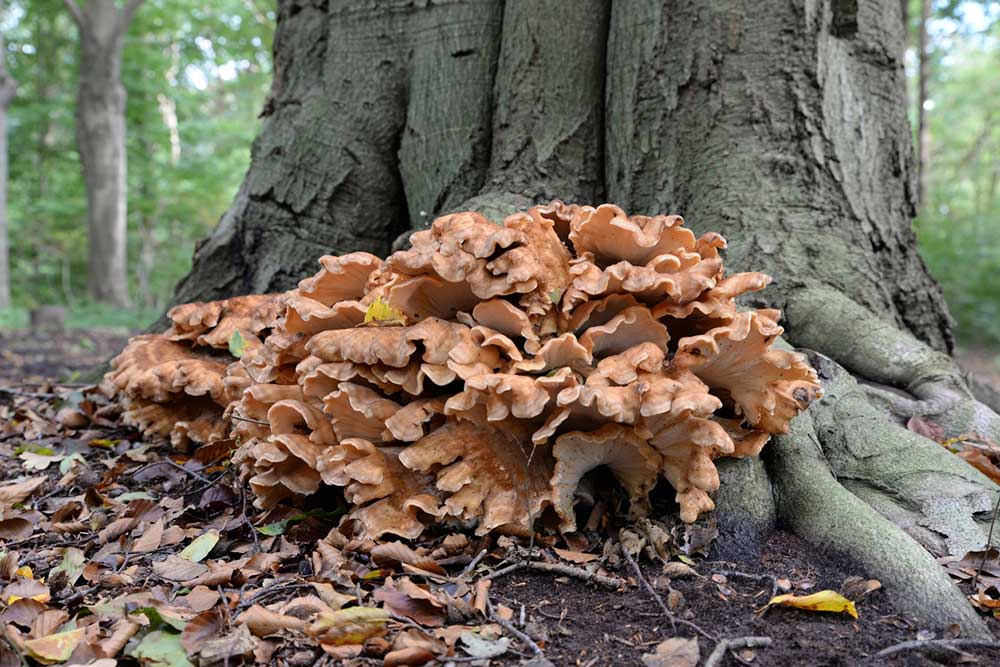
Chicken of the woods is a thick, velvety, bright yellow fungus. The caps are fan-shaped with a rippled margin. When young it has bands of orange which fade to cream as it ages. The underside is covered with white or yellow pores. When squeezed, the brackets discharge a yellow liquid. It has white or pale yellow spores, and a strong mushroomy smell. Chicken of the woods is also known as chicken mushroom, chicken mushroom, and sulphur shelf.
It is common and widespread in Britain. It mainly grows on the trunks of oaks but can also be found on cherry, sweet chestnut, beech, and yew.
Chicken of the woods is an edible mushroom, although it may cause an allergic reaction in some, and caution is advised when picking from poisonous trees such as oak. It has the texture and taste of chicken and is a good replacement for meat in casseroles, pies, and curries. It is best harvested young and should be cooked before consumption. It should not be confused with the inedible giant polypore, which is similar but has brown brackets.
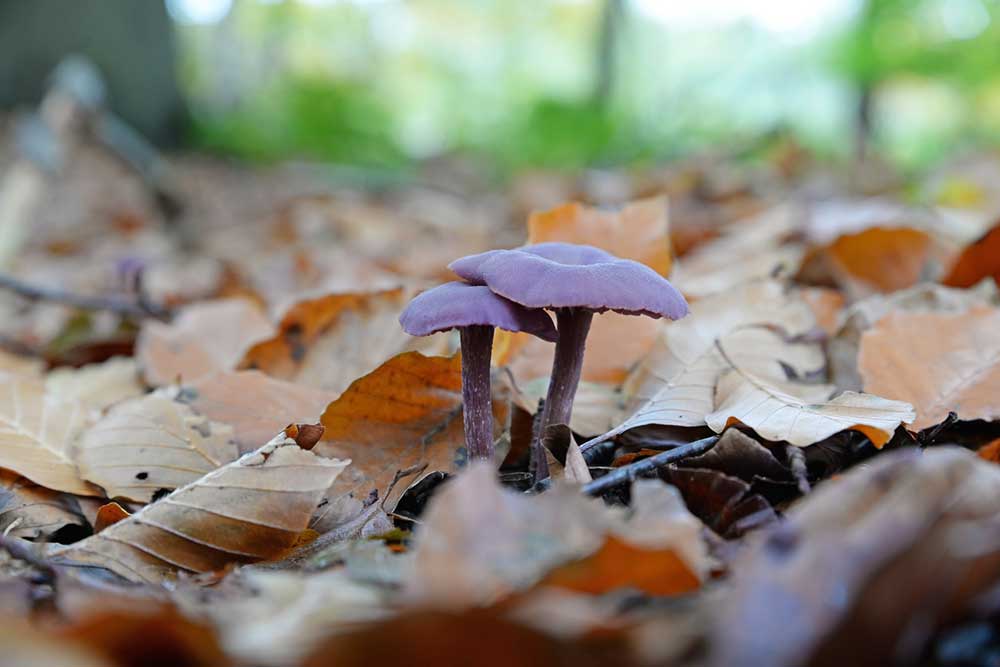
Amethyst deceiver has a deep purple, slightly twisted stem covered in white fibrous hairs. The convex cap, which often develops a depression in the centre and wrinkled edges as it matures, is the same colour as the stem with paler ridges at the edges. When wet or damp the colour becomes deeper, and as it ages, fades to pale brown. The gills, which are widely spaced, are also purple and connected to the stalk, while the spherical spores are white with pointed spines. It has no obvious scent.
Amethyst deceiver is widespread throughout the British Isles. It is found in broadleaf and coniferous woodlands particularly near oak and beech.
As amethyst deceiver matures, and changes shape and colour, it can become hard to identify, hence the name ‘deceiver’. It may sometimes be mistaken for the poisonous lilac fibrecap, but the main difference is in the gills: amethyst deceiver has purple gills, while lilac fibrecap’s are white or grey. Although amethyst deceiver is edible, it has the potential to absorb arsenic from the soil, so caution is advised.
Candelsnuff (Xylaria hypoxylon)
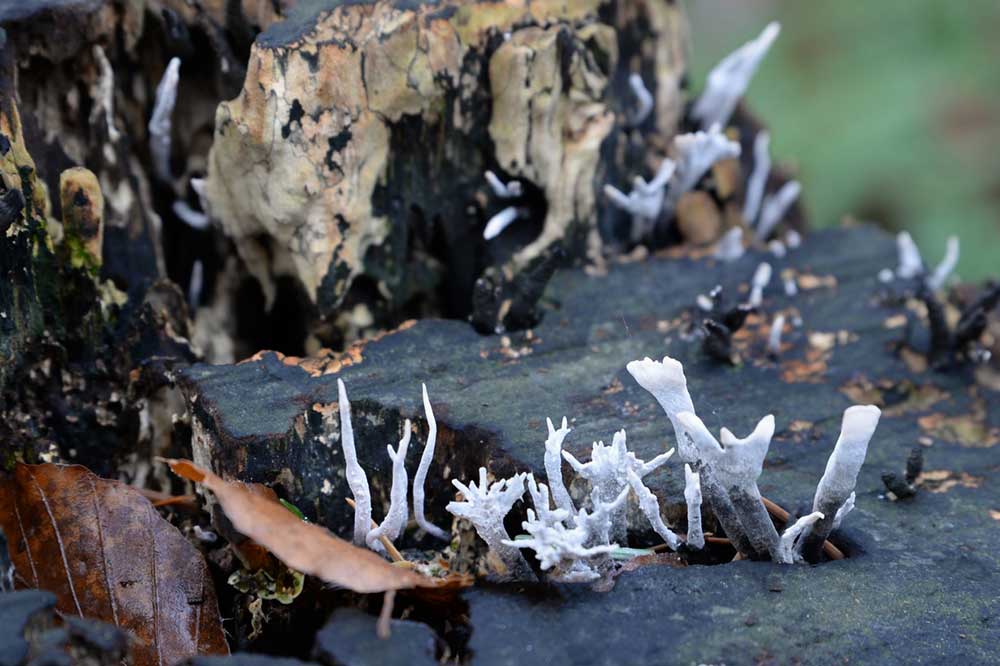
Candlesnuff is an upright fungus with a hairy, black base, a grey mid-section, and a powdery, white tip. The stems may be single spikes but often become flattened and branch like antlers.Its spores are smooth, black and shaped like a bean. Candlesnuff is also known as stag’s horn, carbon antlers, and candlestick fungus.
It is common and widespread throughout Britain, growing on dead and decaying wood of broadleaved trees as well as in moss.
Candlesnuff is similar to beechmast candlesnuff but the latter is much thinner and darker. Although it’s not poisonous it is considered too small and tough to eat.
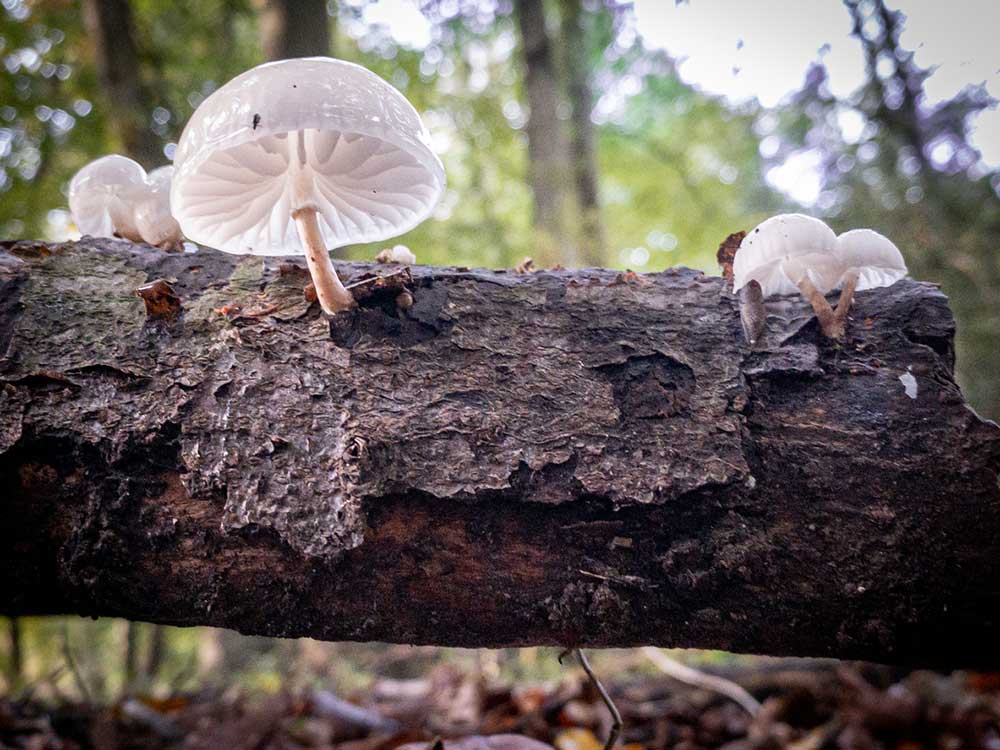
Porcelain fungus has a slender, white, tough stem with a small skirt and a large membranous ring. When young the cap is pale grey and convex but flattens and whitens as the fungus matures. It is covered with a semi-translucent, slimy membrane that often has an ochre flush in the centre. The white gills, which are widely spaced, are located beneath the cap and attached to the stem, while the white spores are smooth and round. When porcelain fungus grows on the underside of a tree, its stems will curl up, so the caps are held with the gills facing down. It is also known as poached egg fungus or slimy beech fungus.
Porcelain fungus is a common mushroom found across Britain. Look out for it in woodland growing in large clusters on the trunks of dead or diseased trees, particularly beech but occasionally oak. It may also grow on the dead branches of living trees. It can completely take over a dead tree and deters or even kills rival fungi with its own powerful fungicide.
Porcelain fungus is easy to identify and is rarely confused with other fungi. Once the slime has been washed off it is edible and has a rich mushroomy taste, but should be cooked before consumption.