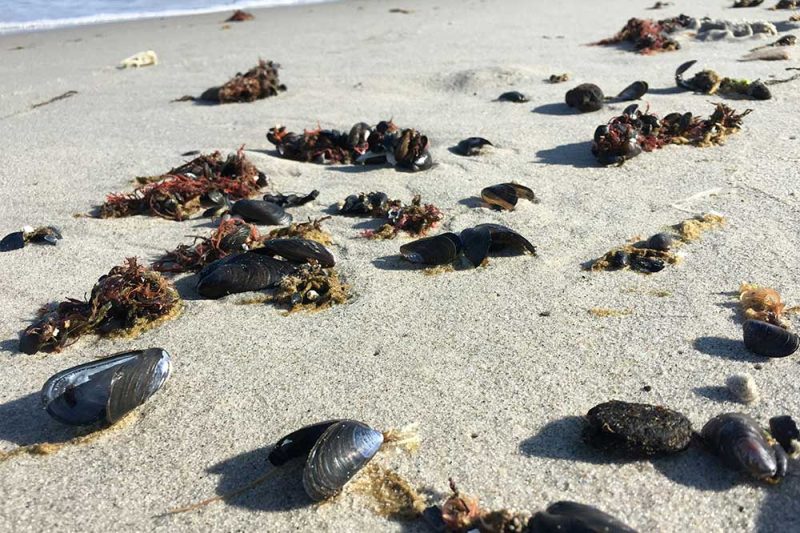
Beachcombing is a fun and rewarding activity that involves walking along the shoreline, particularly after a storm or during low tide, to search for interesting items that have washed up on the beach.
The practice is probably as old as human civilisation, but the term ‘beachcomber’ was first recorded in print in the American lawyer Richard Henry Dana Jr.’s memoir Two Years Before the Mast published in 1840. In it, he describes a population of Europeans living in the South Pacific islands ‘combing’ the beach for anything they could trade.
It is estimated that in 1850, over 2,000 people made their living from beachcombing in the South Pacific, many of them castaways or sailors who had jumped ship. When missionaries arrived, the growth of a commercial community on each island, saw the end of beachcombing.
Today, beachcombing is largely a recreational activity undertaken by collectors and nature enthusiasts, or someone simply looking to while a few hours at the coast. It is also used by conservationists and scientists to track the movement of flotsam and jetsam to monitor ocean currents.
If you’re spending your next holiday on a coastal farm, why not head to the nearest beach at low tide and discover what’s waiting to be found? There’s no need to take everything home as a souvenir – in most cases, a photograph makes the perfect keepsake.
Beachcombing can yield a wide range of objects both manmade and natural.
Beaches are covered with thousands of pieces of broken shells that will eventually be eroded into sand, but finding an intact shell is one of the joys of beachcombing.
Razor shell – long, narrow, rectangular clam shells that are usually brownish in colour.
Common limpet – conical, greyish white shells, that are often found attached to rocks.
Baltic tellin – white, yellow or pink shells, that are smooth and relatively flat with concentric rings that indicate their age.
Dog whelk – spiral-shaped pointed sea snail shell, usually white but sometimes in shades of brown or yellow.
Slipper limpet – an unmistakable slipper-shaped oval shell usually pale cream in colour with blotches of orange or red.
Cowries – small, glossy shells, in the shape of an egg.
It’s not unusual to come across some of the tougher remains of sea creatures that normally live far below the low-tide line and are rarely seen except by divers. If you come across something that looks like an animal, take a moment to check that it isn’t alive before touching or moving it.
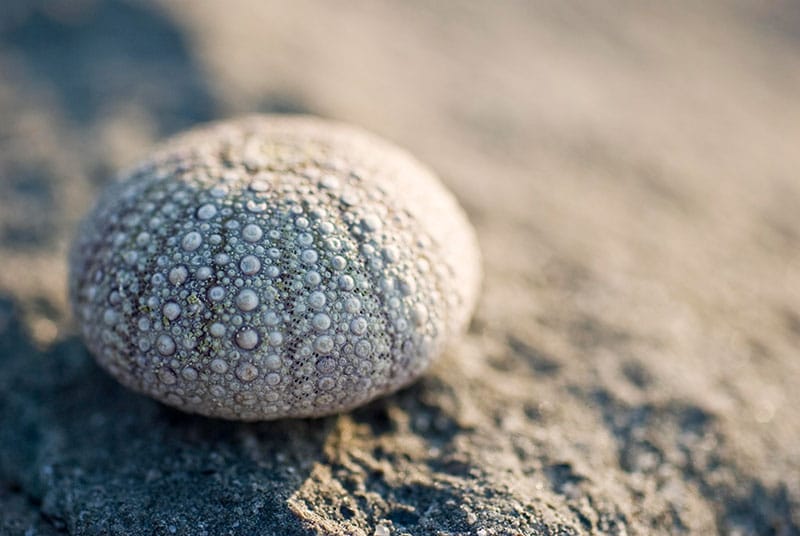
Edible sea urchin – the spherical exoskeleton of a sea urchin is known as a test. It is usually pink or purple but can sometimes be green, yellow, or white and has small bumps where the spines were once attached.
Sea potato – a type of sea urchin with a dullish white, heart-shaped, thin, brittle shell.
Whelk egg cases – often mistaken for sponges, a mass of pale-yellow papery balls in a honeycomb-like structure.
Starfish – live starfish are often mistaken for dead ones as they are quite firm to the touch. If it is near the water, on wet sand, or has active tube feet, it is likely to be alive. Dead starfish are very brittle and are usually found far from the tide line.
Mermaid’s purse – leathery, rectangular egg cases from sharks, skates, or rays, with long horns on each corner.
Black sea grapes – bunches of cuttlefish eggs that have been stained black by cuttlefish ink. There is a chance that the babies may still be alive, so they should be returned to the water.
Look for fossils near the bottom of eroding cliffs, amongst larger rocks and boulders at the back of the beach, or where a stream flows into the sea. Never dig into or hammer at the base of cliffs, as they may be unstable and dangerous.
Ammonites – extinct cephalopods with coiled, chambered shells that range in size from a few centimetres to several metres.
Belemnites – extinct squid-like cephalopods with a bullet-shaped shell.
Gryphaea – small, curved, thick oyster shells. Exogyra, a genus of the family, are nicknamed Devil’s Toenails due to their hooked, claw-like appearance.
Shark’s teeth – small, sharp, and pointed, often black, grey, or brown indicating their mineral composition.
Pyrite nodules – also known as Fool’s Gold, iron sulphide formations that have replaced organic matter to create metallic fossils, often ammonites or bivalves.
Britain’s waters are home to more than 600 species of seaweed, from microscopic phytoplankton to vast underwater forests of kelp. Many varieties are surprisingly tasty and nutritious and can be eaten if you know how to identify them safely. Alternatively, seaweed can be pressed in a flower press and used to create prints and decorations.
Bladder wrack – one of the most common seaweeds. Olive-brown in colour with long, branching fronds and air-filled ‘bladders’ along its length which allow it to float upright in the water.
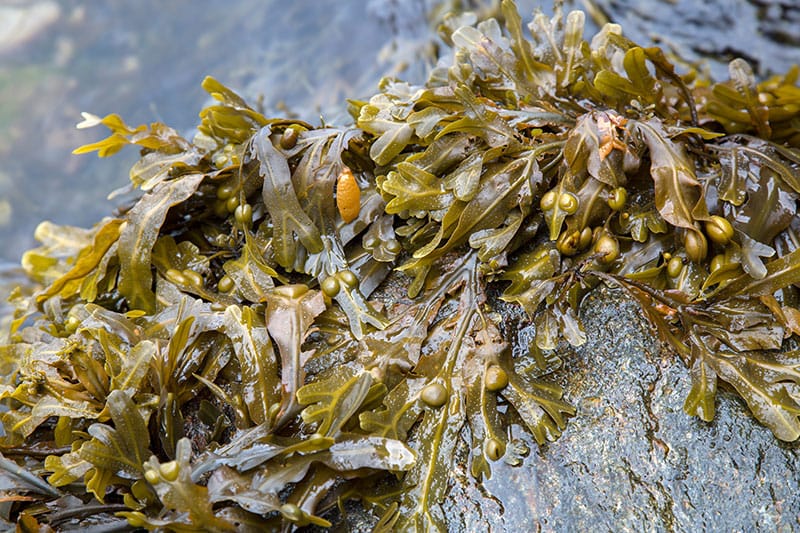
Spiral wrack – grows just below the high water mark on rocky beaches. Pale olive-brown with twisted fronds with swollen tips.
Sea lettuce – bedraggled, green, floppy leaves. It is also known as green laver and is used to make the Welsh speciality, laver bread.
Oar weed – dark brown with splits in the fronds resembling a hand. Tiny creatures such as worms and sea spiders can often be found living inside the roots.
Sea glass is created when shards of discarded glass items are persistently tumbled and ground down by the ocean’s waves, until the sharp edges are rounded and the surface becomes frosted. It can take anything from 20 to 100 years for a piece of sea glass to acquire its distinctive appearance.
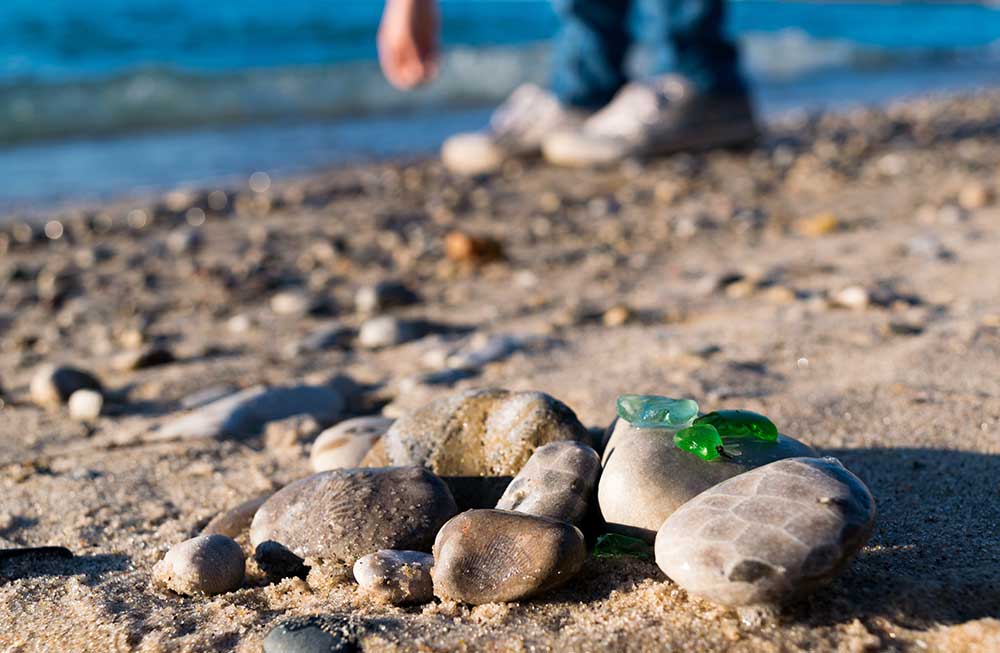
The colour of sea glass is determined by its original source but is most often green, brown, white, or clear. Less common colours include jade and amber, while purple, blue, orange, and red are particularly rare.
Sea glass can be used in a variety of ways. It is primarily used to make jewellery, but is also used in arts and crafts projects, and as a decorative item in the home.
Driftwood refers to any piece of wood that washes up on the shore, but for beach combers weathered pieces tend to be of the most interest, with their gnarled shapes a testament to the power of the ocean.
Most driftwood comes from the remains of trees washed into the sea from flooding or high winds. Manmade objects – known as drift lumber – include lost cargo, parts of shipwrecks, or everyday items swept out to sea during storms.
Driftwood is an important habitat for shore birds, providing shelter and camouflage, and a natural structure for nest sites.
A range of items including, coins, jewellery, keys, fishing tackle, and vintage toys, as well as more mundane items such as ring pulls and balls of aluminium foil.
Beachcombers may also come across actual treasure which are metallic objects other than individual coins that are at least 300 years old and contain at least 10% gold or silver by weight. Two or more coins from the same find that are at least 300 years old are also defined as treasure, as are hoards of more than 10 coins even if they contain less than 10% gold or silver.
If you find what you believe to be treasure, you must report it to the local coroner or Finds Liaison Officer within 14 days.
In 1997, a container ship sank off the coast at Land’s End, Cornwall, dumping almost 5 million Lego pieces into the sea. Coincidentally, the pieces were primarily from sea-themed sets such as Lego Aquazone, Lego Divers, and Lego Pirates.
The spilled pieces have washed up on shores all around the world, but particularly on the beaches in Devon and Cornwall, becoming a cultural phenomenon among beachcombers.
Pieces to look for include scuba tanks, octopuses, flippers, sharks, life rafts, life jackets, sea grass, and cutlasses, as well as flowers, brooms, and dragons.
While beach combing can be a fun and harmless activity, it’s important to be aware of the legal and ethical aspects.
Under the Coast Protection Act of 1949, taking natural items such as pebbles and sand, no matter how small the amount, is not allowed on beaches in the British Isles and you may incur a fine of up to £1000. The law is designed to protect Britain’s beaches from erosion by the sea. Taking materials like shells, driftwood, and sea glass is allowed although some beaches might have restrictions, especially in protected areas. Always check local guidelines before collecting anything.
Ensure that the beach you are visiting is accessible to the public. Many beaches in the UK are owned privately, and accessing them without permission can be considered trespassing. Look for signs indicating whether a beach is private or public.
Take care not to disturb wildlife or their habitats while beach combing. If you find living creatures in any shells you pick up, do not take them away and gently return them to the spot you found them in. If you come across something that is already dead such as a starfish or crab, feel free to take it away with you.
To make the most of your beach combing experience, there are a few things to keep in mind.
The best time for beach combing is during low tide or after a storm when items are more likely to be exposed. Check tide timetables before you go to plan your visit.
Wear comfortable clothing and sturdy footwear suitable for walking on sand and rocky surfaces. Bring layers, as coastal weather can change quickly.
Consider bringing a small bucket or bag to collect your finds, as well gloves to protect your hands. A stick or small shovel or trowel can also be helpful for digging in the sand, while a guide book will help you identify your discoveries.
Follow the principles of Leave No Trace. Only take what you need, and don’t remove any living organisms, plants, or large pieces of driftwood. Be mindful of the local wildlife and ecosystems, and avoid disturbing any nests or habitats you may come across.