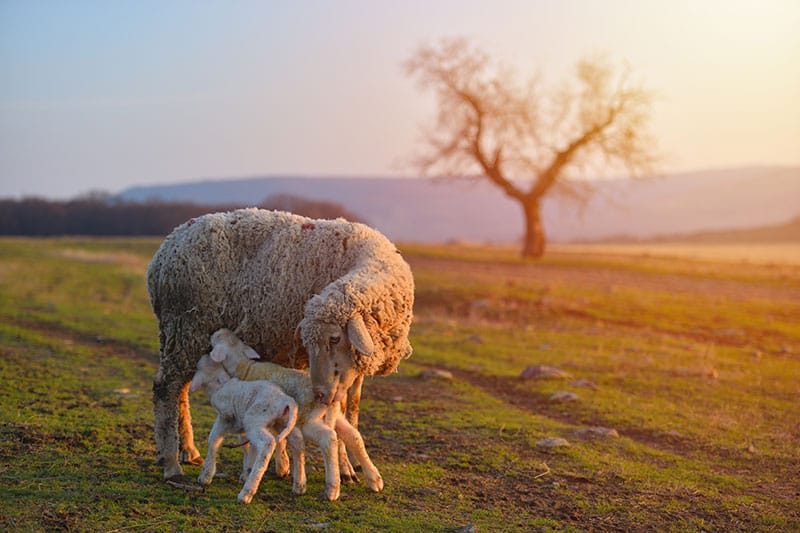
Lambs are strongly associated with spring, yet in the British Isles lambing season can begin as early as November and continue through to June. The precise timing depends on the breed of sheep, the farming system, and local weather conditions.
Sheep are seasonal breeders, meaning they have distinct annual periods of sexual activity and inactivity. More specifically, they are short-day breeders, which means the long, dark nights of autumn and winter trigger the release of the hormone melatonin, the primary driver of seasonal breeding, from the pineal gland at the base of the ewe’s brain. With an average gestation period of around 147 days, seasonality ensures that lambs are born at an optimal time, when grass is plentiful enough to support the lactating ewes.
Modern farming methods allow farmers to override this natural cycle with techniques such as melatonin implants or progestogen treatments which can bring ewes into season earlier, enabling lambing from November or December. The advantages of early lambing include spreading the workload, reducing disease risk in colder weather when bacterial presence is lower, making use of winter grazing while other livestock, such as dairy cows, are housed indoors, preparing mature rams and ewe lambs for pedigree sales, and achieving premium prices for early-born lambs.
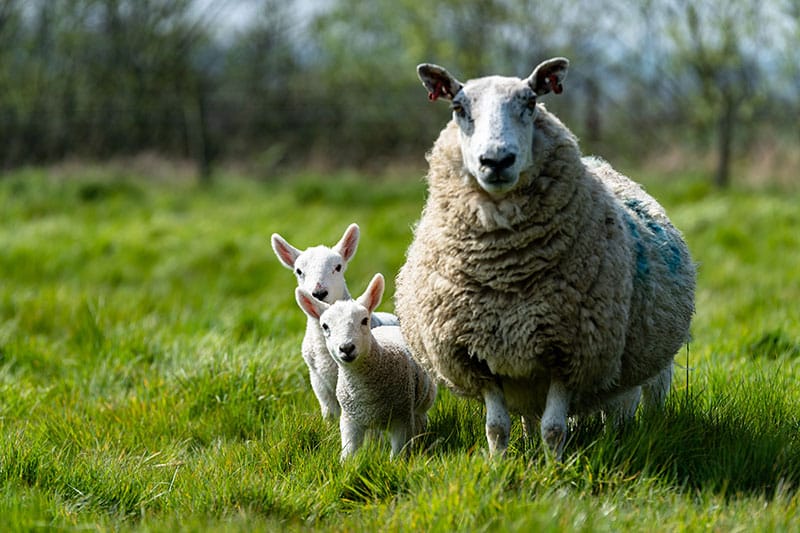
Certain breeds, such as the Dorset Horn, are capable of breeding throughout the year. Some farmers take advantage of this by lambing three times over two years. This can increase turnover, reduce fixed costs per lamb, and produce more replacement stock annually. However, these benefits must be balanced against higher feed, veterinary and medicine costs, increased management demands, and the risk of being out of step with natural grass growth.
Geography also plays a part in the timing with lambing in South West England generally occurring earlier than in northern Scotland, reflecting regional differences in climate and grass growth.
Lambing may take place indoors or outdoors depending on the hardiness of the sheep, weather conditions, and the farmer’s approach. In general, tougher hill and upland breeds are more likely to lamb outside, as this helps them adapt to their environment. Where indoor lambing is practised, ewes are usually brought inside several weeks before their due date and placed on carefully managed nutritional plans.
Indoor lambing allows for closer supervision, protection from cold or wet weather, and tailored feeding, which is particularly important for ewes carrying twins or triplets. Ewes housed indoors are sometimes shorn for several reasons. They require less housing space reducing costs. Shearing makes it easier to spot potential udder problems and to see when a ewe is ‘bagging up’, the stage at which the udder becomes firm as it fills with colostrum, signalling that lambing is imminent. Shorn ewes tend to eat more, which can result in heavier lambs at birth and improved survival rates. Their lambs can more easily locate the teat, ensuring an early intake of colostrum. In addition, cleanliness is easier to maintain, reducing the risk of bacterial contamination as lambs search for the teat. If pregnant ewes are shorn, this should be done at least eight weeks before they are turned back out to pasture to allow sufficient wool regrowth.
Outdoor lambing has its own benefits. It is generally less labour-intensive, as housed ewes and lambs require checking every few hours, pens must be mucked out, and bedding replaced regularly. Costs are lower because housing, bedding, and additional feed are not required. With fewer pathogens, disease can also be reduced, as sheep are not confined together in enclosed spaces, leading to lower antibiotic use. Ewes may experience less stress outdoors, as they can move away from the flock to lamb and form stronger bonds with their offspring. Outdoor systems also allow lamb to be marketed as 100 per cent grass-fed, which can attract premium prices.
The drawbacks are that problems, such as abortions, poor mothering ability, or inadequate milk production, can be harder to detect. Record-keeping may also be more challenging, as it is more difficult to keep ewe–lamb families together in open fields.
To address some of these issues, farmers may use a technique known as drift lambing. This involves moving ewes that have not yet lambed on to fresh pasture each day, leaving newly lambed ewes behind. After a few days, these new families are moved on together to fresh grazing. Drift lambing makes it easier to identify newly born lambs, helps ensure young families have access to the best grass, and prevents ewes from interfering with or stealing other lambs. Although more labour-intensive than set-stocking, where ewes and lambs remain in the same field throughout the season, drift lambing is associated with lower lamb mortality.
The birthing process begins when the ewe goes into labour and contractions start. Signs include restlessness, getting up and down repeatedly, pawing at the ground, and lying on her side while straining with her nose stretched into the air. At this stage, she should be left undisturbed. The water bag usually appears first, and the lamb should be delivered within the hour.
Once the lamb is born, the ewe should be allowed to claim and lick her newborn, helping to dry it and strengthen the bond between them. The farmer may need to ensure the lamb is breathing properly and that its mouth and nostrils are clear of mucus and fluid. It is also important to check whether another lamb is due and that milk is flowing freely from the ewe’s teats. Lambs must receive colostrum as soon as possible, ideally within the first two hours of life and regularly during the first 24 hours, as it provides essential antibodies to protect against disease and infection.
The umbilical cord is trimmed if necessary, and the navel is dipped in iodine to prevent infection. If lambing takes place indoors, the ewe and her lambs are moved to a small pen under a heat lamp to encourage bonding and keep the lambs warm.
If the ewe struggles to give birth, for example, if the lamb is particularly large or incorrectly positioned, the farmer may need to assist. The ewe is gently laid on her side while the farmer checks the lamb’s position by hand, correcting it if required before carefully easing the lamb out. If complications persist or the lamb cannot be delivered safely, veterinary assistance will be called.
Sadly, not all lambs survive, and in such cases, the ewe may be distressed and left with a full udder. She will be moved to a pen and her feed reduced to help dry up her milk supply gradually, minimising the risk of complications. Sometimes, however, an orphaned lamb can be fostered by the ewe. Various methods are used to encourage acceptance, including ‘slime grafting’, where the orphan is rubbed with the ewe’s birthing fluids and placenta, or placing the pelt of a dead lamb onto the orphan to transfer its scent.
A lamb may become orphaned for several reasons. Its mother might die, or become ill or injured soon after giving birth. Ewes carrying multiple lambs, particularly triplets or quadruplets, can struggle to produce enough milk for them all. And in some cases, a ewe becomes separated from her newborn and fails to bond, rejects it outright, or focuses more on feeding herself than caring for her offspring.
Grafting orphaned lambs onto another ewe can be highly successful, depending on the method used and the temperament of the ewe. However, if grafting is unsuccessful, or there are too few ewes available to foster additional lambs, human intervention becomes essential.
Orphaned lambs are fed a colostrum replacer, a highly nutritious supplement designed to provide the vital antibodies they would normally receive from their mother. It should be given warm, in a sterilised bottle. Lambs must be fed while standing, and should not be cuddled or fussed during feeding, as this can encourage them to bond with people rather than other sheep. Most lambs will instinctively suckle; if they hesitate, gently pressing the teat against their lips will usually stimulate a feeding response.
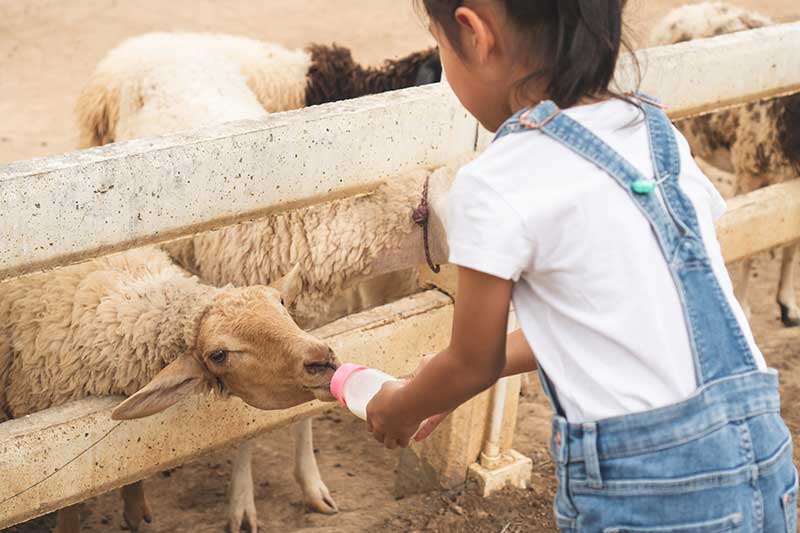
Bottle feeding should be reserved strictly for genuinely orphaned lambs, where it is necessary to save life. Unfortunately, some farm parks offer bottle-feeding experiences in which lambs are deliberately separated from their mothers for visitor interaction. While artificial feeding is sometimes unavoidable, it can carry risks, including poor nutrition and weakened immunity if not managed correctly. It is also not always clear what happens to these lambs once they are no longer small and cute enough to attract attention.
If you are considering visiting a bottle-feeding attraction, ensure that only truly orphaned lambs are involved. Alternatively, visit a genuine working farm, where animal welfare and responsible husbandry are the priority.
We have a fantastic collection of farm stays where you can experience the magic of lambing season in spring. As well as seeing lambs gambolling in the fields, you may also have the chance to watch ewes give birth and see the newborn lambs take their first wobbly steps, help bottle-feed orphaned or weak lambs, and learn about the entire process from experienced farmers. Please note, not all farms allow hands-on experiences for safety and welfare reasons, so it’s best to check in advance.
View our collection of farm stays with lambs.
If you’re pregnant, especially in your first trimester, it’s important to take extra precautions around sheep during lambing season.
Ewes can carry infections that are harmful to unborn babies, such as:
These infections can be passed to humans through contact with birthing fluids, afterbirth, or clothing contaminated by farm environments.
To stay safe: