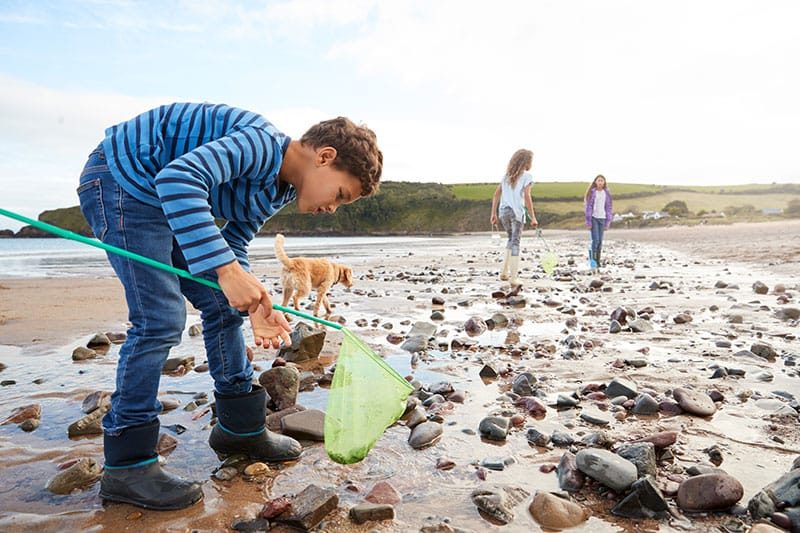
Rockpooling is a delightful way to explore the fascinating world of marine life found along our coastlines. Shallow pockets of water left on rocky shores during low tide form miniature ecosystems, teeming with diverse creatures and plant life. These natural aquariums offer a family-friendly way to inspect the rich biodiversity of marine life close up.
Shore crab – the most common crab in the British Isles and commonly found in rock pools. It is usually greenish in colour but can sometimes be orange or red with a spiky pattern on its shell.
Hermit crab – hermit crabs live inside the empty shells of sea snails, particularly those of whelks and periwinkles. They have a reddish-brown body and the right-hand pincer is larger than the left.
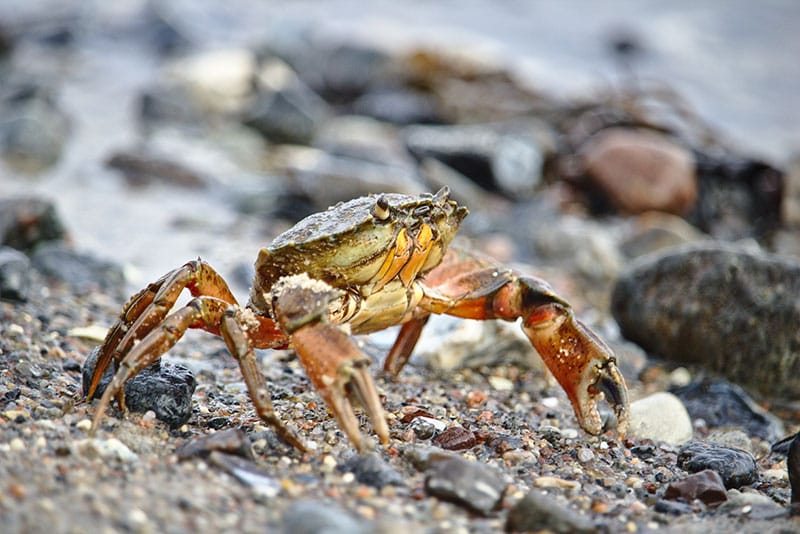
Velvet swimming crab – a medium-sized crab with bright red eyes, and a body covered in short hairs that are soft to the touch. But don’t get too close – they’re known to give a nasty nip.
Porcelain crab – a tiny greenish-brown crab with long antennae and broad, flattened claws. They are well-camouflaged and can be hard to spot.
Edible crab – large brownish-orange crab with a distinctive pie crust edge to its shell and black-tipped claws. It is a nocturnal predator that hides under boulders during the day.
Prawns and shrimps – usually found hidden in crevices or under stones darting around the pool to find darkness. They have a translucent body with brownish markings and long antennae.
Sea slater – closely related to the woodlouse, they have a flat, grey, segmented body with lots of legs. Turn over rocks to discover them.
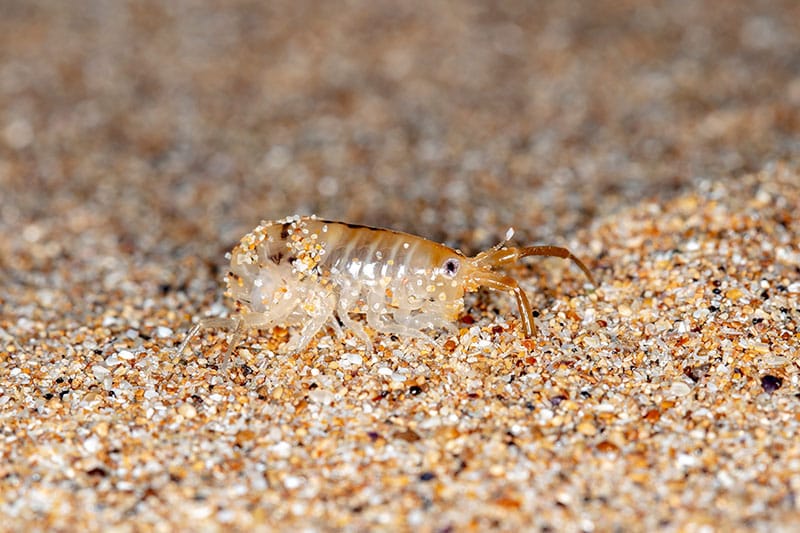
Sand hopper – tiny crustacean with a creamy body and one antenna thicker than the other. They jump high into the air when disturbed.
Acorn barnacles – barnacles attach themselves to rocks, pier legs, old boats, and pieces of driftwood. The shell is grey-white with a kite-shaped opening.
Squat lobsters – there are several species of squat lobster that call the British Isles home. They have flattened bodies and tuck their tails making them look like a cross between a lobster and a crab.
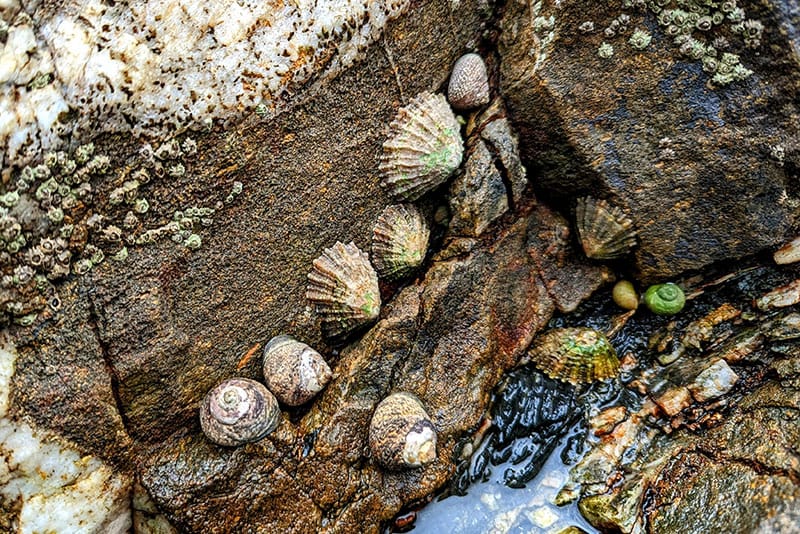
Limpets – small cone-like shells that are found firmly clamped to rocks, only becoming active when the tide comes in. Do not attempt to remove them as you may damage the muscle that keeps them there.
Periwinkles – a common sight when rockpooling, they have a grey whorled shell with a point at the top, similar to that of a land snail.
Dog whelks – found wherever there are barnacles and mussels which they feed on. They usually have a white shell although it may be brown or yellow, that’s conical in shape with a pointed tip.
Spotted cowries – also known as the common cowrie, it has a pale, reddish-brown, egg-shaped shell with three brown spots on the top.
Sea slug – large fawn sea slug covered in rod-like structures known as cerata, with a white V-shaped mark on its head.
Sea lemon – large colourful sea slug with a warty body. They are usually yellow but can also be green, white, or brown.
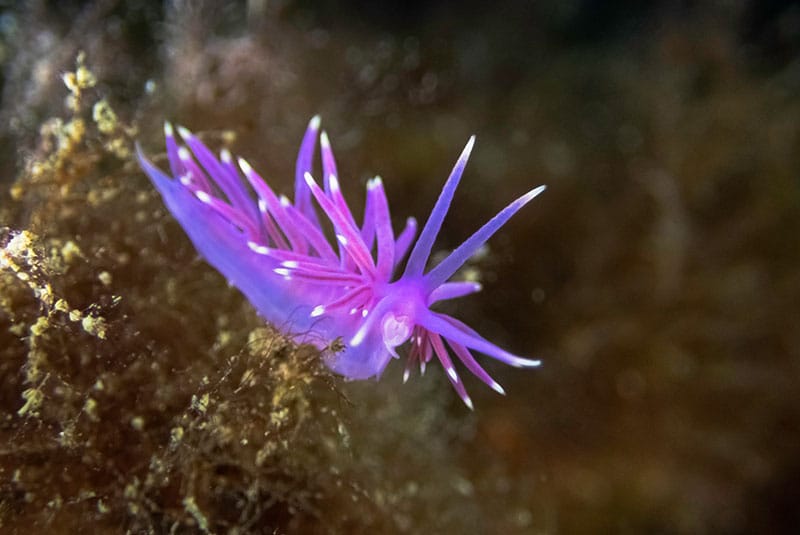
Violet sea slug – a tiny sea slug with a dazzling violet body and white tips to the projections on its back. Its eggs are laid in a thin white thread which can sometimes be easier to spot.
Sea hare – looks like a sea slug but has an internal shell. It is brownish in colour, and its tentacles look like hare’s ears, giving it its common name.
Mussel – also known as the blue mussel, the common mussel is a familiar sight on beaches all around Britian’s coastline. The shell is dark bluey-grey with concentric lines.
Piddocks – types of clam that burrow into soft clay and sand. They have a brittle greyish shell covered in ridges and lines.
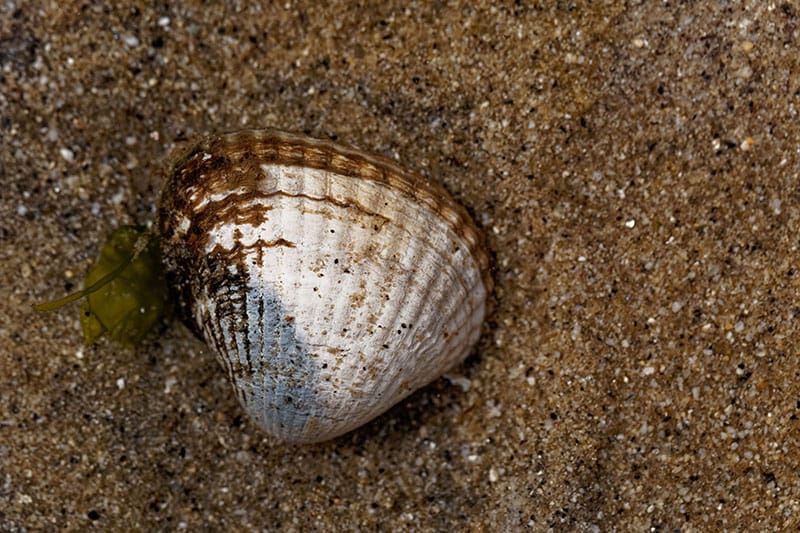
Cockle – the common cockle has a round domed shell that is usually off-white but may be pale yellow or brown.
Variegated scallop – the species of scallop most likely to be found washed up on the beach or in rock pools. It has a ribbed shell that comes in a range of colours including white, red, pink, purple, yellow, and orange.
Beadlet anemone – commonly seen as dark red, jelly-like blobs in rockpools as they retract their tentacles as the tide goes out. They may occasionally be orange or green.
Snakelocks anemone – large grey-brown anemone with bright green tentacles with purple tips. Be careful if you spot them as they can sting quite badly.
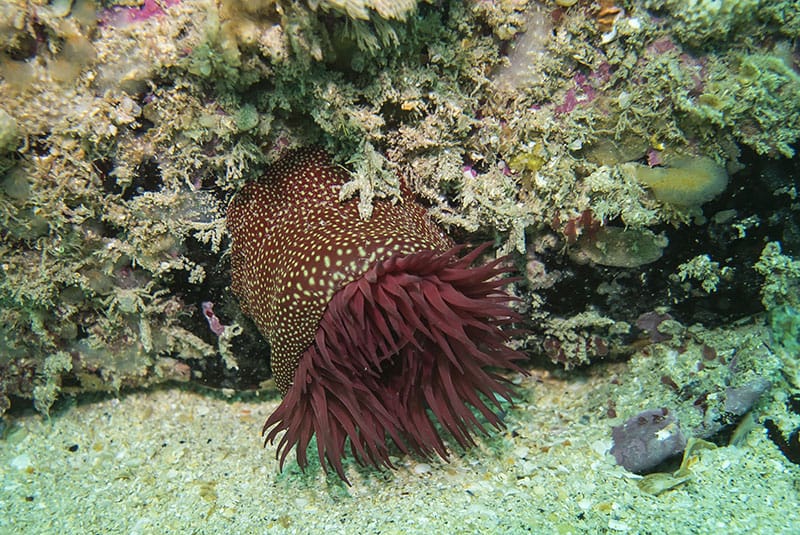
Strawberry anemone – bright red anemones with green spots which gives them their name. They have small red tentacles which are often retracted at low tide.
Daisy anemone – one of Britain’s largest anemones, the daisy anemone has a dark trumpet-shaped body with short, plum-coloured tentacles.
Common starfish – often found washed up on the shore after storms, the common starfish is orangey in colour and has five arms with pale spines
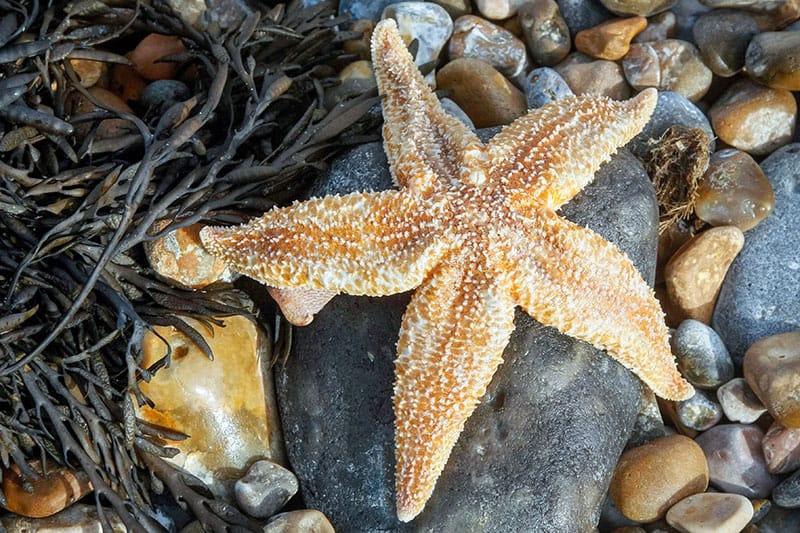
Cushion star – a tiny starfish with five short arms. It is usually pale orange, brown, green, or cream and has puffed-up appearance.
Bloody Henry starfish – a five-armed starfish that ranges in colour from red and purple to yellow and brown, with a sandpaper-like texture on its upper body.
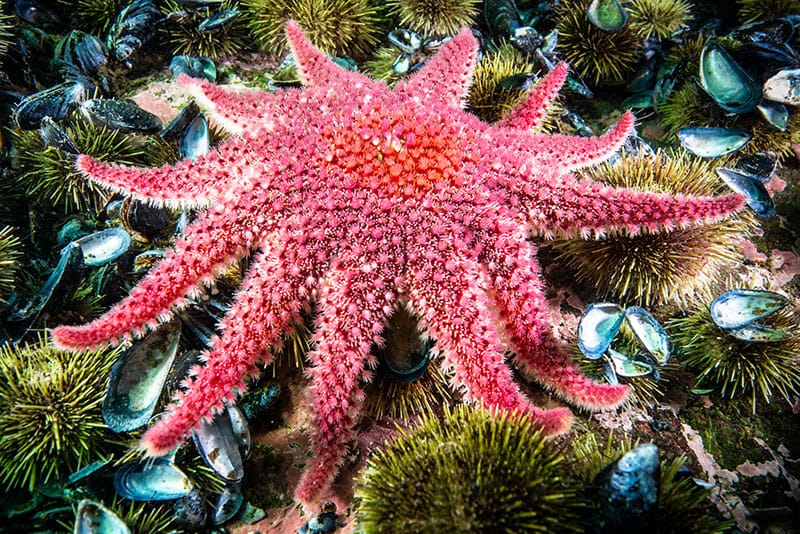
Common sun star – a sun-shaped starfish typically with 10 to 12 arms but occasionally with as many as 18. It is orangey-red with bands of pink, red, yellow, and white on its arms.
Brittlestars – brittlestars are related to starfish with fragile arms that are often broken off when found in rockpools. Several species live along the British coast and vary in colour from dullish brown to purple, red, orange, and yellow.
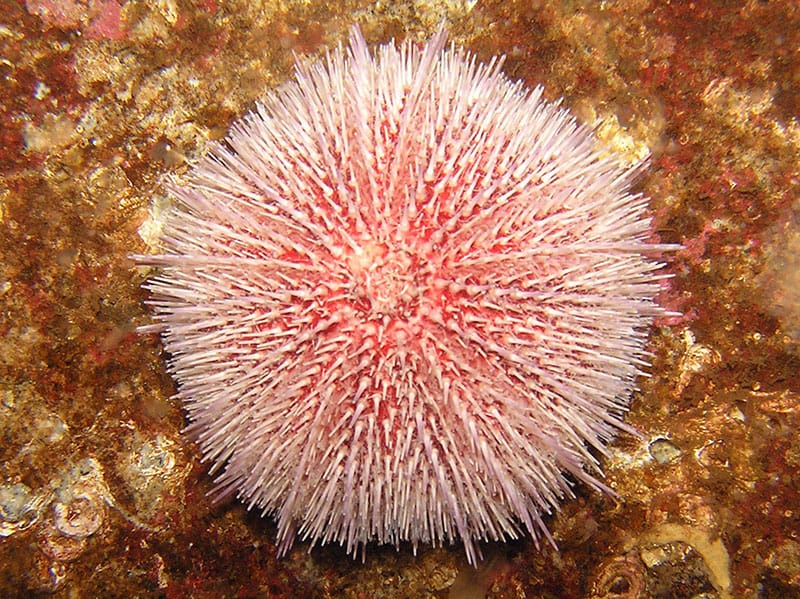
Edible sea urchin – also known as the common urchin, the edible sea urchin is the largest species of urchin in Britain. It is usually pink or purple but may also be red, green, and yellow.
Shanny – the shanny, also known as the blenny, is a common find in rockpools. It is a long fish with a large head and big eyes and are usually brown with darker markings although males turn almost completely black during breeding season.
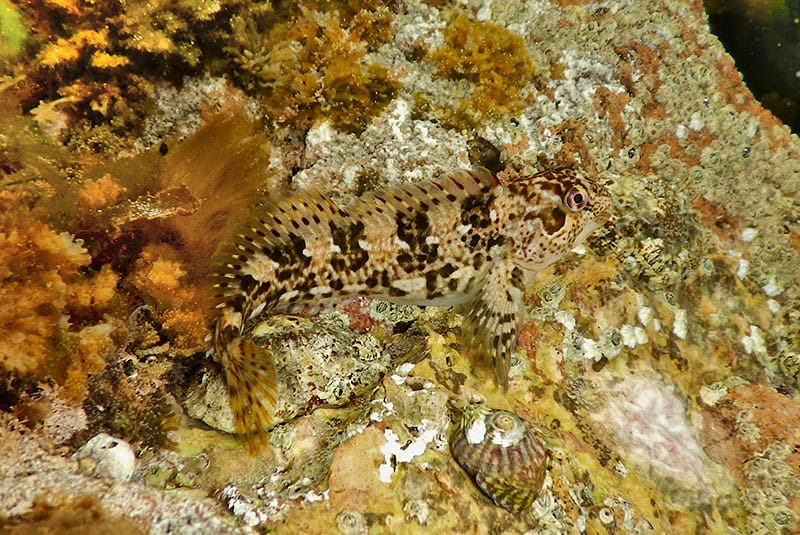
Tompot blenny – the largest British blenny which is occasionally found in rockpools. It is orangey-brown with darker mottling and bars.
Rock goby – found in rockpools during the summer, the rock goby is well camouflaged with a brown mottled body. Gobies can be distinguished from blennies by the number of dorsal fins; gobies have two, whereas blennies have one.
Rocklings – the most common species to be found in rockpools are the shore and five-bearded rockling. They are long and slippery like an eel with three barbels on the face.
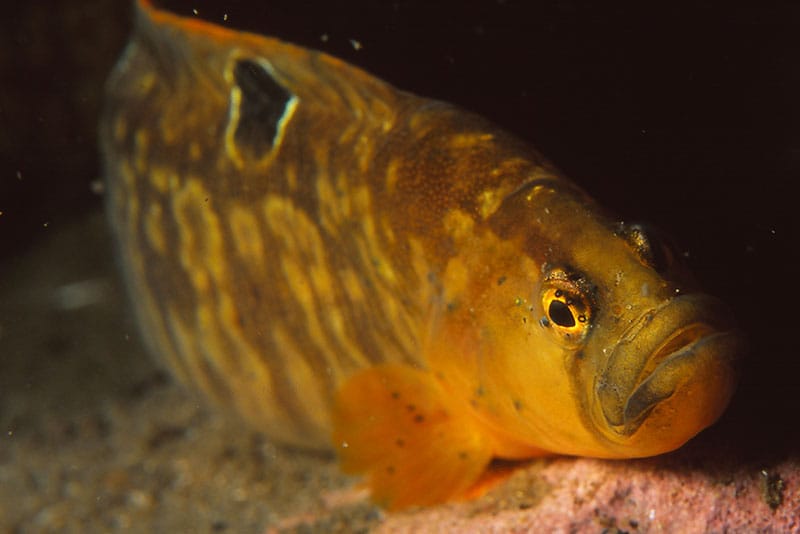
Butterfish – butterfish have pale yellow or orange-brown slimy skin with darker bands and white-ringed black spots on its back.
Worm pipefish – often mistaken for a piece of seaweed, the worm pipefish has a dark olive-green body with an upturned seahorse-like snout, and light green markings on the face
Bladder wrack – a common brown seaweed with air-filled bladders running along its length
Channelled wrack – a yellow-brown seaweed with long fronds with rolled in sides creating ‘channels’. It has V-shaped swellings at the ends which are its reproductive structures.
Serrated wrack – also known as toothed wrack, serrated wrack has olive-brown flat fronds with jagged edges.
Rainbow wrack – a bushy seaweed with spiky fronds that appears blue or purple under water.
Carrageen – a branching seaweed also known as Irish moss. It is usually reddish-brown but its fronds may appear iridescent in water and turn green if exposed to sunlight for long periods.
You don’t need any special kit to go rockpooling, but a few simple items can make the experience more rewarding:
Transparent container – a clear plastic bucket or Tupperware container allows you to gently scoop up water and creatures for a closer look without harming them. A net is not recommended, as they can easily entangle and injure small, soft-bodied animals.
Magnifying glass – not essential, but useful for spotting tiny details such as the suckers on a starfish. Alternatively, you can use a specially designed magnifying pot.
Identification book – a good field guide with clear photos and descriptions will help you tell similar species apart.
Sturdy footwear – rocks can be slippery or sharp, so wear appropriate shoes with plenty of grip for safety.
Head to a sheltered, rocky beach and aim to explore at low tide. Spring tides are ideal, as they reveal more rockpools. When you find a suitable pool, approach it quietly and avoid casting a shadow over the water, as this can startle the creatures and send them into hiding.
Take time to observe what’s in the pool and on the surrounding rocks. You can use your bucket to gently scoop up some water, plants, ad small animals for a closer look. Carefully lift a stone or piece of seaweed to check for anything hiding underneath, then return it exactly as you found it.
Once you’ve finished identifying and recording your discoveries, return everything to the pool by slowly submerging your bucket. Don’t keep creatures out of the water for long, as changes in temperature can stress them. And keep your bucket in the shade, too, as direct sunlight can quickly harm or even kill the delicate marine life.
Rember to leave no trace: take any litter home with you and ensure you don’t leave any waste behind.