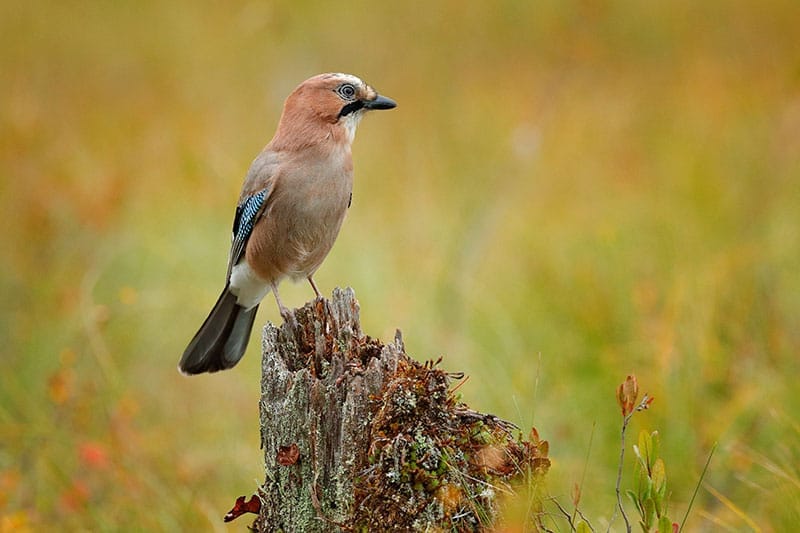
The jay is the most colourful member of the crow family, with a pinkish-brown body, white rump, and bright blue wing patches. Unlike many of its relatives, it tends to be shy and secretive, often keeping to the cover of foliage. However, from September onwards, sightings increase as jays begin foraging for acorns, nuts, and seeds, which they bury in the ground to see them through winter. They also become more vocal, uttering a harsh, rasping screech when disturbed, a call that has earned them the nickname “screamer of the woods”.
Although highly intelligent, jays frequently forget where they have hidden their food caches, which means some of the buried acorns sprout into oak trees. Studies suggest that, before humans began growing trees commercially, jays were the main agents of propagation of the European oak, and are credited with establishing the largest population of holm oak in northern Europe, found at Ventnor on the Isle of Wight.
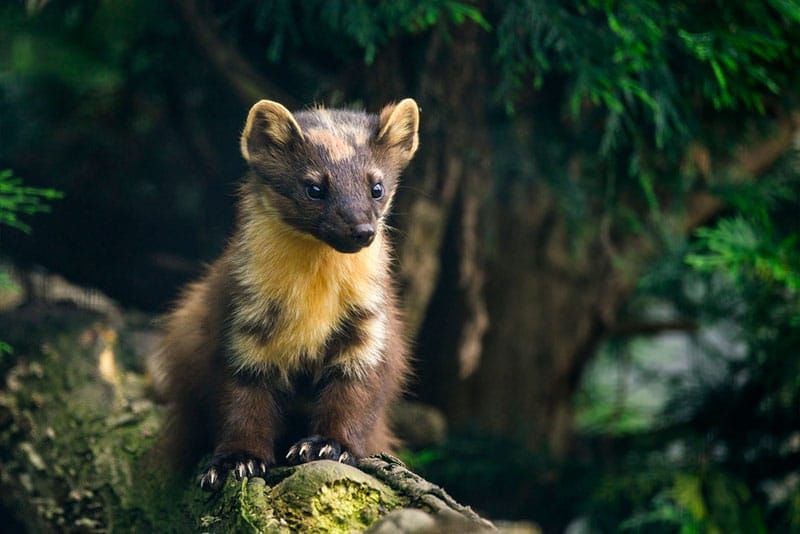
Once confined to northwest Scotland and thought to be extinct in England, the pine marten has made a modest recovery across the British Isles thanks to legal protection and conservation efforts. A successful reintroduction programme in the Forest of Dean has helped their return, and they are now occasionally recorded in Cumbria, the North York Moors, Shropshire, and the New Forest. In 2022, one was even captured on camera by the Zoological Society of London in woodland in southwest London, the first confirmed sighting in the capital for over a century.
Elusive and nocturnal, pine martens are difficult to spot, but they can be recognised by their chestnut-brown fur and the distinctive pale yellow bib on the throat and chest. They have a seasonal diet, preying on small rodents, birds, eggs, and insects, but also feeding on fruits. In late summer and early autumn, bilberries, rowan berries, and blackberries become a major food source, often turning their droppings (scats) blue or red. Look out for the scats left on forest paths or prominent places such as boulders and tree stumps, used as markers to signal their territories.
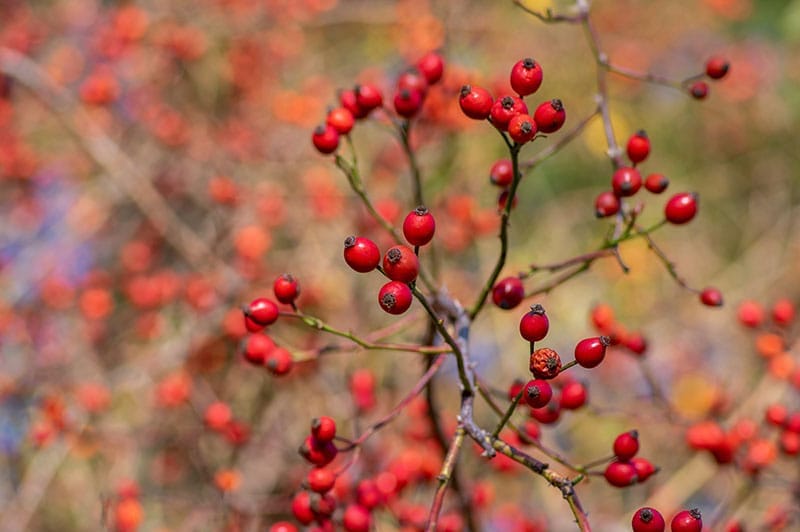
The dog rose is the most widespread of Britain’s native wild roses, found in hedgerows, woodland edges, sand dunes, and grasslands. It is a scrambling shrub with arching, thorn-covered stems, which bears sweetly scented pale pink or white flowers in summer. By autumn, these give way to oval, bright orange or red fruits known as rosehips, a valuable food source for birds and small mammals such as field mice, squirrels, and bank voles.
Rich in vitamin C and containing anti-inflammatory galactolipids, rosehips have long been prized for their health benefits. While they can be eaten raw, they are more commonly used in jams, jellies, syrups, pies, teas, wines, and other drinks. Foragers should take care when preparing them, as the seeds are covered in fine, irritating hairs that can cause digestive problems if consumed.
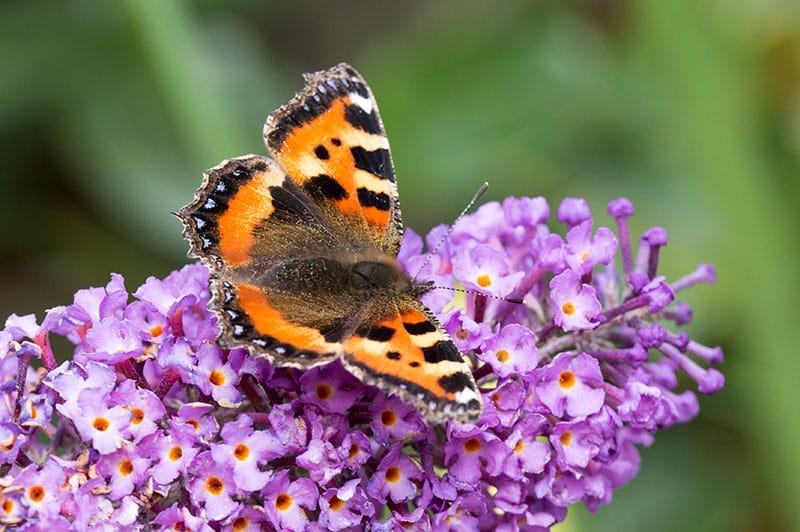
Although butterflies are often associated with summer, many species in Britain continue flying well into autumn and beyond, and as wildflowers become scarcer in the countryside, they are increasingly drawn to gardens in search of that all-important nectar.
One of the most noticeable species in September is the small tortoiseshell. During this time, it focuses on building fat reserves in preparation for its long winter hibernation, needing at least 20% of its body weight in lipids to survive until spring. It is a colourful butterfly, easily recognised by its reddish-orange wings patterned with black and yellow on the forewings, and a row of blue spots set in a black border along the wing edges. Towards the end of their foraging season, small tortoiseshells become more vulnerable to bird attacks, as their reduced muscle-to-body mass ratio makes them slower and less agile in flight.
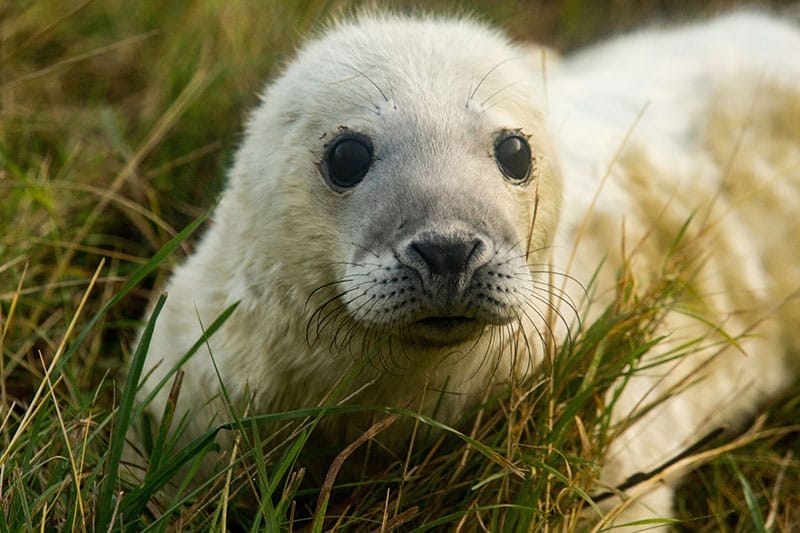
The British Isles are home to two species of seal: the harbour seal and the grey seal. Harbour seals give birth in June and July, while grey seals pup between late August and January. Unlike harbour seal pups, grey seal pups are born dependent on their mothers, spending around three weeks suckling before gradually shedding their fluffy white coats. Because this coat isn’t waterproof, they must remain on land until they have moulted, so if you want to spot seal pups, grey seals offer the best chance.
September is one of the prime times to see them. In West Wales, the Pembrokeshire coast is a hotspot, especially around islands such as Skomer and Ramsey. By late September, pups also appear on the Farne Islands in Northumberland, home to one of Britain’s largest grey seal colonies. Boat trips from Seahouses offer excellent viewing opportunities.
If you do go seal-watching, always keep a respectful distance and leave dogs at home. Not only can dogs disturb the seals, but they may also carry diseases that put the pups at risk.