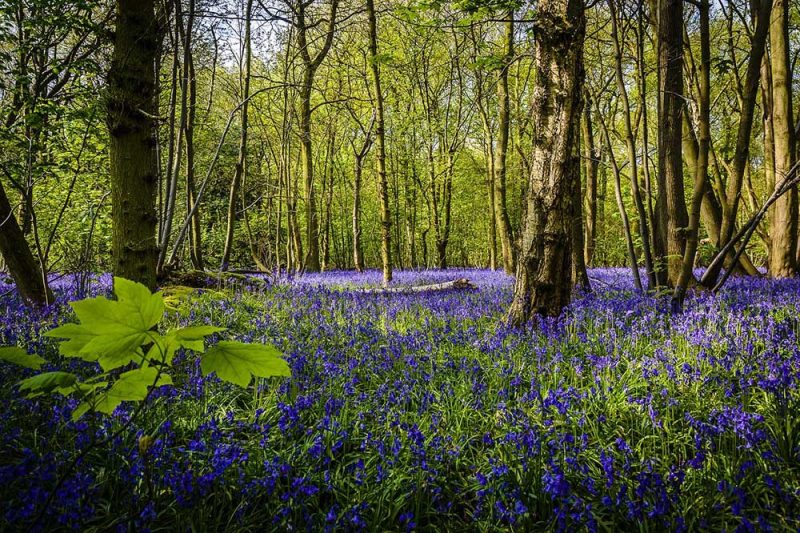
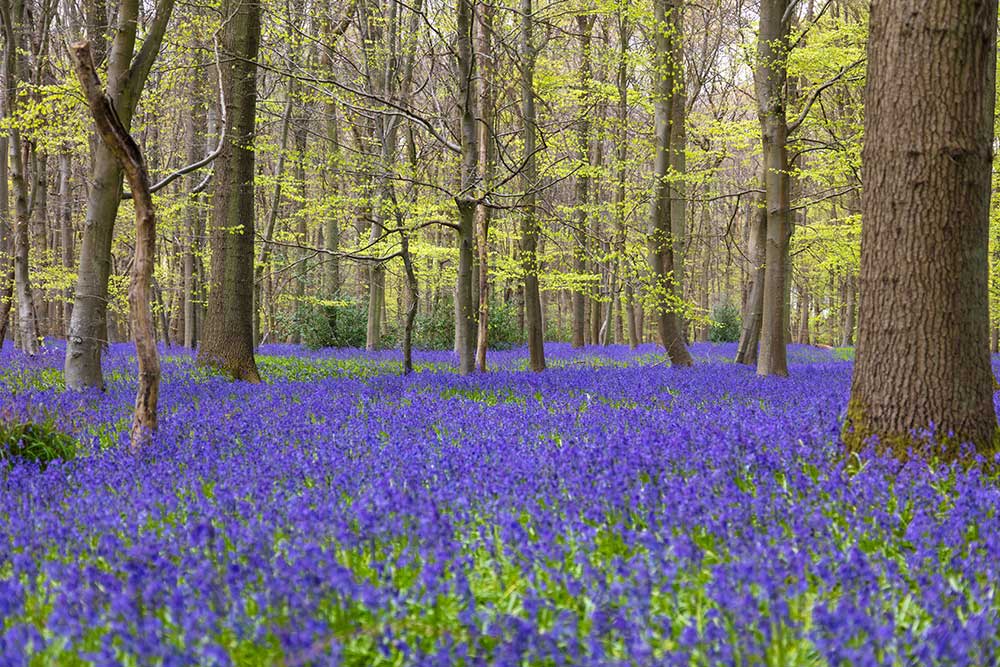
As spring arrives in the British Isles, one of nature’s most beautiful sights also appears; woodlands carpeted with flowering bluebells.
The British Isles are home to more than half the world’s population of bluebells, (Hyacinthoides non-scripta), known for their violet-blue bell-shaped flowers and sweet fragrance. They typically flower from late April to early June, flourishing in ancient woodlands. As bluebells spread very slowly and suffer badly from being trampled on, the presence of a carpet of bluebells indicates a very old wood that dates back to at least 1600. Woodlands with dense canopies produce thicker bluebell carpets as the plants compete for the light.
Where to see bluebell woods
Ashridge Estate, Hertfordshire
Set within the Chiltern Hills just north of Berkhamsted, Ashridge Estate comprises 5,000 acres of ancient woodlands, chalk downlands, and open meadows. In late April and early May, the beech and oak woodlands, known as Ashridge Forest, are transformed into a sea of blue, attracting large numbers of photographers and nature lovers.
For a bird’s eye view of the estate, climb the Grade II listed Bridgewater Monument, a 172-step granite column with a York stone base built in 1832 to commemorate Francis Egerton, 3rd Duke of Bridgewater. The estate is also home to the Pitstone Windmill, one of the oldest surviving examples of a form of post mill thought to have been built in the early 17th century.
Stay nearby – farm cottages in Hertfordshire
Nidd Gorge, North Yorkshire
Nidd Gorge is a deep ravine that was carved out of soft sandstone during the last Ice Age. The site, situated west of Harrogate, is made up of five woods: Bilton Banks, Coalpits Wood, Gates Wood, Scotton Banks, and Spring Wood.
These ancient, broadleaved woodlands support a rich variety of wildlife including beautiful bluebell displays in spring, when you can also spot breeding birds such as nuthatches, treecreepers, goldcrests, and lesser spotted woodpeckers.
Stay nearby – farm cottages in Yorkshire
Holyford Woods, Devon
Nestled in a picturesque valley just north of Seaton, Holyford Woods is one of the oldest woodlands in England with an abundance of wildlife including tawny owls, dormice, and rare bats. The woodland is comprised of oak, ash, birch, holly, elm, and hazel with a sunken stream, known as a goyle, running through its heart.
In spring, the woodland floor is carpeted with bluebells, while the air is filled with the aroma of wild garlic. Other native flowers to look out for include red campions and foxgloves that begin to bloom from late April.
Wreay Woods, Cumbria
Situated on the banks of the River Petteril, Wreay Woods is a wonderfully diverse patch of woodland. Thought to have been in existence for hundreds of years, a deep gorge has been carved through the land exposing the underlying red sandstone.
In spring, the woodland floor is carpeted with bluebells, alongside dog’s mercury, wood anemones, and moschatel, while native ash, oak, and birch provide nesting sites for blackcaps, ciffchaffs, and long-tailed tits. The river is also rich in wildlife. Look out for dippers and grey wagtails hopping along the water’s edge, and otters on the banks.
Tehidy Woods, Cornwall
Now managed as a Country Park, Tehidy is the largest area of woodland in West Cornwall, covering more than 250 acres with nine miles of footpaths to explore. The best place to enjoy the springtime bluebell display is in the ancient oak woodlands of North Cliffs, where strong, salty winds have stunted the trees and bent them away from the prevailing south-westerlies, creating beautifully sculpted and unusually shaped forms.
The park was once part of the Basset estate, with extensive ornamental gardens, follies, and a deer park. Although little of this landscape survives today, several notable specimen trees remain, including sweet chestnut, lime, Scots pine, Japanese maple and a magnificent monkey puzzle tree. One of the most famous is the Twisted Beech, which appeared on a 1788 map of the estate, making it at least 250 years old.
Plessey Woods, Northumberland
With over 100 acres of woodland, meadow and riverside to explore, Plessey Woods is home to an abundance of wildlife including great spotted woodpeckers, nuthatches, red squirrels, and roe deer. In spring a sweep of bluebells appears along with primroses and wood anemones which flourish in the damp, shaded conditions.
The park has a visitor centre where visitors can purchase a range of books, maps, local information guides, and gifts, as well as a café, children’s play area, and plenty of lovely spots to stop for a picnic.
Mortimer Forest, Hereford/Shropshire
Straddling the Shropshire and Herefordshire border, the thousand-hectare Mortimer Forest was once formed of ancient royal chases and deer parks, before being largely replanted by the Forestry Commission in the 1920s. Today, it is rich in wildlife, with goshawks, nuthatches, goldcrests, and a variety of warblers all calling it home. Look out, too, for the distinctive long-haired fallow deer that roam the forest.
A steep trail leads to Climbing Jack Common, a wide open clearing at the heart of the forest, which in spring, is transformed by a vast sweep of bluebells, believed to be one of the largest displays in England.
Brede High Woods, East Sussex
Brede High Woods is a large ancient woodland situated in the High Weald National Landscape. The mix of woods, heath, grassland, and streams is a haven for wildlife supporting thousands of species including several rarities. Renowned for its invertebrates, it’s home to the flea beetle and a population of glow-worms, while mammals include dormice, weasels, badgers, fallow and roe deer, wild boar.
Carpets of bluebells appear in spring providing an important early source of nectar for butterflies like the brimstone, orange-tip, and pearl-bordered fritillary. Keep an eye out too for water voles, great-crested newts, and the strange, eel-like brook lamprey in the ponds and streams.
Kinclaven Bluebell Wood, Perthshire
Tucked away, just north of Perth, Kinclaven Woods becomes a magical place in springtime when the ground is carpeted with swathes of blue, and the song of birds including linnets, spotted flycatchers, and willow warblers fills the air.
A circular footpath, marked with waypoints and dotted with benches, invites you to pause and take in the views. Keep an eye out for other woodland wildflowers like wood anemones, dog violets, and yellow rattle. You may also come across some fascinating fungi, and if you’re lucky, a red squirrel or two!
Stay nearby – farm cottages in Perthshire
Fairy Glen, Ross-shire
Managed by the RSPB, Fairy Glen nature reserve is a hidden gem situated on the Black Isle not far from Inverness. A stream tumbles through broadleaf woodland with a winding path leading to two beautiful waterfalls. The glen has long been associated with fairies and was once the scene for a well-dressing ceremony where local children decorated a pool with flowers to ensure that the fairies kept the water clean.
In spring, the ground is carpeted with bluebells and other wildflower including lesser celandine, primroses, wood sorrel, and wood anemones. Look out for woodland birds such as spotted flycatchers, song thrushes, bullfinches, and long-tailed tits. Grey herons can also be seen waiting patiently for fish while buzzards can be seen circling overhead.
Fforest Fawr, Cardiff
Fforest Fawr is a beautiful woodland near Castell Coch, one of the most picturesque castles in Wales. It is often used for film locations and past productions include Dr Who, Merlin, Sherlock, and Da Vinci’s Demons.

The mixed woodland is particularly beautiful in spring when bluebells blanket the floor, interspersed with the delicate white blooms and broad green leaves of wild garlic. Its distinctive scent adds to the atmosphere, and the young, tender leaves, are excellent in marinades, soups, sauces, and pestos.
Stay nearby – farm cottages in Glamorgan
Abermawr, Pembrokeshire
Situated on the Pembrokeshire Coast Path, Abermawr is a beautiful stretch of rural coastline that includes a remote shingle beach backed by marsh and woodland. In spring, bluebells add a haze of colour to the woodland floor below oaks, beech, and ash that are alive with the songs of breeding birds.
At low tide, fossilised tree stumps are exposed on the beach, the remains of a prehistoric forest that became flooded when an ice sheet collapsed and melted about 8,000 years ago. Preserved by sea salt, which has prevented them from the rotting, the forest has remained frozen in time.
Tips for visiting bluebell woods
Timing: Plan to visit between late April and early June for the best chance to see the flowers in full bloom. Weather and location can affect the flowering season so check for local updates. Some of the more popular woods can get very busy, so early morning is often the best time to skip the crowds.
Respect the environment: Bluebells are a protected species in the UK, and it is against the law to pick or uproot them. To help preserve these delicate plants, stick to designated paths, avoid stepping onto the bluebell carpet for photos, and ensure that dogs and children do not run through them. Bluebells are easily damaged and can take years to recover.
Wear suitable clothing: Woodland paths can be muddy or uneven, making sturdy, weatherproof footwear a wise choice, and with spring’s unpredictable weather, it’s worth bringing a waterproof jacket in case of an April shower. The shade of the woods can feel much cooler than open countryside, so wear layers you can easily take off when you step back into the sun.