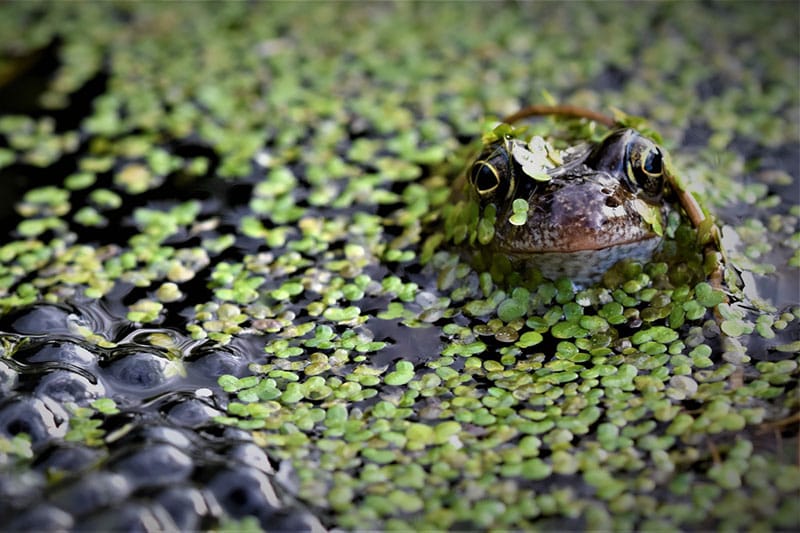
The common frog has smooth skin and comes in a wide range of colours, from olive-green, brown and grey to yellow or even reddish tones. It can change colour primarily for camouflage, but also to regulate its temperature, becoming darker when cold or wet and lighter when warm or dry. It has a pale belly, aa dark mask around the eyes and ears, and its long, striped legs are built for hopping. Males are smaller than females and have hard swellings called nuptial pads on the first digits of their forelimbs, which help them grip females during mating.
Frogs spawn in early spring, laying up to 4,000 eggs in a season. The eggs are black, encased in a single jelly-like clump known as a raft. Tadpoles hatch after around three weeks and take about four months to develop into froglets.
Common frogs are widespread across the British Isles. During the breeding season they are most often seen in garden ponds and lakes, while at other times of year they inhabit woodland, hedgerows, grassland and meadows.
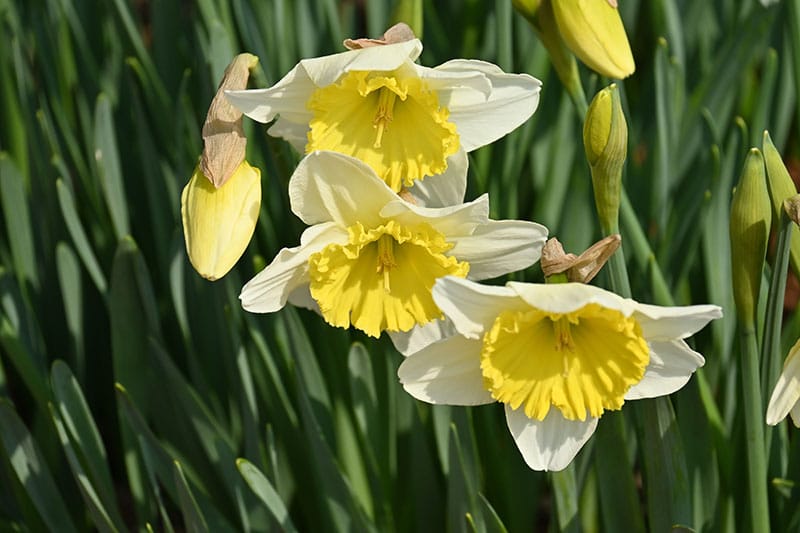
In spring, clumps of daffodils appear across the British Isles, adding a cheerful burst of colour to parks, gardens, churchyards, and roadside verges. However, many of the daffodils seen growing in the wild are cultivated garden varieties that have either become naturalised or been planted deliberately.
True wild daffodils are far rarer. They can be recognised by their narrow, grey-green leaves and six pale yellow petals encircling a darker trumpet, a distinctive two-tone colouring that sets them apart from their garden relatives. Wild plants are typically smaller, reaching between 20 and 30cm in height, and often form spreading clumps that carpet the ground.
The best places to see wild daffodils are in ancient woodlands, damp meadows and grassland, and on rocky ground. One of the largest displays can be found in the Farndale Valley in the North York Moors National Park. They also grow on nature reserves in Gloucestershire, parts of South Devon, and in the Black Mountains of Wales.
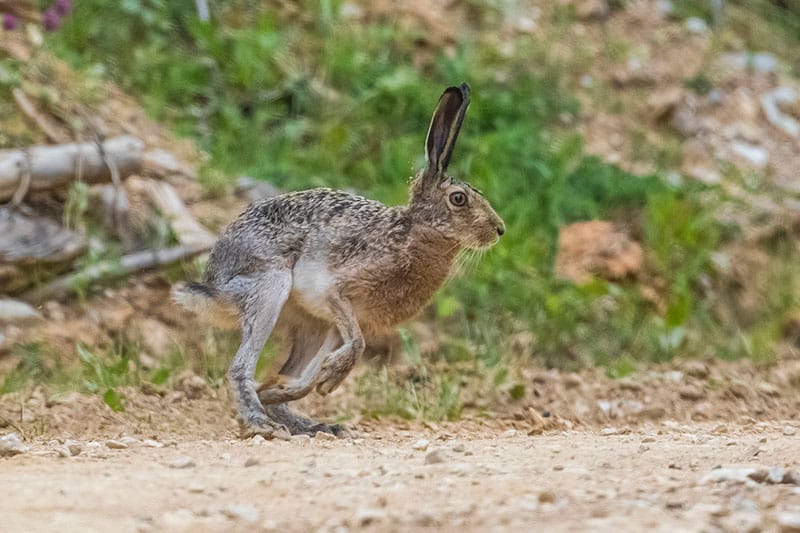
Thought to have been introduced to Britain by the Romans, the brown hare is now considered naturalised. It is larger than a rabbit with golden-brown fur, a pale belly, and a white tail, along with long ears tipped with distinctive black markings.
March marks the height of the breeding season. Males, known as bucks, pursue females, or does, in an effort to win their attention. If a female is unreceptive, she may turn and fight, with both hares rising onto their hind legs and using their forepaws to ‘box’. These encounters can be surprisingly fierce, and it’s not unusual to see fur flying. It’s widely believed this behaviour inspired the English expression ‘as mad as a March hare’. Females typically produce three or four litters of young, known as leverets, each year.
For a chance of witnessing hares boxing, head to open grassland or arable farmland bordered by woodland or thick hedgerows. Early morning, as the sun rises, is the best time to look.
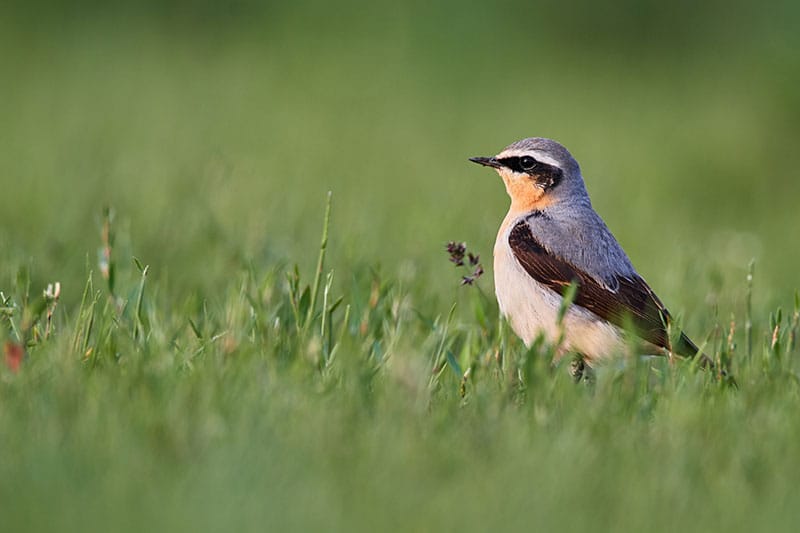
The Northern wheatear is a migratory member of the chat family that also returns to the British Isles each March from its wintering grounds in Africa. The male has a blue-grey back and head, with a bold black mask. It has black wings and pale buff underparts with a soft orange wash across the breast and throat. The white rump gives the bird its name which derives from the Old English hwīt (white) and ēare (arse). Females are similar in pattern but are browner and duller overall.
Primarily a ground-dwelling bird, the Northern wheatear favours open landscapes such as pasture, moorland, and heath. It can be seen running or hopping across the ground as it searches for snails, worms, and insects, such as beetles and ants.
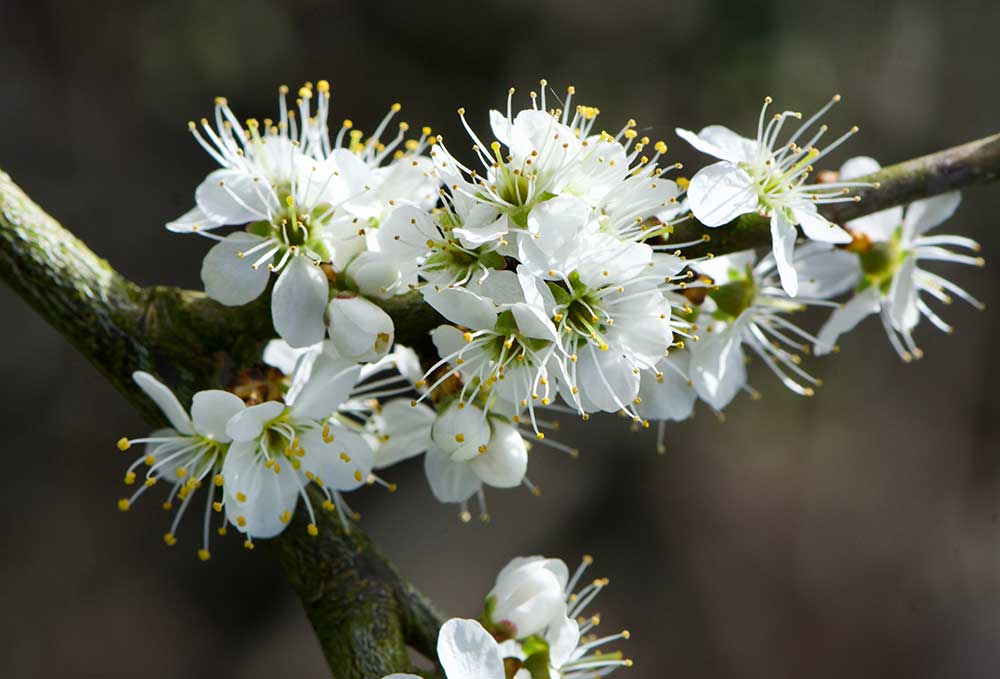
Blackthorn is a spiny shrub with dark brown bark and small, oval, slightly wrinkled leaves with serrated edges. It usually forms a bush, but can grow to become a tree with a height of up to 6 or 7 metres. The flowers are white with five petals, and appear shortly before the leaves in March or April. The fruit, known as a sloe, is black with a waxy dark blue or purple bloom. They are harvested in October or November after the first frosts.
It is widespread across the British Isles, growing in copses and woodland but is most often used as a hedging plant along the edges of fields and paths. Blackthorn can sometimes be confused with the wild plum, but it has smaller fruit and narrower leaves. Hawthorn too is similar, but its flowers emerge at the same time as the leaves.
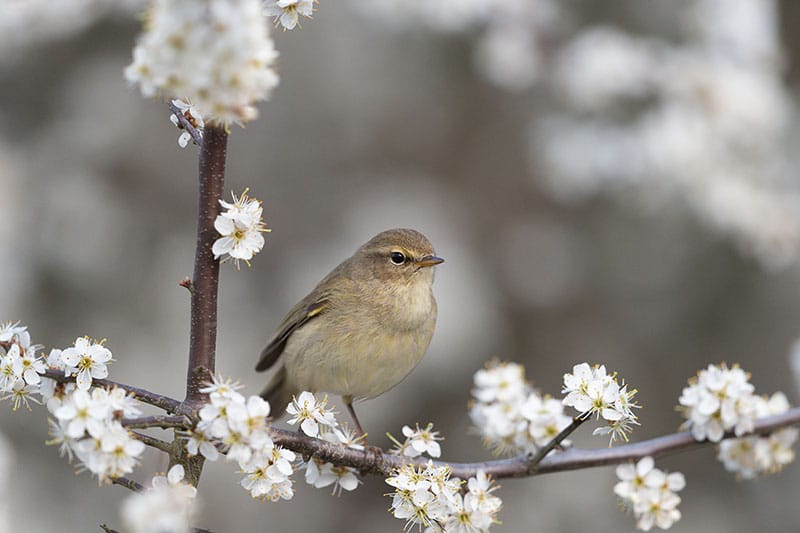
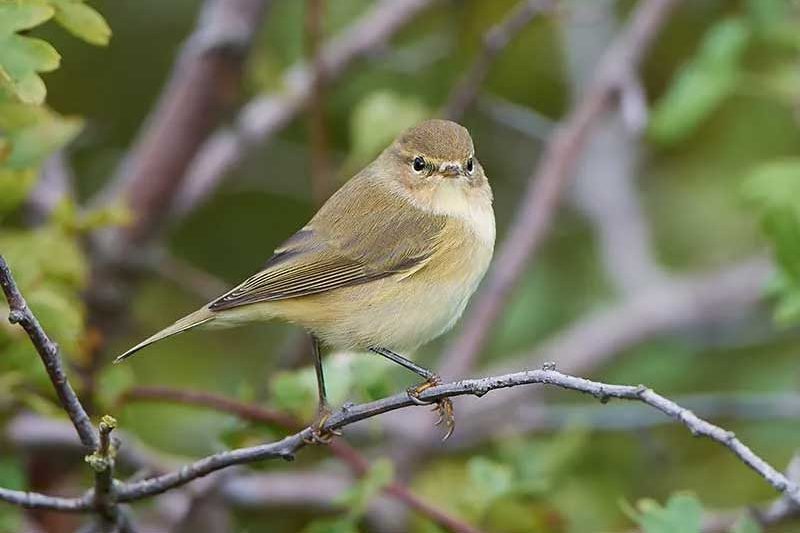
The chiffchaff is one of the first migratory birds to return to the British Isles, arriving from its wintering grounds in southern Europe and North Africa. It is a medium-sized warbler with an olive-brown body and a very pale yellow wash on the breast and belly. It has a fine, pointed bill, a distinct white eye-ring and, notably, dark legs and feet, a key feature that helps distinguish it from the very similar willow warbler, which has pale legs. Males and females look alike.
It takes its name from its unmistakable, repetitive “chiff-chaff, chiff-chaff” song, which is often heard before the bird is seen. It can be found in woodlands, hedgerows, scrubby areas, and parks and gardens, frequently near water such as lakes and marshes. Look out for it flitting through trees and shrubs as it searches for insects among the leaves. While most migrate south for the winter, some chiffchaffs remain in Britain all year round, moving to milder coastal areas during the colder months.