One of the greatest pleasures of a farm stay is the animals, and the chance to see them up close and in their working environment. Watching a sheepdog move a flock, standing at a fence as cattle graze nearby, or collecting eggs from hens that are entirely unafraid of humans are experiences few other holidays can offer in quite the same way.
However, farm animals are neither zoo exhibits nor pets. They live and work as part of a functioning farm, and they need to be treated with a level of respect that reflects that reality. Most guests understand this instinctively, but there are a few important things worth knowing in advance, both for your safety and for the welfare of the animals.
Farm animals can be highly sensitive to sudden movement and loud noise. A running child, a slamming car door, or a dog that lunges can all startle an animal that was calm only moments before.
Move slowly and deliberately, and speak in a normal voice rather than shouting. If you are with children, make sure they understand before approaching any animals that this is not a playground and that different rules apply around livestock.
Farm animals have carefully managed diets and feeding routines, and feeding the wrong food can cause serious health problems. Sheep may develop digestive issues, horses given too many treats can become difficult to handle or suffer from conditions such as laminitis, and poultry fed bread regularly can experience nutritional deficiencies.
If you would like to feed the animals, always ask the farmer what is appropriate. In most cases, they will be happy to say yes and guide you to what is safe, and what is not.
Farm animals can carry bacteria such as E. coli O157, Cryptosporidium, and other organisms that are harmless to them but can cause serious illness in humans, particularly young children.
After any contact with animals, always wash your hands thoroughly with soap and warm running water. Hand sanitiser is not sufficient on a farm, as it does not remove all of the relevant bacteria.
Washing your hands is especially important before eating or drinking, and for children who have a tendency to put their hands near their mouths.
Some farm animals are comfortable with human contact, while others are not. A friendly-looking cow does not necessarily want to be stroked by a visitor.
Always check with the farmer before attempting to touch or handle any animals. On most farm stays, there are usually animals that are accustomed to guests and comfortable with interaction, and the farmer will know exactly which ones are appropriate.
Cows and bullocks are large, powerful animals that can move quickly and with considerable force. While most cattle on farm stays are calm, accustomed to people, and unbothered by visitors observing them from a distance, there are situations where extra care is essential.
Avoid walking through a field containing cattle if you can help it. If there is an alternative route, such as around the edge of the field or through a different gate, take it. If you must cross the field, do so steadily and directly, without approaching the animals or making sudden movements.
Be especially cautious around cows with calves. A cow protecting her young can become defensive very quickly, even if she has shown no sign of aggression before. Give cows and calves a wide berth, and if a cow moves towards you with her head lowered, leave the field calmly via the nearest exit.
Beef cattle can also be curious, and young bullocks in particular may approach walkers out of interest. What begins as curiosity can sometimes turn into pushing or jostling, so avoid encouraging contact and move away if animals approach you.
If cattle move towards you and you are with a dog, follow the guidance in the Countryside Code, and let the dog off the lead. It may feel counterintuitive, but a loose dog has a better chance of escaping safely on its own, whereas a dog on a lead can tether you in the path of the animals. Release the lead, move calmly but quickly to the field boundary, and allow the dog to find its own way out.
Sheep are generally less physically dangerous than cattle, but they can still pose risks. A panicked flock may stampede and knock a person over, and rams can become aggressive during the autumn tupping season.
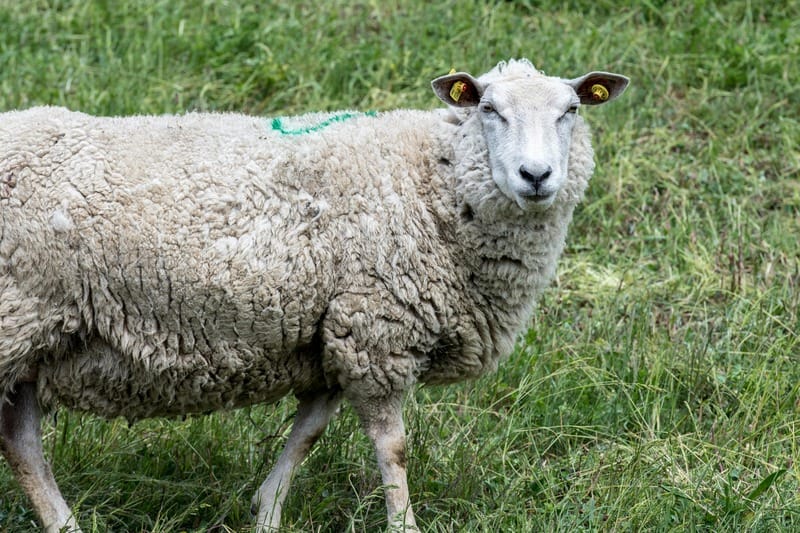
However, they are easily startled and will move quickly if disturbed. A flock that bolts can be difficult for a farmer to manage, and in the wrong circumstances, for example near roads or the edges of cliffs, they can injure themselves. For this reason, always approach fields with sheep quietly and avoid any behaviour that might cause them to scatter.
During lambing season, ewes and newborn lambs are at their most vulnerable, and some ewes may reject a lamb that has been handled and carries an unfamiliar scent. Avoid picking up lambs that appear to be alone, as they are often simply resting while their mother is nearby. If you believe a lamb is genuinely in distress or has been abandoned, inform the farmer rather than intervening.
Tupping season typically runs from October to December, when rams may become territorial, so give them extra space during this period. Do not approach any ram showing signs of agitation, such as head lowering, pawing the ground, or backing away before charging.
As with all livestock, always keep dogs on a short lead around sheep to prevent them from chasing or worrying the flock.
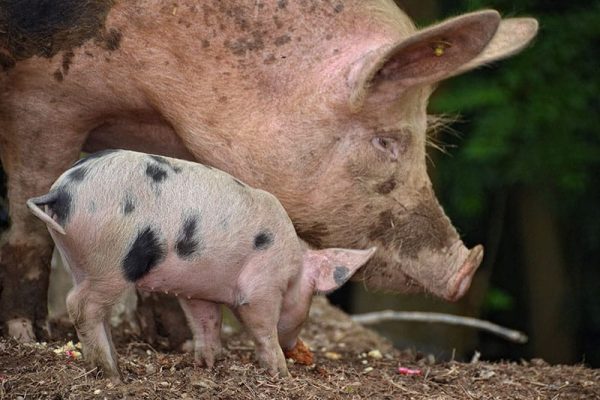
Pigs are intelligent, curious, and surprisingly friendly. Many pigs on farms enjoy human contact and will readily approach a fence to investigate visitors. However, they are also much stronger than they appear and have powerful jaws, so there are a few key points to bear in mind.
Be aware that pigs can bite. It is not usually aggressive, but a pig exploring with its mouth can still cause serious injury, so never put your fingers through or over the fence of a pig enclosure.
Do not enter pig pens or enclosures. Even a calm-looking sow may become highly protective of her piglets, and pigs naturally root and nudge, meaning they can easily knock a small child over through sheer enthusiasm. Children should always be closely supervised around pigs, and it is safest to observe them from the other side of the fence.
Horses can be some of the most accessible animals on a farm, and also the ones guests most often want to interact with. However, they can be unpredictable, and their size means that even an unintentional movement can cause injury.
Always make sure a horse is aware of your presence by approaching from the front or slightly to the side. Never approach directly from behind, as a startled horse may kick reflexively.
If you are offering a treat or greeting a horse, use a flat, open palm rather than extended fingers. Horses can easily misinterpret the difference between food and a hand, and a bite can be extremely painful.
Avoid sudden movements or loud noises around horses, as these can trigger their natural flight response. A spooked horse may bolt or spin unexpectedly, which can be dangerous for anyone riding or handling them.
Before interacting with any horse, check with the farmer, who will know each animal’s temperament, and remember what is safe for one horse may not be appropriate for another.
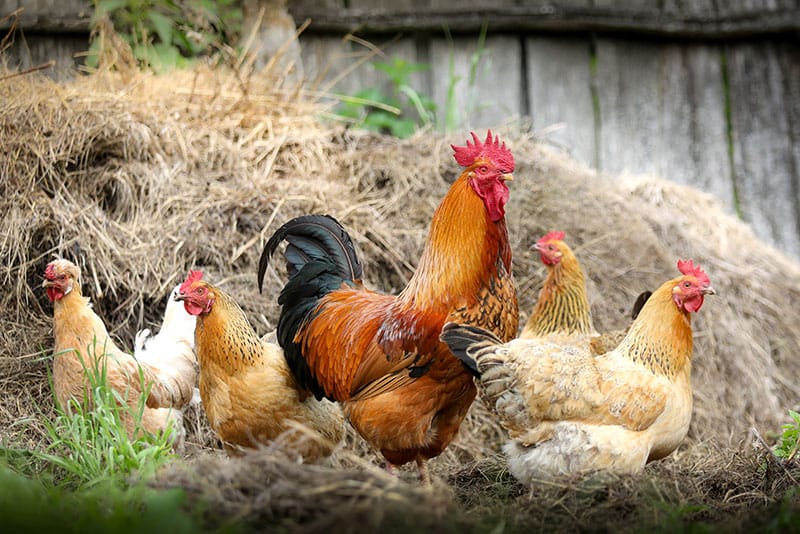
If a farm keeps hens, ducks, or geese, they may be free to roam the property, so it is very likely that guests will encounter them, and in some cases they may even wander into the garden of the accommodation.
It may sound obvious, but chickens should never be chased. It causes unnecessary stress and can lead to injury as birds attempt to escape. Children should be made aware of this before arriving at the farm, not once the birds are already scattering.
Geese in particular can be territorial, and breeding gander protecting his flock may hiss, chase, and bite. They are fast, low to the ground, and persistent. If a goose approaches you with its neck stretched forward and wings spread, give it plenty of space and avoid turning your back on it.
If you have been invited to collect eggs, approach hens slowly and calmly to avoid startling them. Be aware that some hens become broody and will remain sitting on their eggs, even when unfertilised. Broody hens should be approached with care, as they may become defensive. While it is sometimes possible to collect eggs from beneath a sitting hen, it’s best left to those with experience, otherwise you risk a painful peck.
If you see an animal that appears to be injured, unwell, or in distress, inform the farmer as soon as possible. Do not attempt to intervene yourself as even with the best intentions, handling a farm animal can worsen its condition or put you at risk.
The farmer will understand the animal’s normal behaviour, know what signs to look for, and be able to decide whether veterinary or other professional help is needed.
If an animal appears to be in immediate and serious danger and you are unable to reach the farmer, you can contact the RSPCA in England and Wales or the SSPCA in Scotland via their emergency lines. If the situation involves an animal on a public road, contact the police.
Finally, remember farm animals are not there for the entertainment of guests. They are part of a working farm, producing food, maintaining the land, and supporting the livelihood of the people who care for them.
The most rewarding farm stay experiences tend to come from guests who recognise this and approach the animals with respect that goes beyond simple curiosity. A farmer who sees that you are considerate towards their livestock will usually be more willing to share access and experiences than they would with someone treating the farmyard like a petting zoo, and the guests who gain the most from a farm stay are those who engage with animals on their terms, rather than their own.